From the top of El Mirador the town arranges itself into a single idea. Red tile roofs run downhill in every direction, broken by palms and the occasional dome. To the north the Santa Ynez Mountains rise straight out of the last streets. To the south lie the harbor, the long arm of Stearns Wharf and, on a clear day, the islands lined up across the channel. Directly below sits the sunken garden, a lawn so green and level it looks painted on.
Climbing the clock tower of the Santa Barbara County Courthouse costs nothing. It is the simplest good thing to do downtown, and it explains the city better than any map.
A courthouse built from rubble
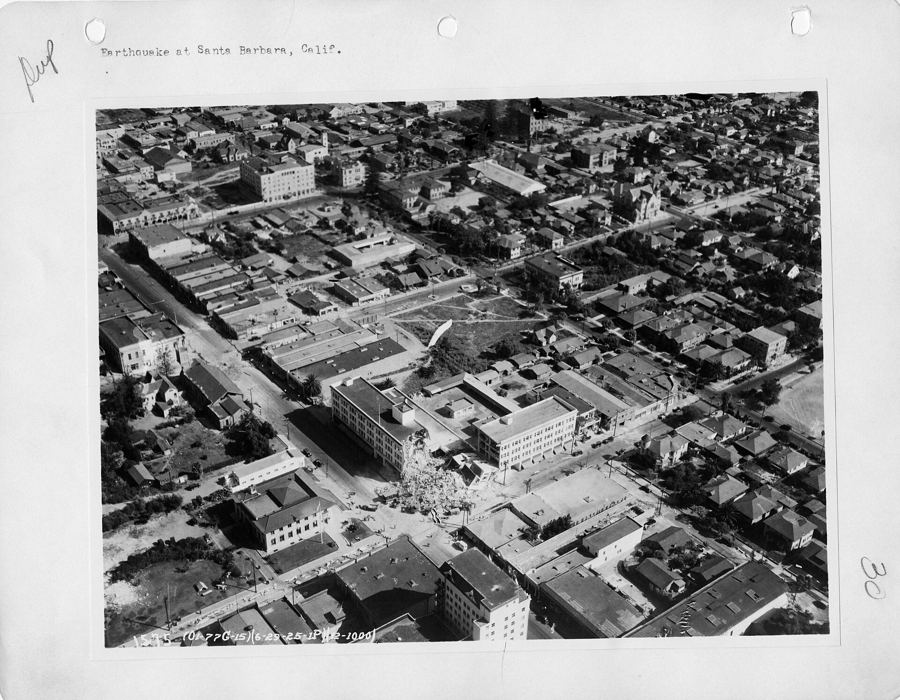
The building exists because of an earthquake. On the morning of June 29, 1925, a strong quake wrecked much of downtown Santa Barbara, including the old county courthouse, a domed Greek Revival building that stood on this block. The county decided to replace it, and the city, already debating what it wanted to look like, used the moment to rebuild in a Spanish Colonial Revival style.
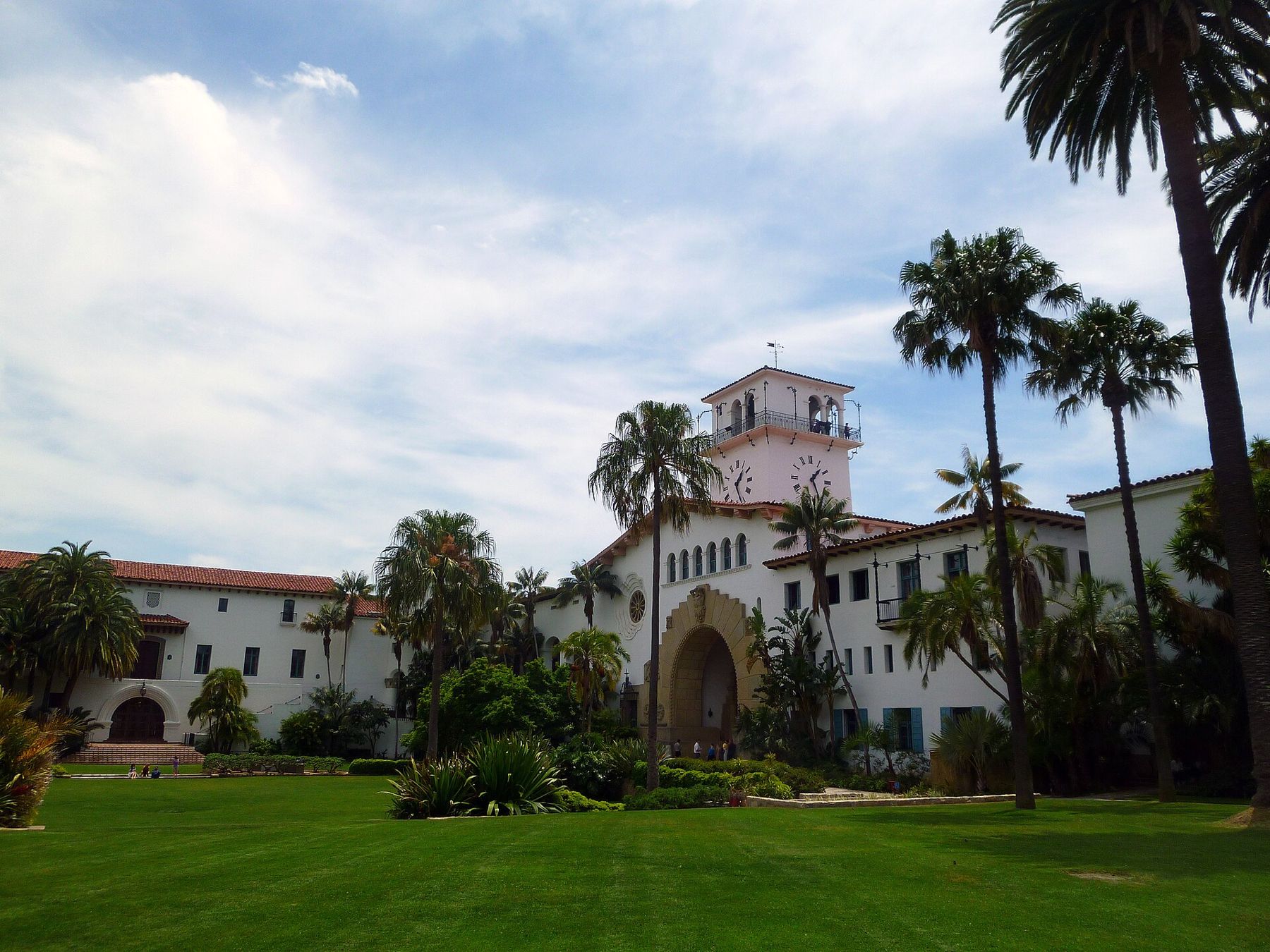
The design went to William Mooser III, of a San Francisco family of architects, who had spent years in Spain. The new courthouse was finished in 1929. It is not one building but four, wrapped around the garden in a giant L that fills a whole city block between Anacapa, Anapamu, Santa Barbara and Figueroa streets. In 2005 it was named a National Historic Landmark.
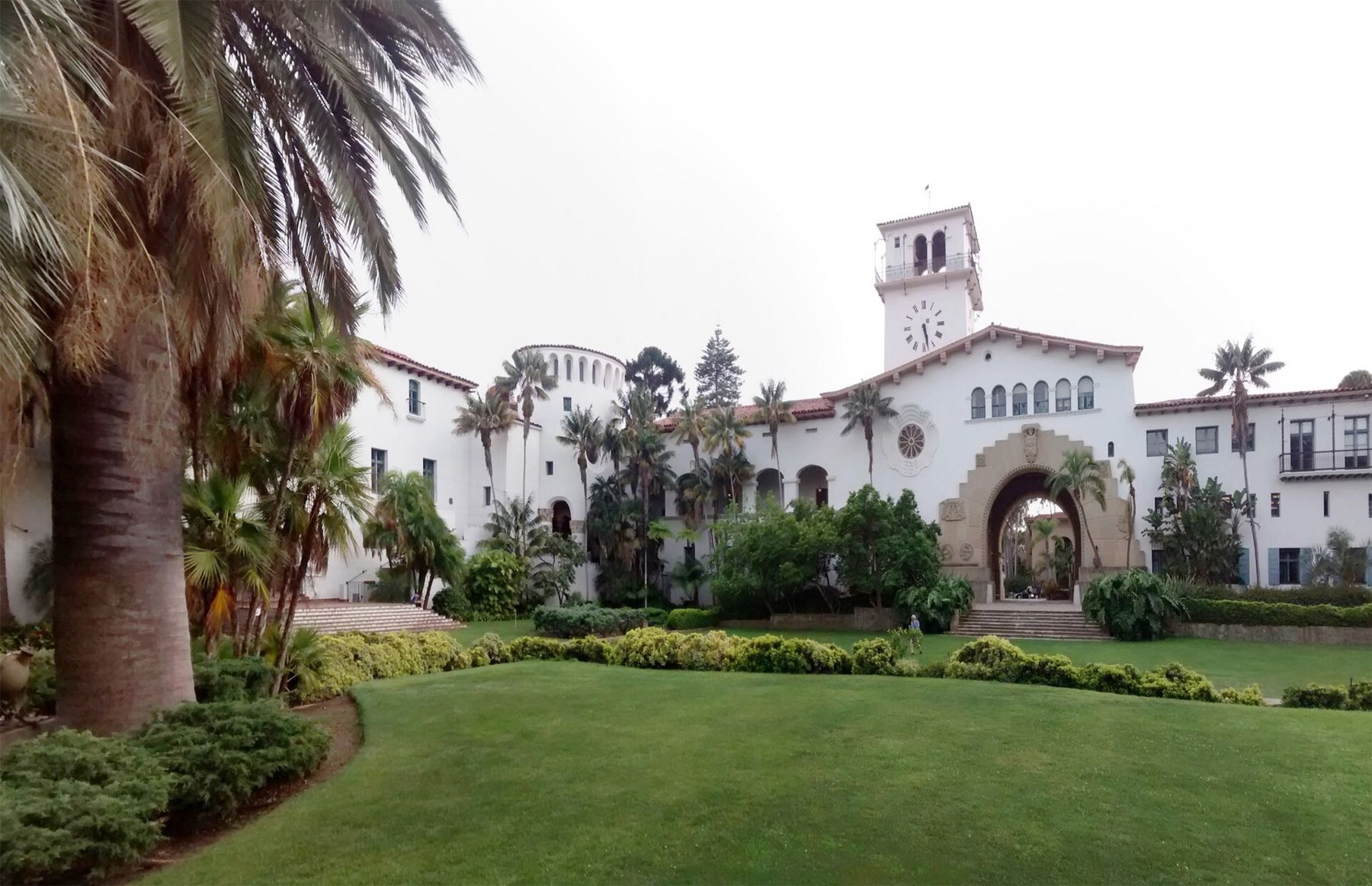
Mooser borrowed freely. There are Moorish arches, Andalusian ironwork, painted wooden ceilings, hand-made tile from Tunisia and Spain, and carved sandstone. Nothing quite matches, and that is part of the charm. The building feels as if it had been added to over centuries rather than finished in four years.
Walk around the outside before going in and the variety becomes clear. The wings are different heights and widths. One has a round turret, another a long open gallery, a third a plain wall pierced by a single deep window. Stairways climb the outside of the building rather than hiding inside it. Iron grilles, lanterns and balconies appear wherever a wall might otherwise look bare. Even the drainpipes and gutters were given some thought.
It also still works. The Superior Court holds hearings here, county offices fill the corridors, and people come to get married, file papers and serve on juries. Visitors walk past lawyers in suits. Keep voices low on the court floors.
The great arch and the sunken garden
Most people enter through the great arch on Anacapa Street, a tall opening that frames the garden and the mountains beyond like a picture in a doorway. The arch is lined with tile, and the stairs inside it lead up to the main floor. Stand in the middle and look back toward the street, then forward to the lawn. The building is designed around that view.
The sunken garden fills the inside of the L. It is a broad, slightly lowered lawn edged with palms, magnolias and flowering shrubs, with paths and stone benches around it. On weekdays it is quiet, with office workers eating lunch on the grass. On summer evenings and during Fiesta it fills for concerts, dances and public events. Wedding parties gather here for photographs most weekends.
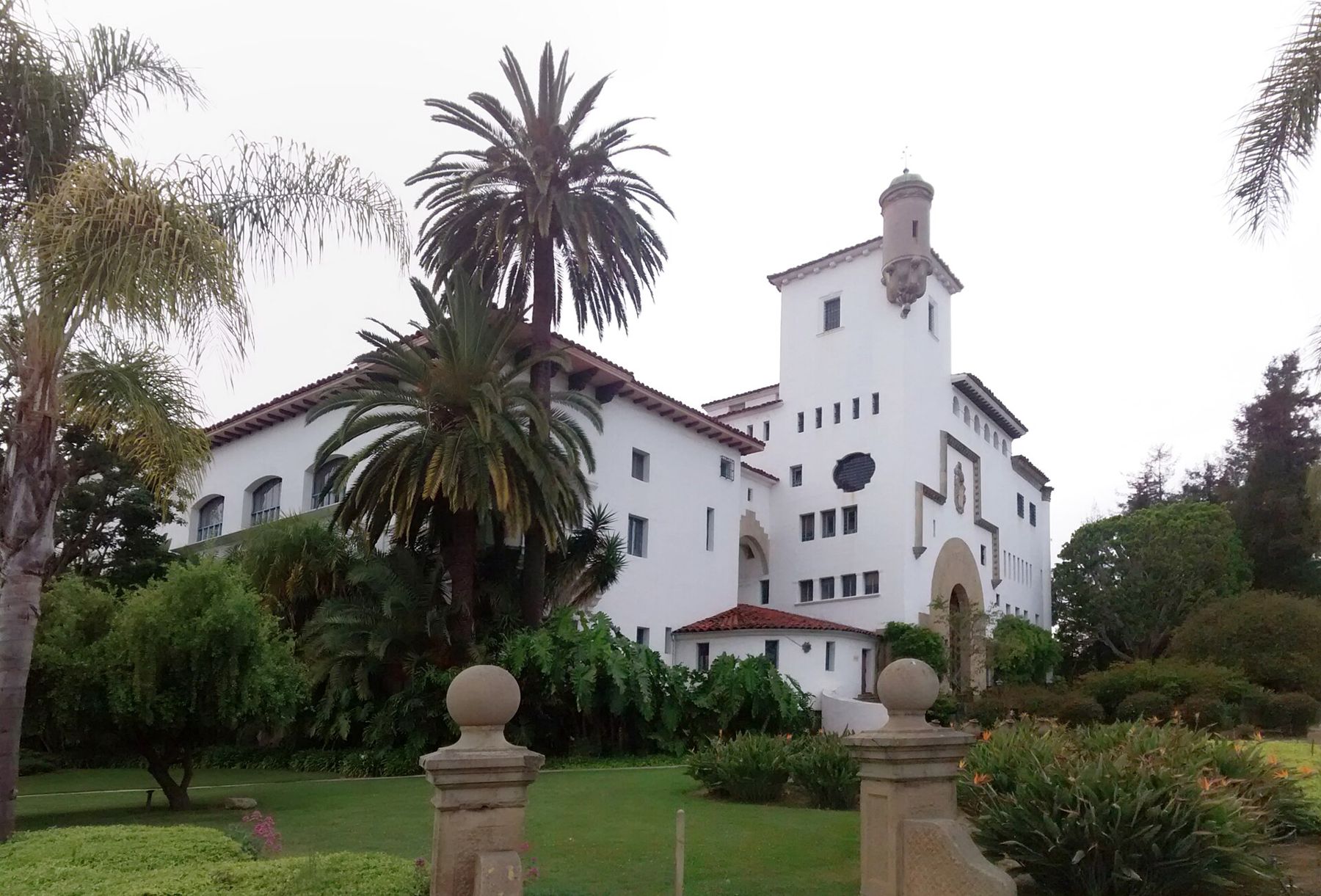
The garden is also the best place to understand the scale of the building. The courthouse is large, but it never feels heavy, because the mass is broken up into wings, towers and arcades of different sizes, and because the planting softens every corner. Big trees stand close to the walls, and climbing plants run up them. The effect is less of a government office than of a very large house built around its own park.
Walk the full loop of the garden before going in. From the far side the whole courthouse comes into view at once: the white walls, the tile roofs at different heights, the turret and the clock tower above them all.
The Mural Room
Upstairs, on the second floor, is the Mural Room, the former assembly room of the county Board of Supervisors. It is the most elaborate room in Santa Barbara and well worth the detour on the way to the tower.
The walls are covered with murals by Dan Sayre Groesbeck, a Hollywood set designer and illustrator, that tell the history of the region in large, theatrical scenes: Chumash life on the coast, the arrival of the Spanish by sea, the building of the mission and the coming of the Americans. Above them the ceiling is painted wood, heavy with pattern, and iron chandeliers hang low. The scenes are a 1920s idea of history, romantic and selective, and are worth looking at as that.
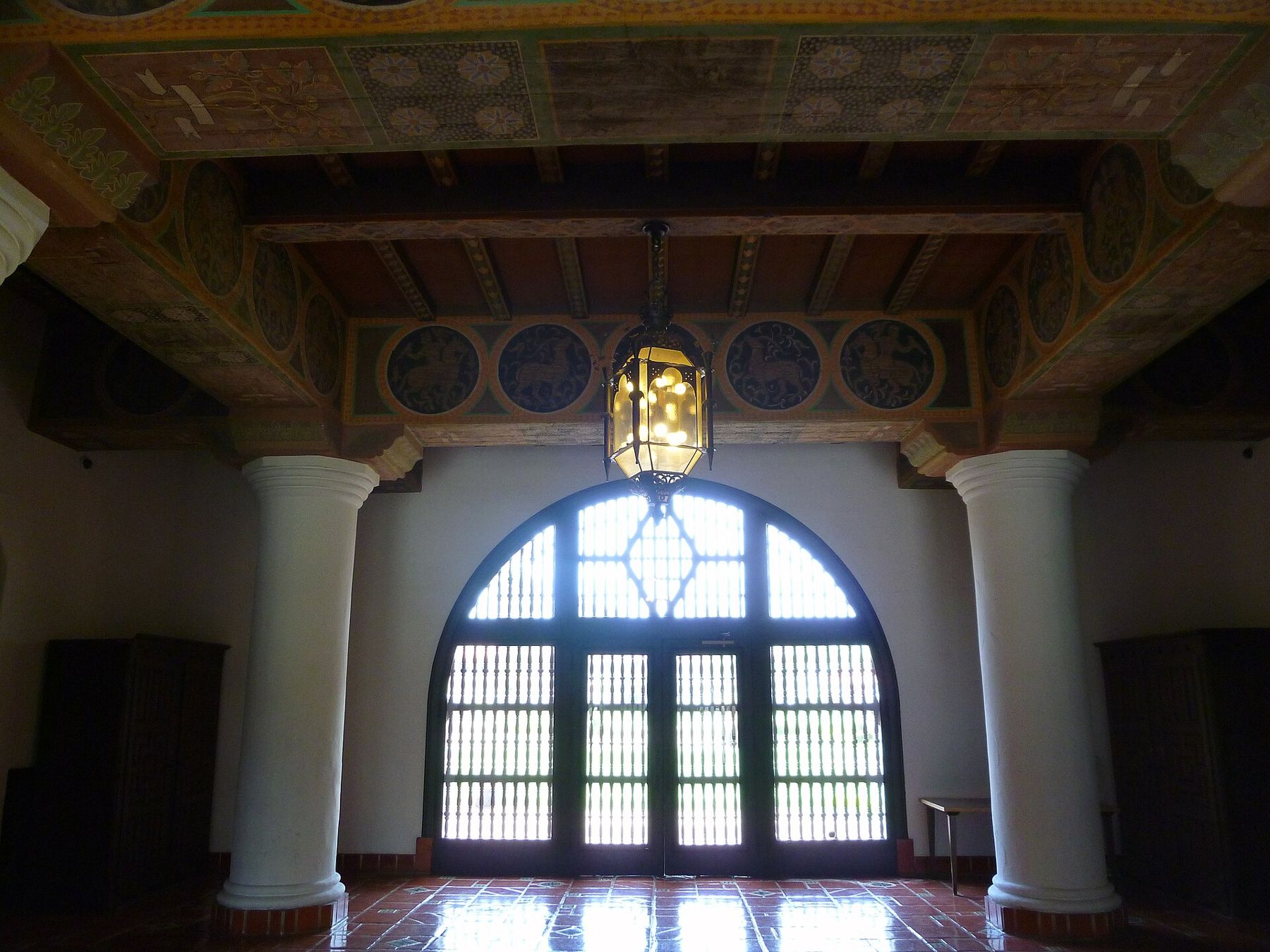
The room is still used for public meetings and, often, for weddings, so it may be closed for an event. If the doors are open, step in and stand quietly for a minute. The details come slowly: patterns painted on the beams, faces in the crowds, the way the windows were placed to light the walls.
Climbing El Mirador
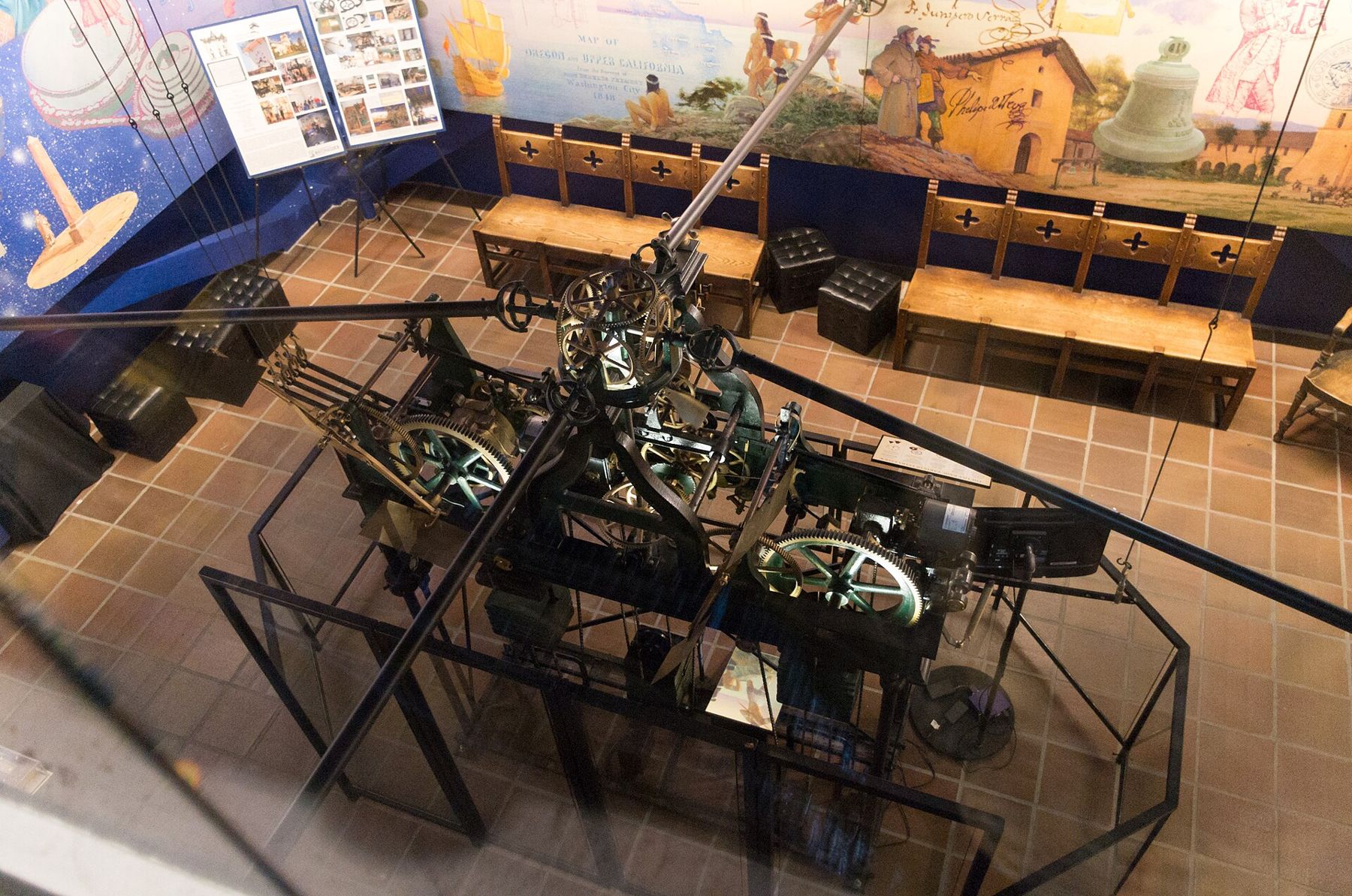
The tower is called El Mirador, the lookout. Take the elevator to the top floor and then the stairs. On the way you pass the clock room, where the works of the tower clock sit behind glass: a mechanism of gears and four long shafts that turn the hands on the four faces outside.
Then you step out onto the open deck. Walk all the way around. Each side shows something different. To the south are the roofs of downtown and the ocean beyond them, the harbor breakwater and Stearns Wharf. West you see the ridge of the Mesa and the masts in the harbor. North is the most dramatic view: the city climbing toward the mountains, the twin towers of the Mission on its rise, and the canyons above.
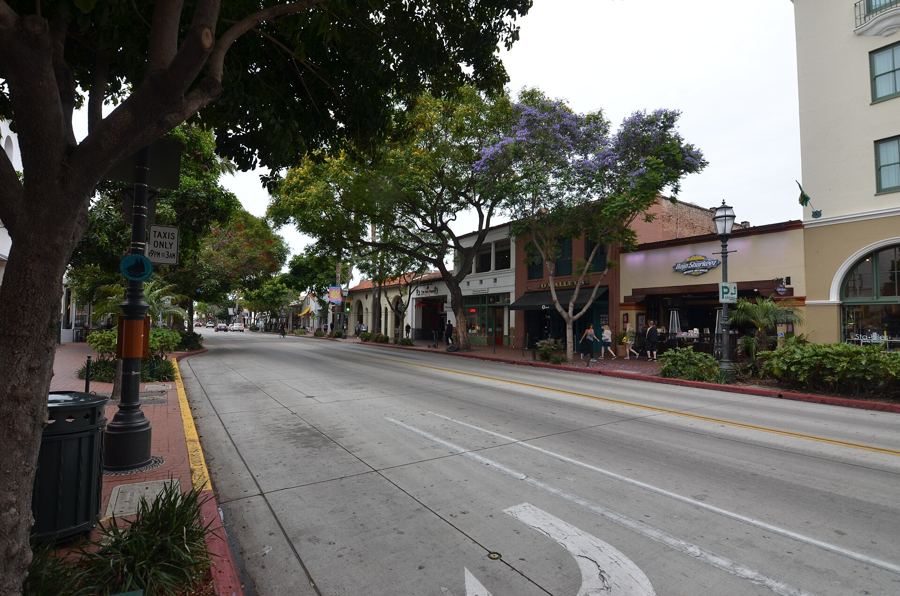
Look down, too. The roofs below are the clearest lesson in what Santa Barbara did after 1925. Nearly every building in sight is white or cream with a red tile roof, a rule the city still enforces in the old downtown.
The roofs below are the clearest lesson in what Santa Barbara did after 1925.
The Presidio chapel is a small white shape to the southeast. Behind it the Lobero Theatre's tower rises above the roofline. Follow State Street with your eye toward the water and you can trace the whole walk from the mountains to the sea.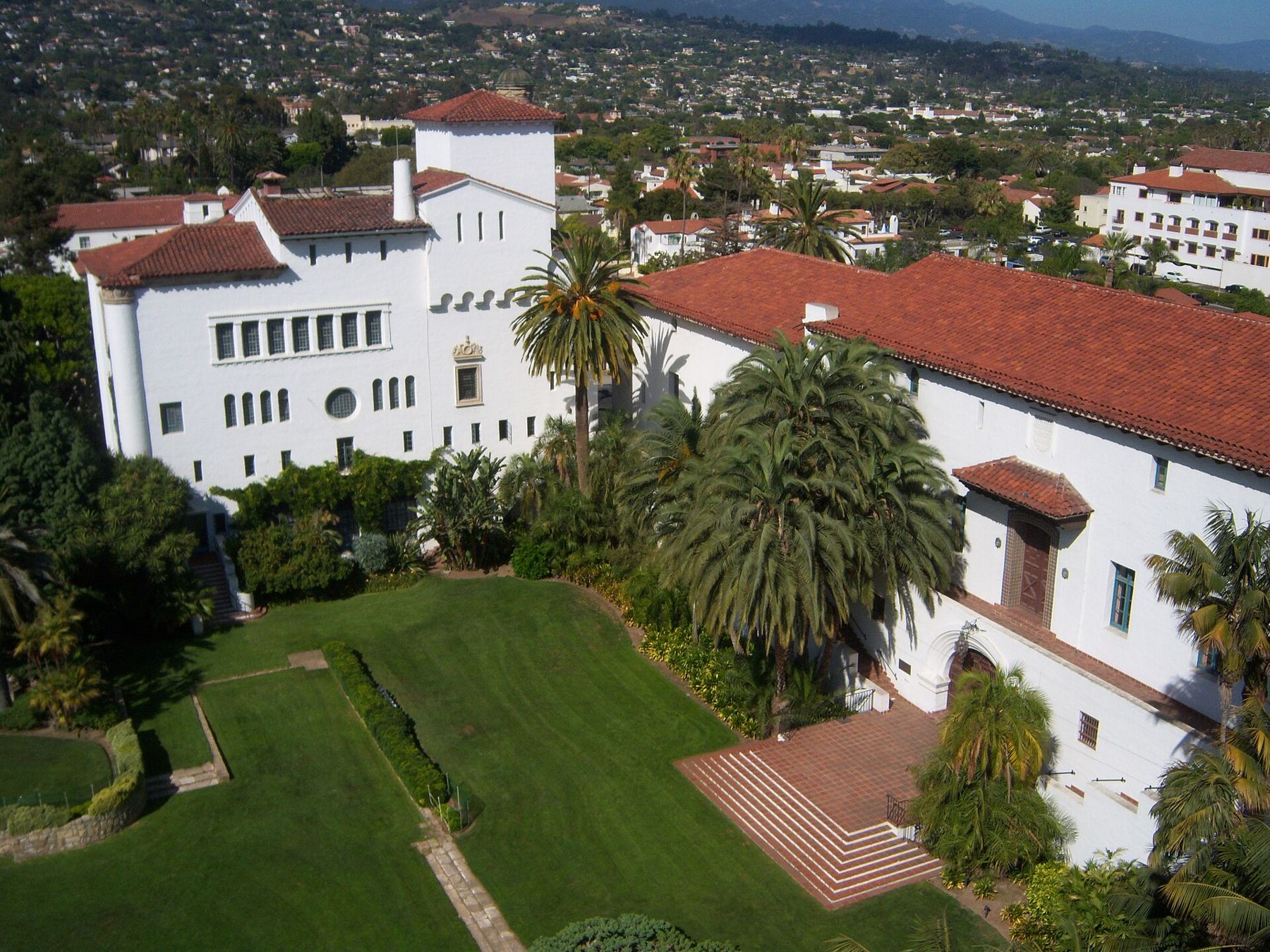
The deck is small and can be crowded around midday on weekends. Morning and late afternoon are quieter, and the low light makes the tile glow. On days of thick marine layer the view stops at the nearest roofs, so a clear morning is worth waiting for.
How to use the visit
Entry to the courthouse and the tower is free. The building keeps set hours, the tower sometimes closes for events or weather, and both change through the year, so check before you go. Free docent tours have long been offered on a set schedule, which also changes, and they are the best way to see rooms you might otherwise miss, including the old law library and the hall of records.
Bring a light layer for the tower. Even on warm days the wind on the deck can be cool, especially in the afternoon when the sea breeze arrives. Photographers should bring a wide lens for the roofscape and a longer one for the Mission towers and the harbor, both of which are too far away to read well on a phone. The deck has a railing all the way around, and children can see over it with a lift.
Give it an hour at least. Start in the garden, enter under the arch, go up to the Mural Room, then climb the tower. Come back down and walk the corridors, where tile stairways, iron lanterns and painted ceilings turn up around every corner.
The courthouse is the natural first stop on the Red Tile walk, and from the tower you can plan the rest. It is also first on our list of free things to do in town. To understand why everything around it looks the way it does, read about the 1925 earthquake that cleared the ground. 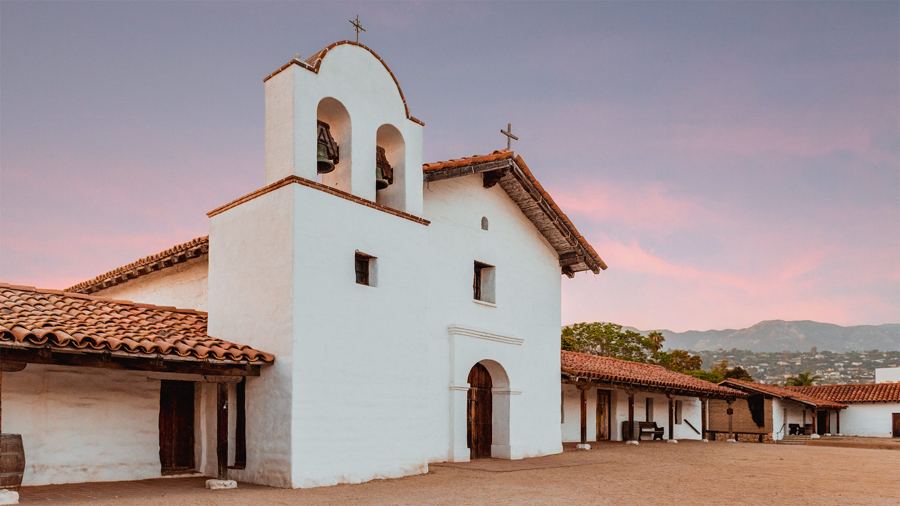 Also on Presidio PostEl Presidio de Santa Bárbara, then and now
Then go back up once more before you leave town. The second time, you will know the names of what you are looking at, and the red roofs will read like a street map of everything you walked.