Look at a photograph of State Street from 1920 and you might not know the city. Brick and stone commercial blocks with flat parapets, cornices and plate-glass shopfronts line both sides. There are Victorian houses with turrets, a domed Greek Revival courthouse, a rambling Victorian resort hotel. It is a pleasant American town of its day, and almost none of it looks Spanish.
Then, a little before seven on the morning of June 29, 1925, the ground moved.
The morning of June 29
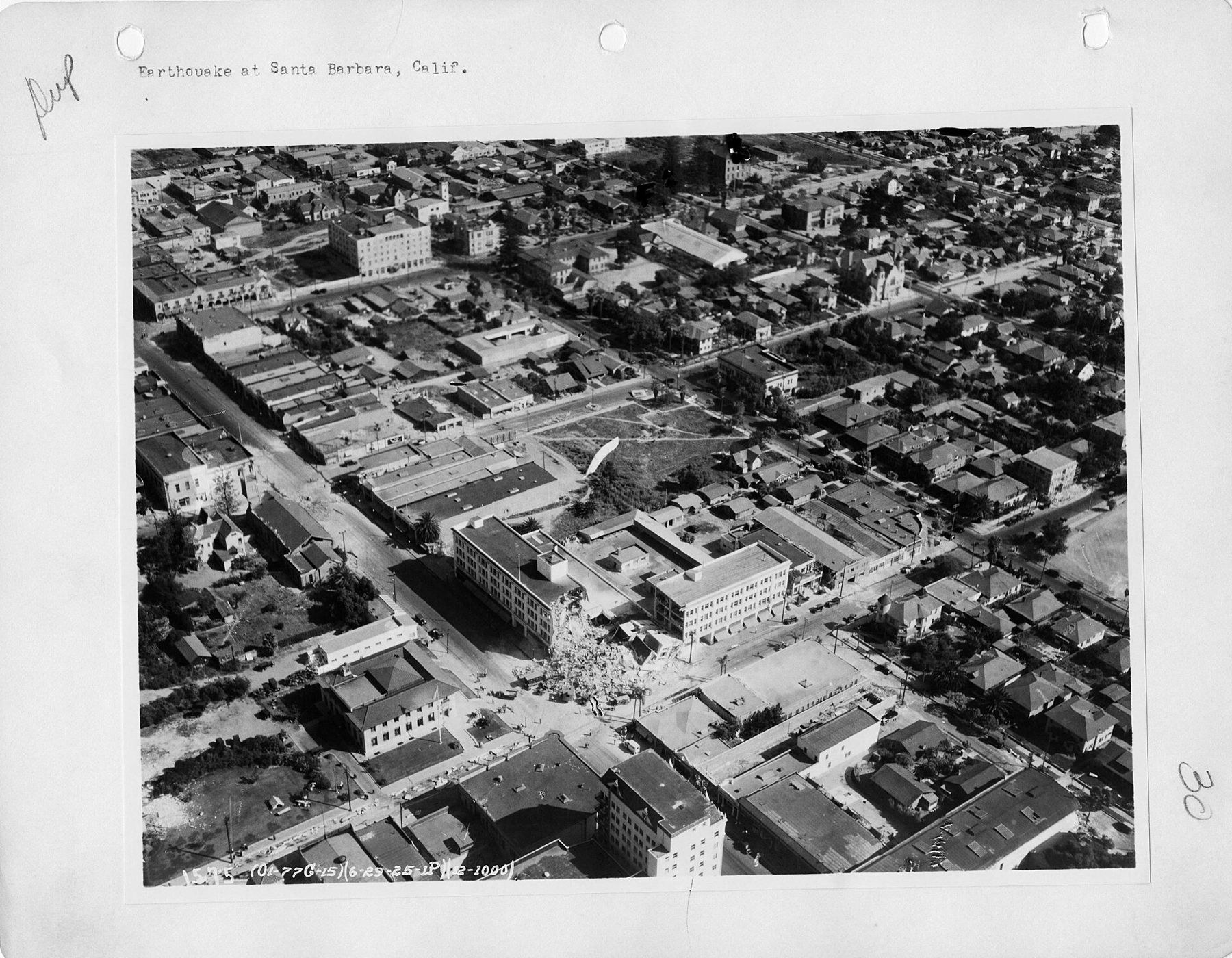
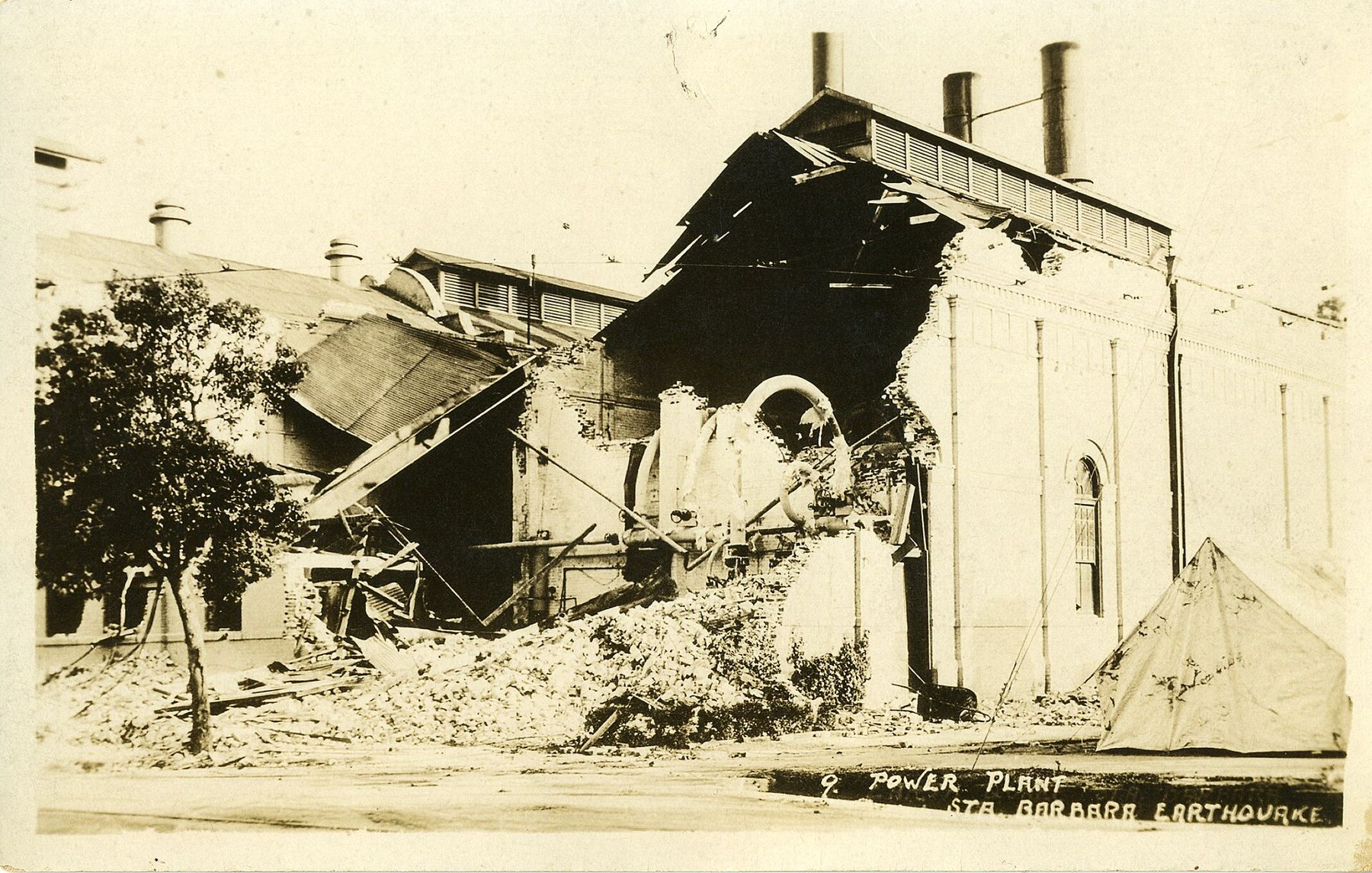
The earthquake struck at about 6:44 a.m. It lasted only seconds, but the old downtown was poorly built for it. Unreinforced brick buildings were the worst hit. Front walls peeled off and fell into State Street, leaving rooms open to the air like doll's houses. Parapets and cornices collapsed onto the sidewalks. Hotels and churches cracked or partly fell.
The timing helped. At that hour few people were in the shops and offices that suffered most, and thirteen people were killed. A worse hour could have killed many more.
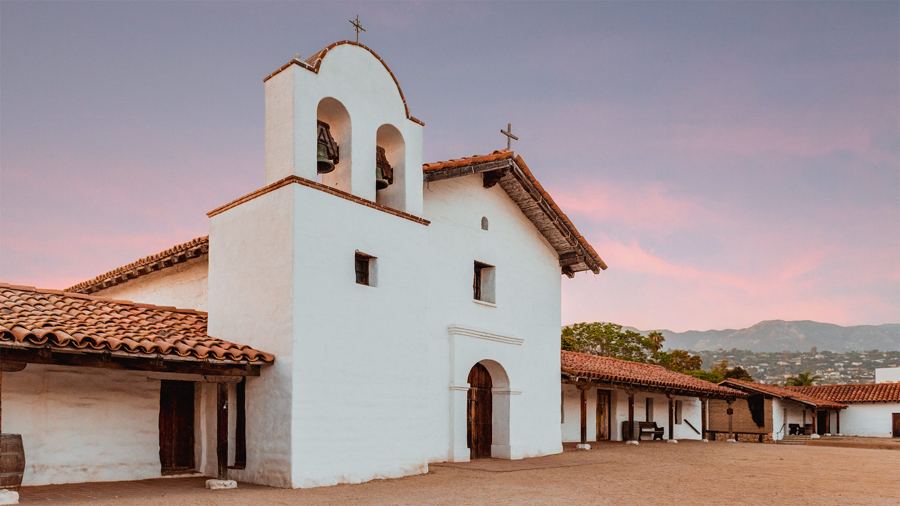
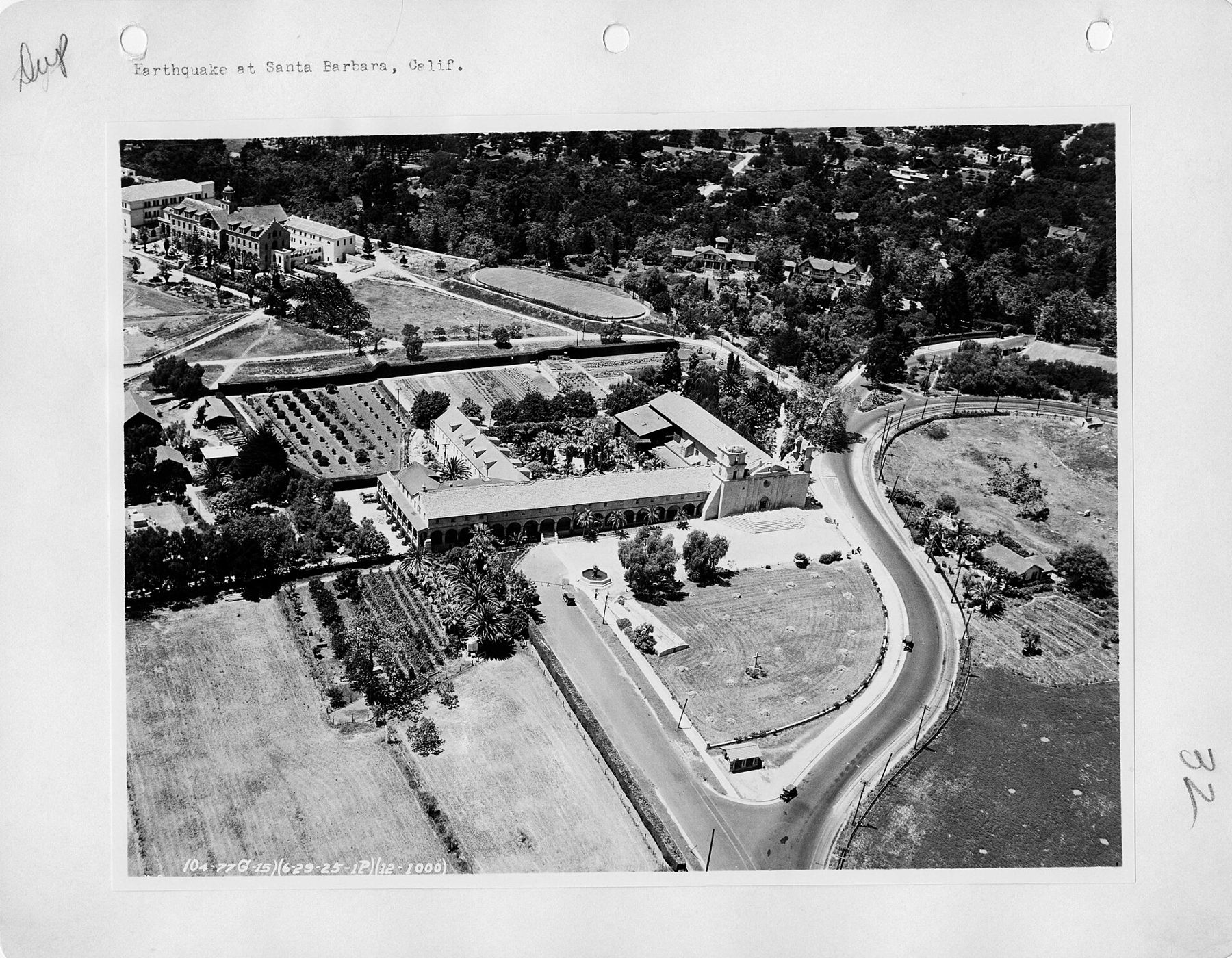
Above the town, the Sheffield Dam failed and released its reservoir, which swept down through the eastern part of the city toward the beach. The Arlington Hotel, a large Victorian resort on State Street, was badly wrecked. At the Mission, the towers and the front of the church were damaged.
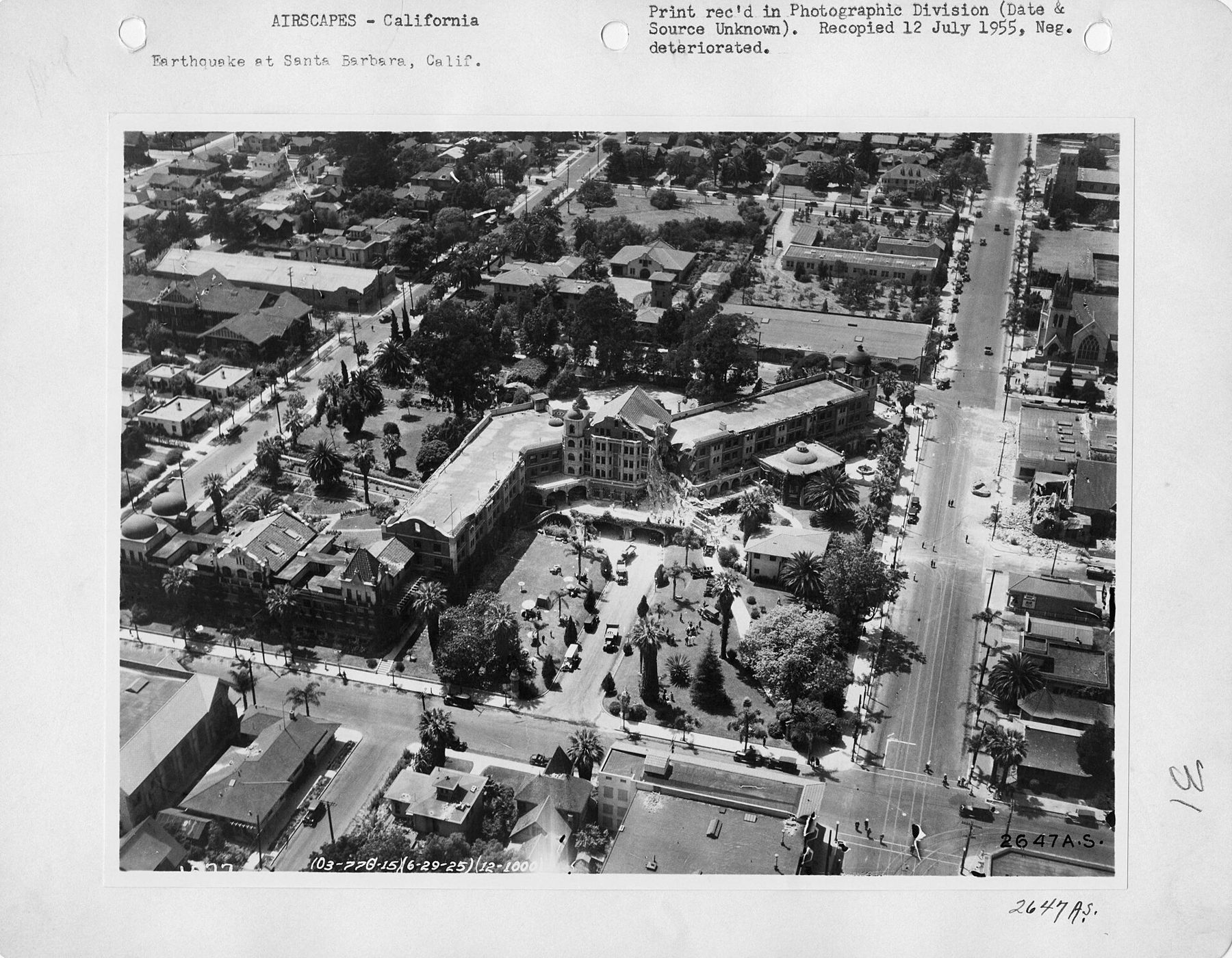
Photographers went up in aircraft the same day. Their pictures show a town still mostly standing, but with damage scattered through the downtown blocks: a collapsed corner here, a heap of rubble across a sidewalk there, and crowds standing in the streets.
A town that had already been arguing
What happened next only makes sense if you know that Santa Barbara had been debating its own appearance for years. In the early 1920s a group of residents, many of them working through the Community Arts Association, had begun to argue that the town should build on its Spanish and Mexican past rather than imitate everywhere else.
The most persistent of them was Pearl Chase, a civic organizer who spent her life on the city's looks: trees, parks, signs, buildings. She chaired the Plans and Planting Committee of the Community Arts Association and used it to push for coherent, Spanish-inspired design. She was not an architect. She was something more useful, a person who went to every meeting.
The town was also learning to celebrate the same past in public. In 1924, the year before the earthquake, Santa Barbara held its first Old Spanish Days, a summer festival of parades, music and dancing drawn from the Spanish and Mexican era. The architecture and the fiesta grew from the same impulse: to give a resort town of mostly American newcomers a story about where it came from.
There were already examples to point to. Bernhard and Irene Hoffmann had restored Casa de la Guerra, the old adobe home of the presidio commander, and built El Paseo next to it, a set of arcaded shopping lanes designed largely by James Osborne Craig. The new Lobero Theatre, by George Washington Smith with Lutah Maria Riggs, opened in 1924. Both showed that a new building in an old Spanish manner could be practical as well as handsome. 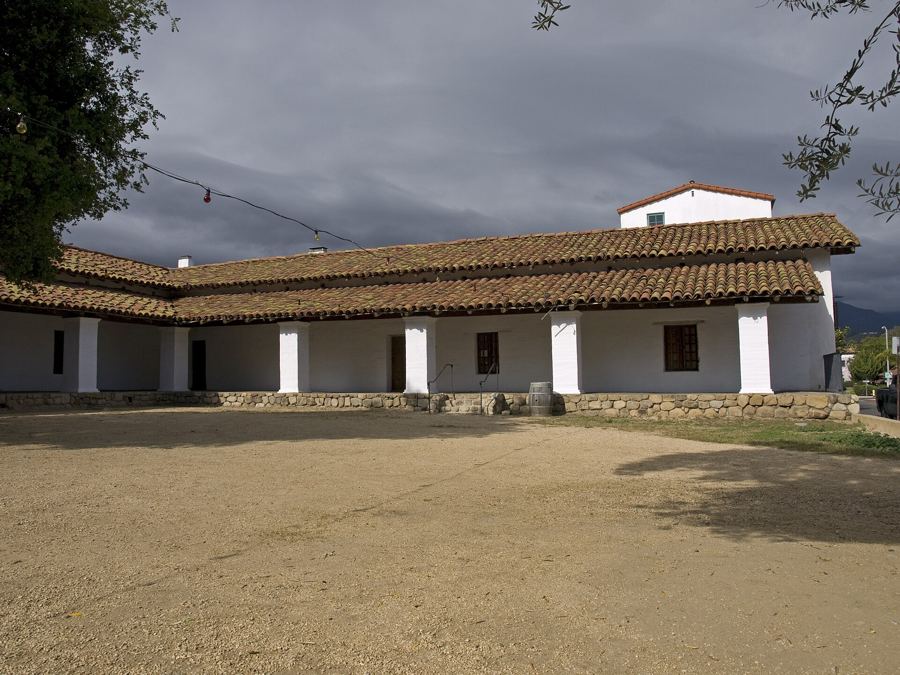 Also on Presidio PostThe Red Tile walk, stop by stop
Rebuilding with rules
The earthquake gave the reformers their chance. Within weeks the city had a large part of its main street to rebuild, and they were ready with a plan. The city created an architectural board of review with the power to approve the design of new buildings, one of the first of its kind in the United States. Alongside it, a community drafting room offered owners free design help, so that a merchant who could not afford an architect could still get a facade in the approved style.
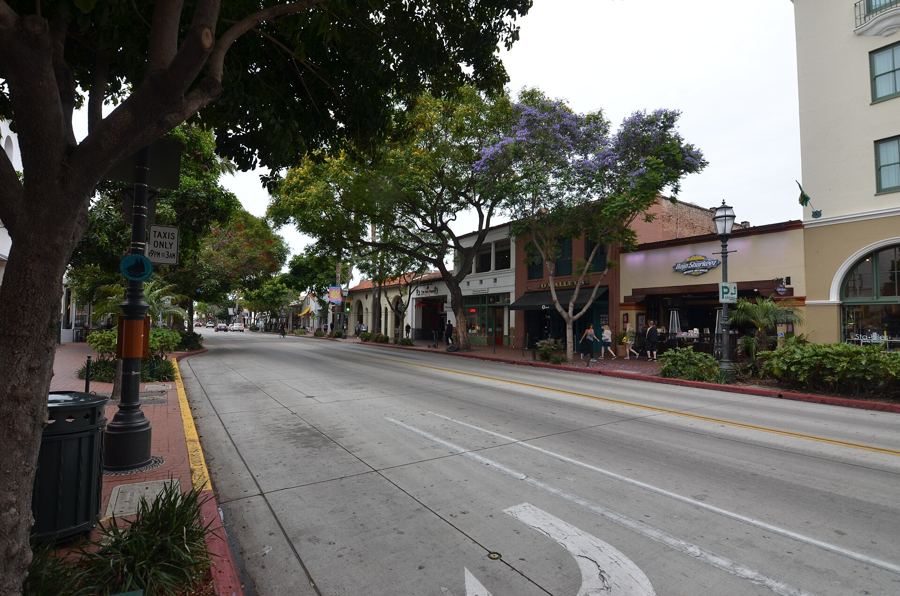
The guidance was simple: white or light walls, red tile roofs, arches and arcades, wrought iron, balconies and courtyards. The results were fast. Within a couple of years State Street had been transformed, block by block, into something close to what you see today.
The board itself did not last. It was abolished within about a year, as opposition to the rules grew. But the work it had approved stayed built, and the idea stayed alive. Decades later the city returned to formal design review, and the old downtown is still governed by it.
The earthquake did not make Santa Barbara Spanish by itself.
The earthquake did not make Santa Barbara Spanish by itself.
What it did was clear the ground at the exact moment a group of people had a vision, a set of examples and the political will to impose them.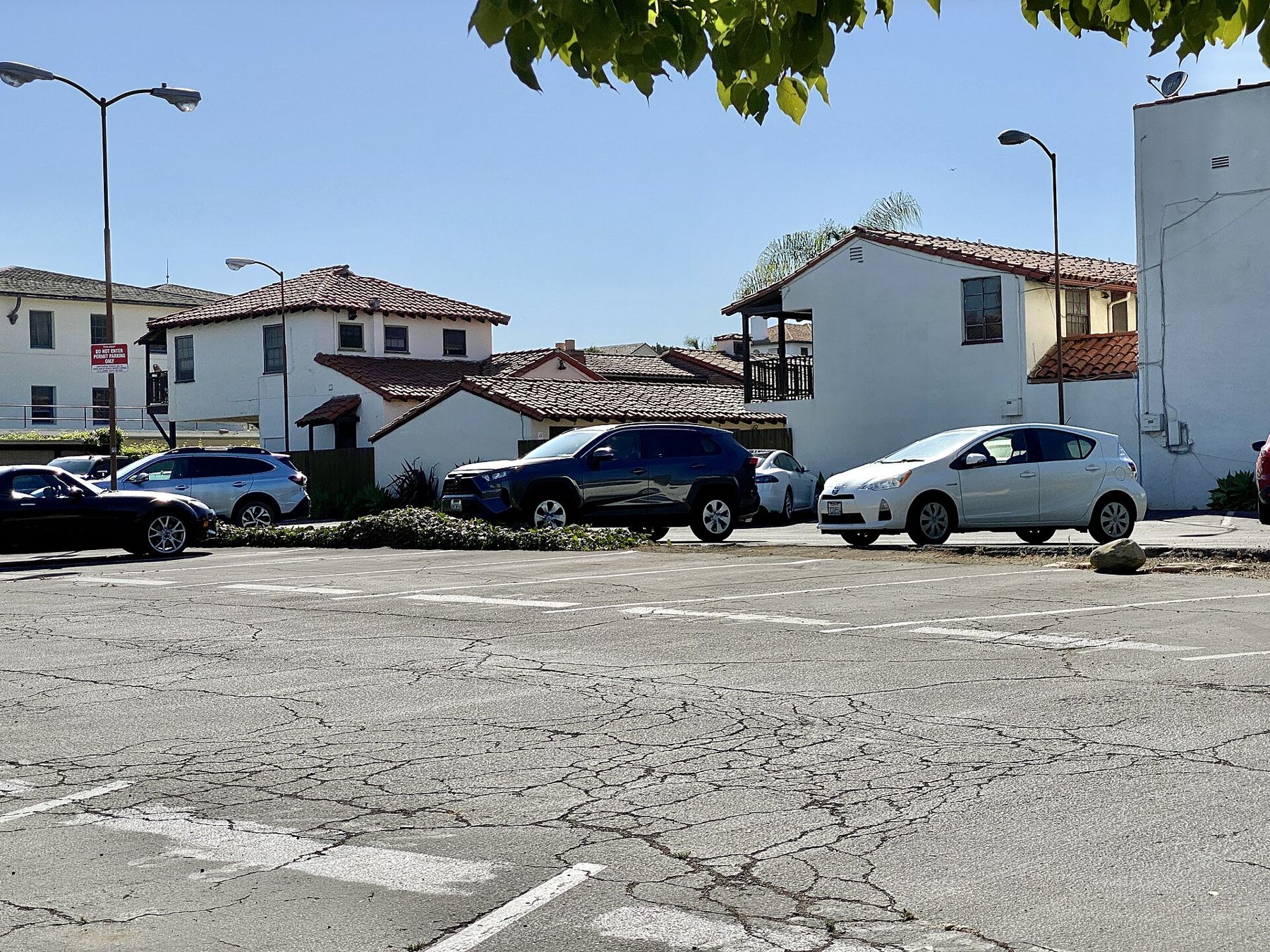
The buildings that rose
The architects who did the most to shape the look of the rebuilt town were mostly local, or became so. George Washington Smith, who had trained as a painter and turned to architecture, designed houses and public buildings in a pared-back Andalusian manner, with plain white walls and few, carefully placed details. Lutah Maria Riggs worked in his office for years and went on to her own long career. Carleton Winslow, William Edwards and Joseph Plunkett all left buildings across downtown. Their work set a standard that later builders tried to match.
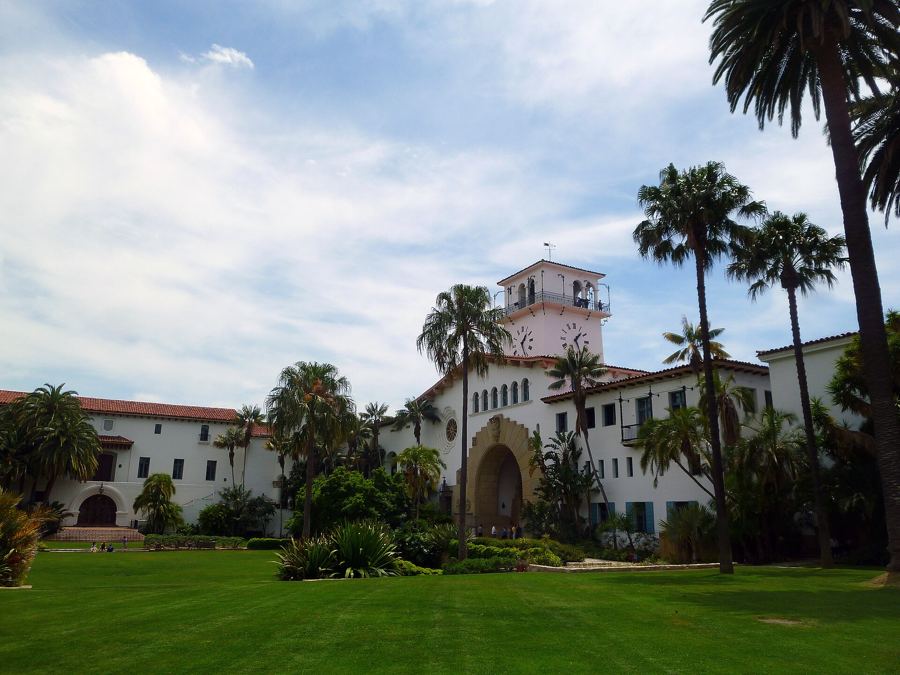
The new courthouse is the grandest product of the rebuilding. The county replaced its ruined Greek Revival building with a complex designed by William Mooser III, finished in 1929, with a great arch, a sunken garden and a clock tower. It became the model civic building of the new city.
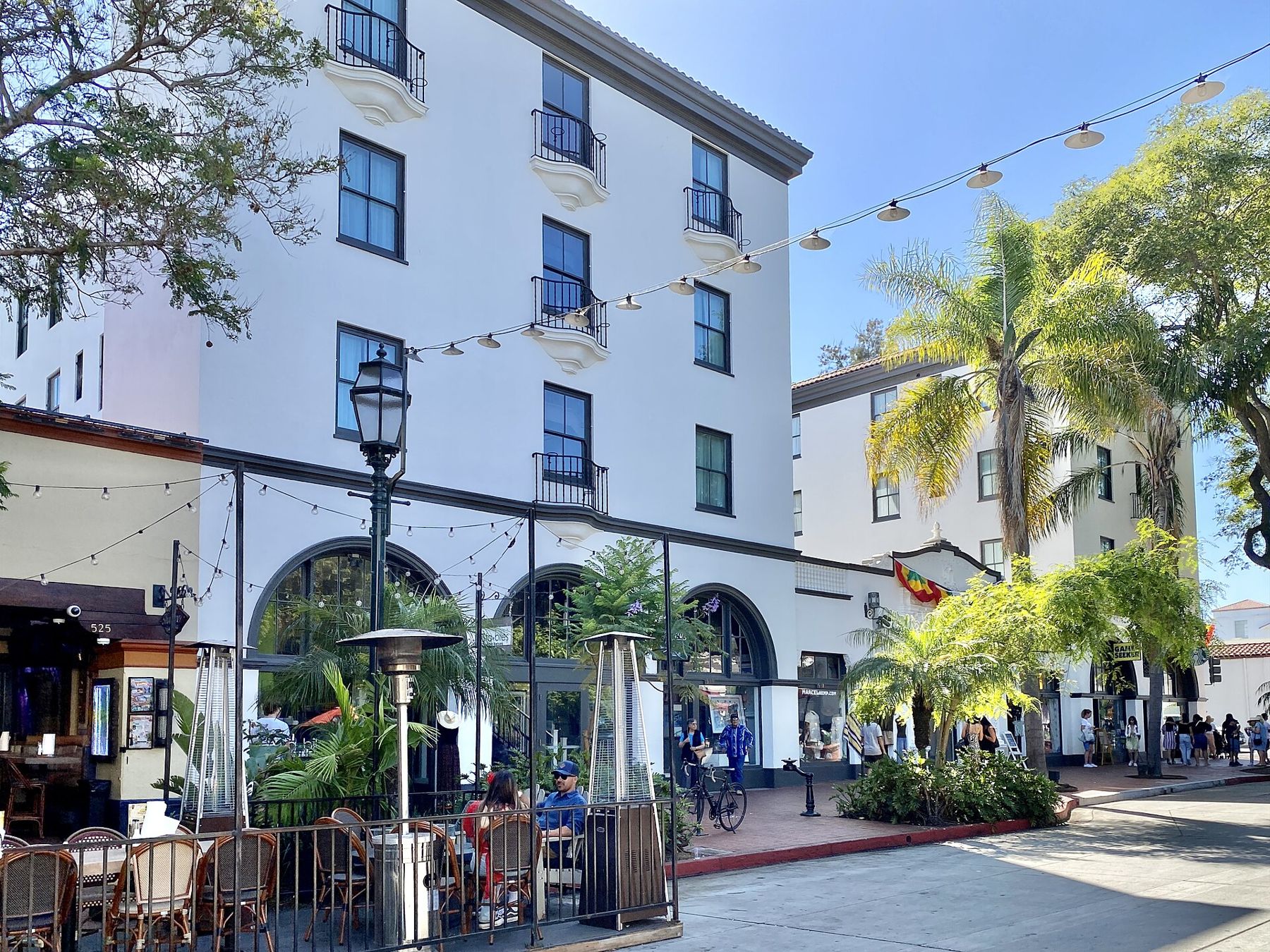
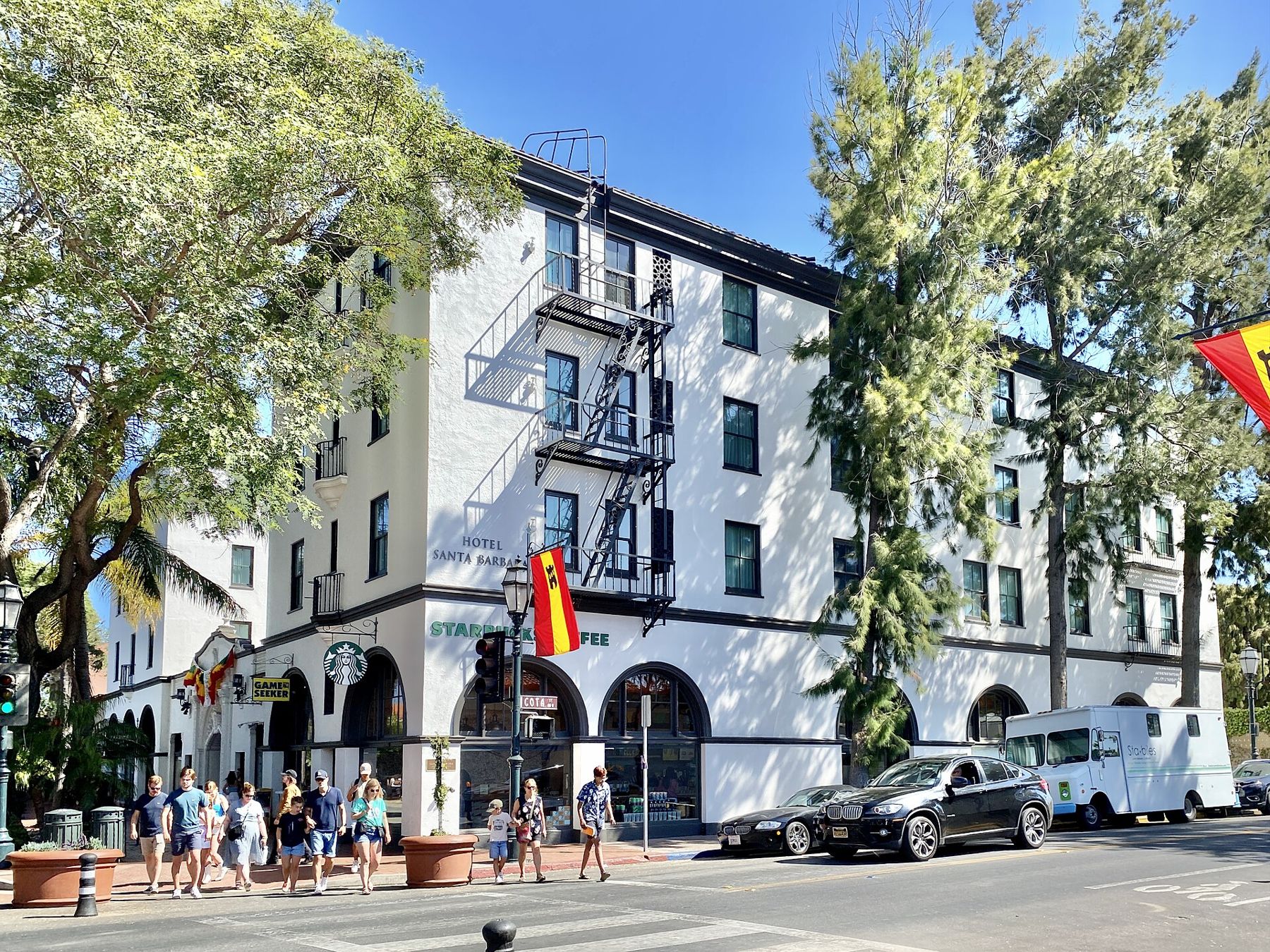
On the site of the destroyed Arlington Hotel rose the Arlington Theatre, which opened in 1931 as a movie palace whose interior is painted as a Spanish village under a starry sky. Hotels and shops along State Street were rebuilt with arcades and towers. The Hotel Santa Barbara, at State and Cota, was rebuilt in 1926 on the site of an older hotel the earthquake destroyed.
The Mission was repaired too, with its towers rebuilt soon after the quake. Those repairs used concrete that later began to fail, and in the early 1950s the facade and towers were rebuilt again. What you see on the hill today dates from that second rebuilding.
What you can see today
Walk down State Street and you are walking through the result. The arcades, the tiled roofs, the courtyards opening off the sidewalk, the near-total absence of glass towers: all of it follows from the decisions made after June 1925 and from the rules that have kept them in force.
The best place to see it whole is from the top of the Courthouse clock tower, where the red roofs run away in every direction. Then come down and look closely. Some buildings are genuine 1920s work by the architects who defined the style. Others are later, built to fit. A few survivors from before the quake hide behind newer fronts.
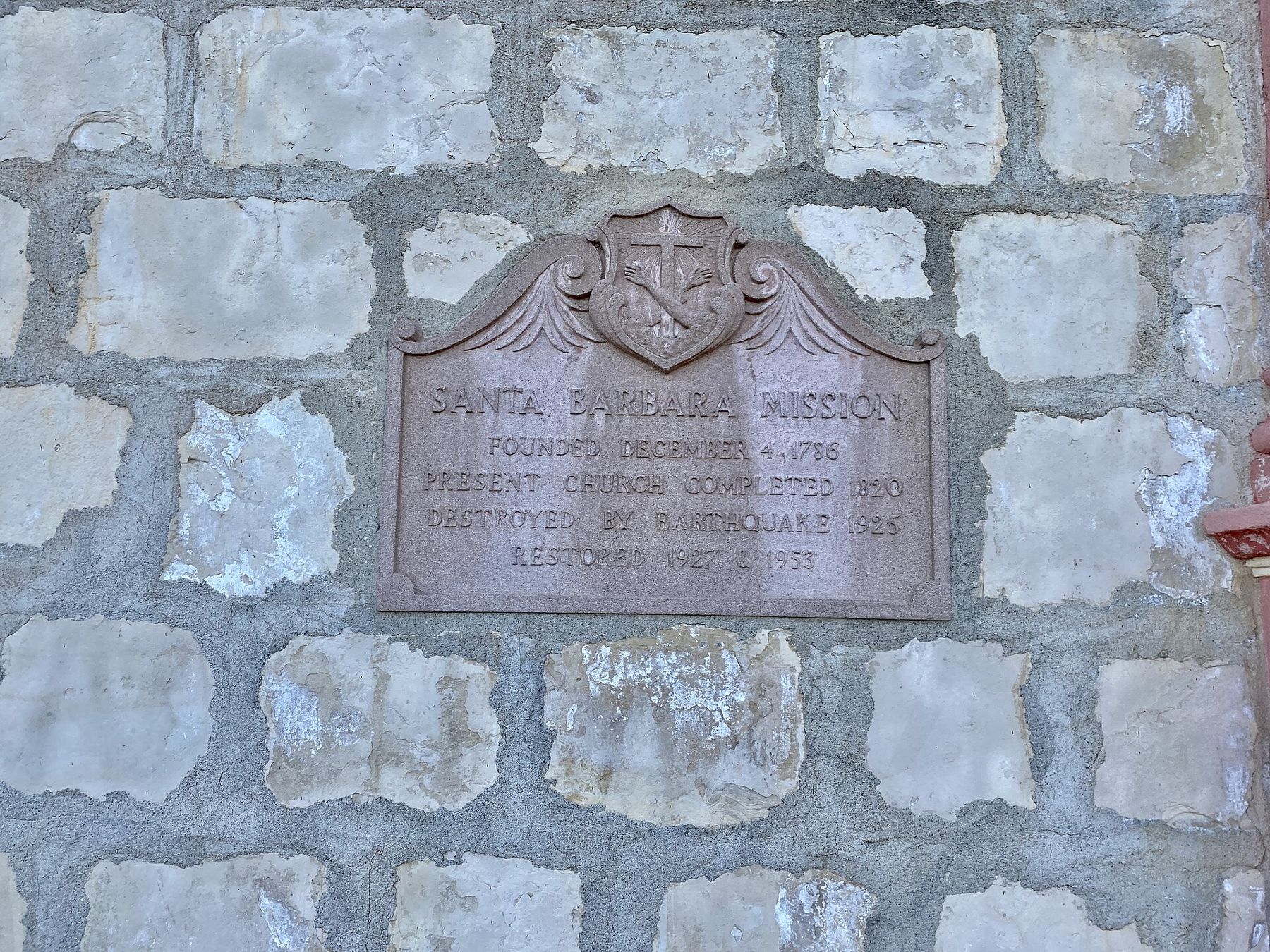
At Mission Santa Barbara, a plaque by the church records the damage of 1925 and the rebuildings that followed. On State Street, look up above the shopfronts for the dates and details of the rebuilding years. And on the Courthouse lawn, picture the domed building that stood there before.
The rules can still be felt in small things. Shop signs downtown are modest, often painted or carved rather than lit. Building heights are kept low, which is why the Granada Theatre, finished in 1924, still stands out. New buildings, even large ones, are broken into smaller masses with courtyards and arcades. Arguments over a new project's design are a regular part of local politics, and they are often fought in terms that Pearl Chase would have recognized.
The town that rose after 1925 was, in a sense, an invention: a Spanish city designed largely by Americans in the 1920s. It has now been standing long enough to become its own history, and every new building downtown still has to answer to it.