- Arlington TheatreA 1931 movie palace on the old hotel site
- Granada TheatreThe 1924 tower that long ruled the skyline
- Santa Barbara Museum of ArtArt in the old post office building
- La ArcadaA tiled 1920s courtyard lane off State
- El PaseoThe arcaded lanes that set the town's style
- Paseo NuevoAn open-air shopping center from 1990
- Moreton Bay Fig TreeA giant fig planted in the 1870s
- Stearns WharfThe 1872 wharf at the foot of State
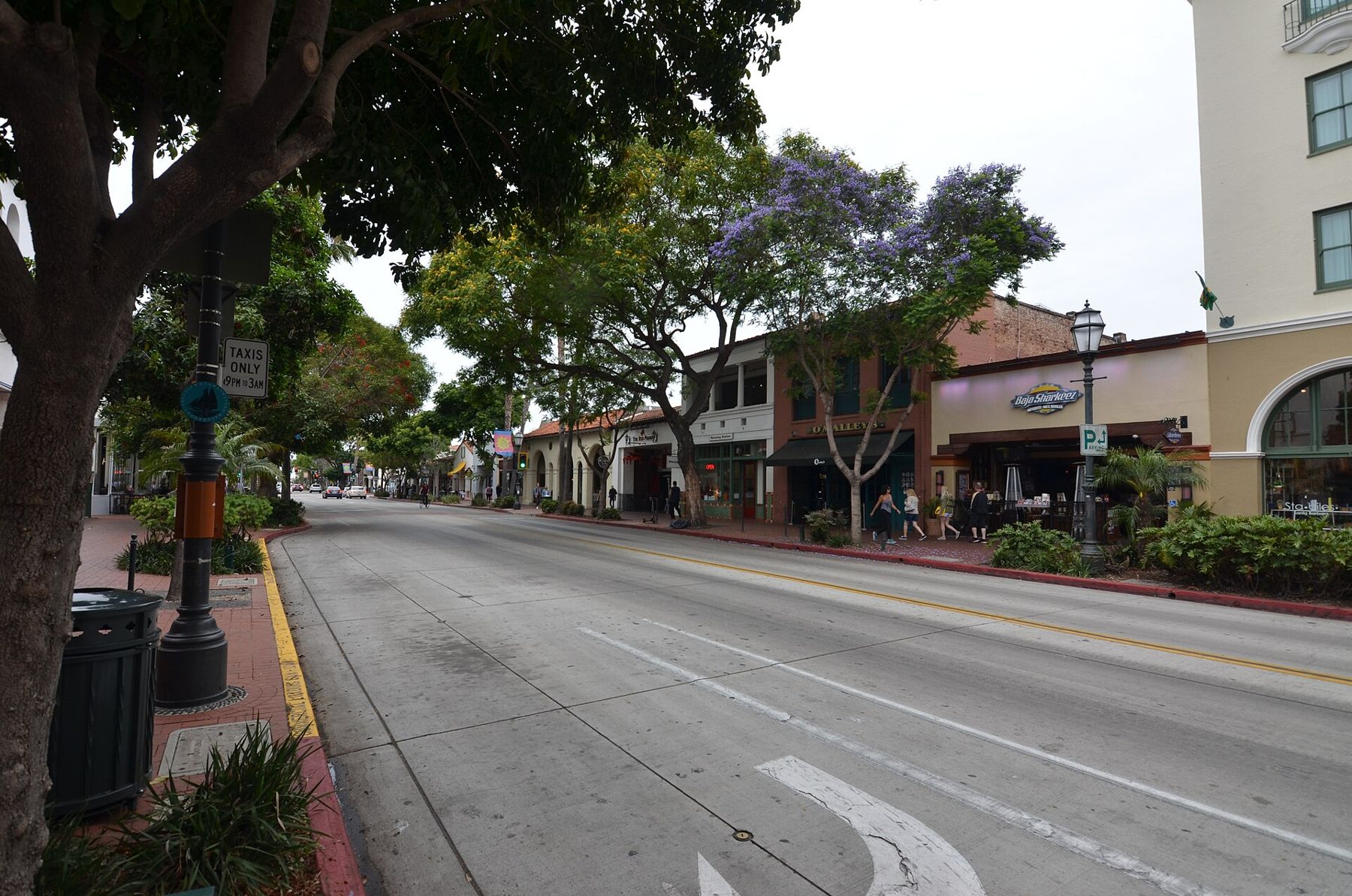
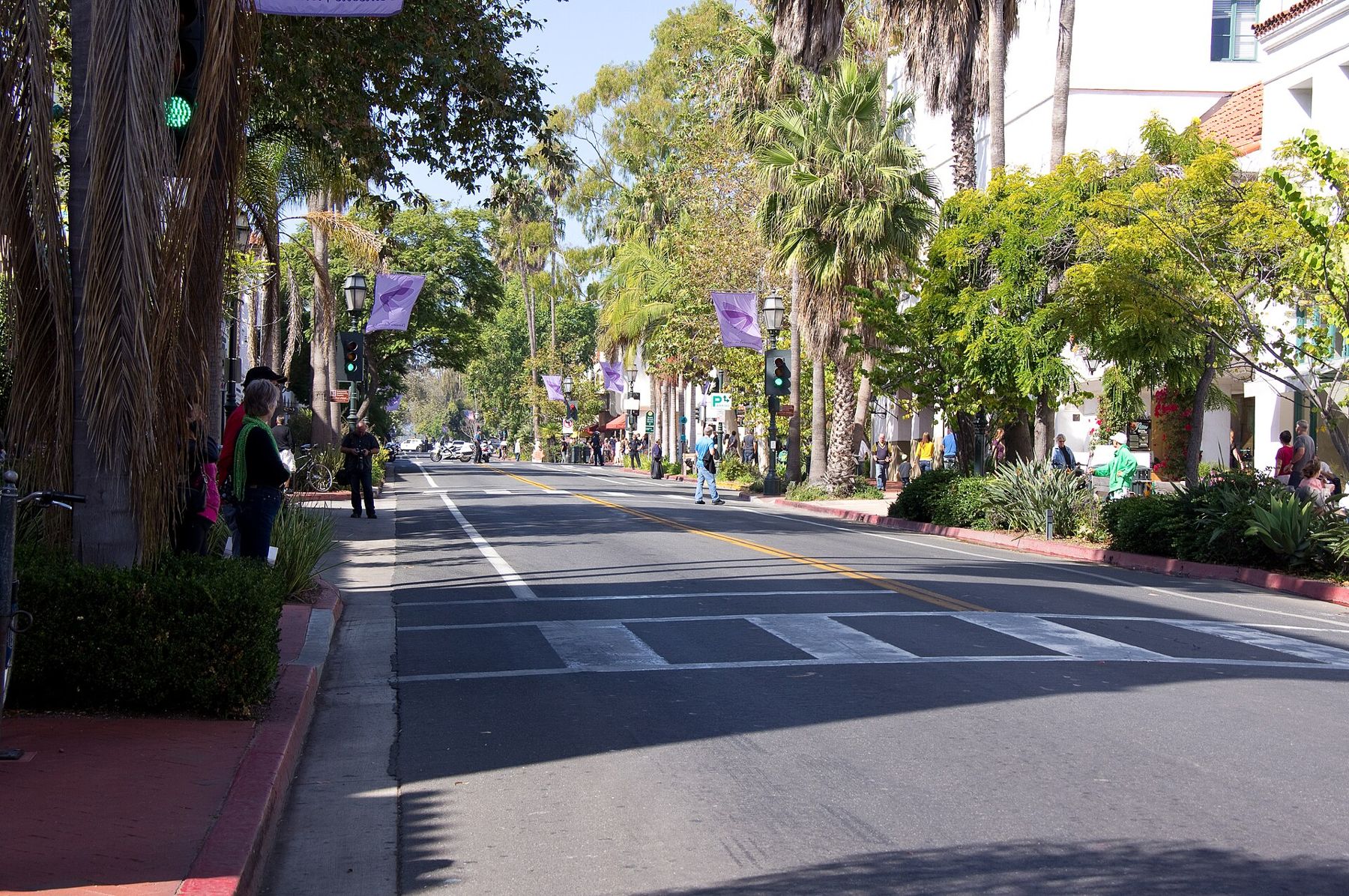
State Street is a straight line drawn from the mountains to the sea. Stand at its upper end downtown and look south, and the street falls gently away between the arcades and jacaranda trees until it meets a strip of blue at the bottom. Turn around and the Santa Ynez Mountains fill the other end. The town grew along that line, and walking it from top to bottom is the simplest way to understand the place.
The street has changed more since 2020 than in the previous half century. In the spring of that year the city closed the downtown blocks to cars so restaurants could set tables in the roadway. The closure outlasted the emergency, and the long middle of State Street became a promenade for walking, cycling and eating. How it should look permanently is still being worked out, block by block, so expect to find some things different from one visit to the next.
This walk starts at the Arlington Theatre and ends at the end of Stearns Wharf, about a mile and a half, all downhill.
Arlington Theatre
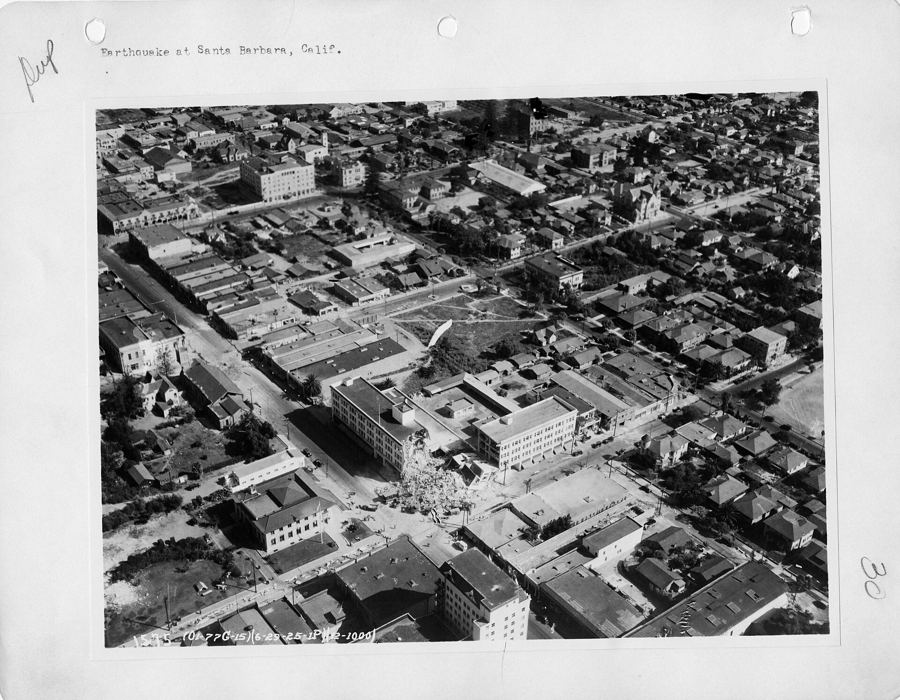
Begin in the 1300 block at the Arlington Theatre, whose tall tower and forecourt stand back from the sidewalk. It opened in 1931 as a movie palace, designed by the Santa Barbara firm of Edwards and Plunkett, on the site of the Arlington Hotel, a Victorian resort wrecked in the 1925 earthquake.
The inside is the surprise. The auditorium is painted to look like a Spanish village at night, with house fronts, balconies and tile roofs along the side walls and a dark blue ceiling scattered with stars. It still shows films and hosts concerts and the film festival. If the doors are open, look into the forecourt and its tiled entrance.
Granada Theatre
Walk a block south and cross Anapamu Street. On the corner rises the Granada, an eight-storey building of 1924 that was for decades the tallest in town. Its height is a reminder of why the city later set limits: one tower was enough.
The Granada began as a theatre and office building, and after a long decline it was restored and reopened in 2008 as a performing arts center. The vertical sign on the corner lights up at night. Programs and ticket prices change through the season.
Santa Barbara Museum of Art
Across Anapamu is the Santa Barbara Museum of Art, housed since 1941 in what was the city's main post office. The front steps facing State Street are a favorite place to sit and watch the street, and the museum's collections run from classical antiquities to Asian art, American painting and photography.
It is the best place downtown to spend a hot or rainy hour. Admission, free days and hours change, so check before you go. Just behind it, on Anapamu, is the public library, whose courtyard is one of the quieter spots in the area.
La Arcada
A few steps further south, on the east side of the 1100 block, a covered passage leads off State Street into La Arcada. This is a courtyard lane of shops and restaurants built in the 1920s, with a red tile roof, a clock, fountains and a scattering of bronze sculptures, some of them quite playful.
La Arcada runs through to Figueroa Street, and from its far end it is a short walk to the Courthouse. It is the kind of space the city's 1920s planners wanted everywhere: private shops arranged around a public outdoor room.
El Paseo
Continue south past Carrillo and Canon Perdido. In the 800 block, on the east side near De la Guerra Street, look for the entrances to El Paseo, a set of arcaded lanes and courtyards built in the early 1920s around the old adobe Casa de la Guerra.
El Paseo set the pattern for the rebuilding that followed the 1925 earthquake, and it still has the best stairways, balconies and quiet corners on the street. Walk through to De la Guerra Plaza and City Hall. Our Red Tile walk covers this part of town in more detail. 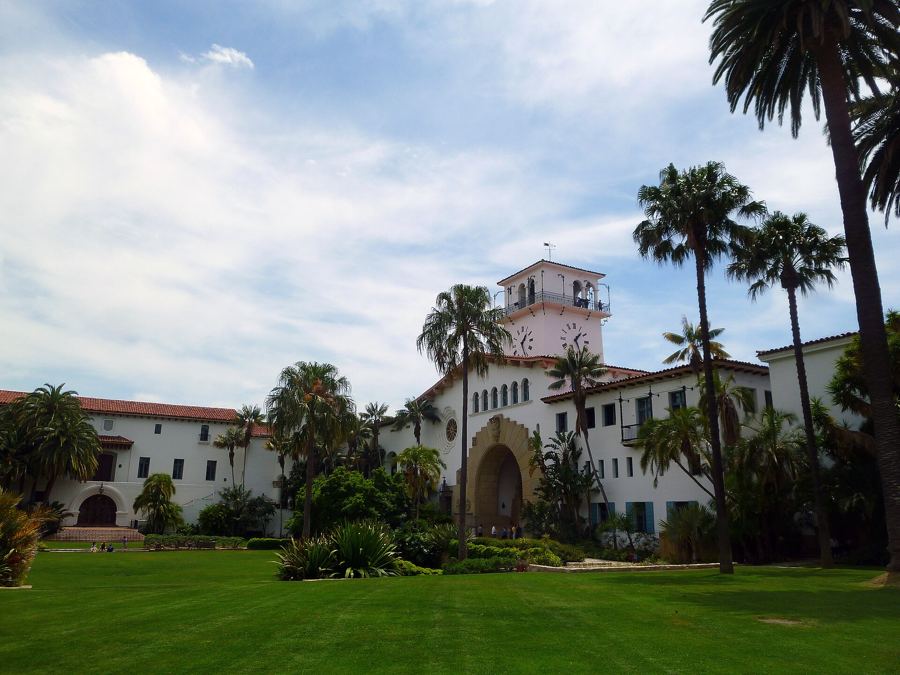 Also on Presidio PostUp the Courthouse clock tower
Paseo Nuevo
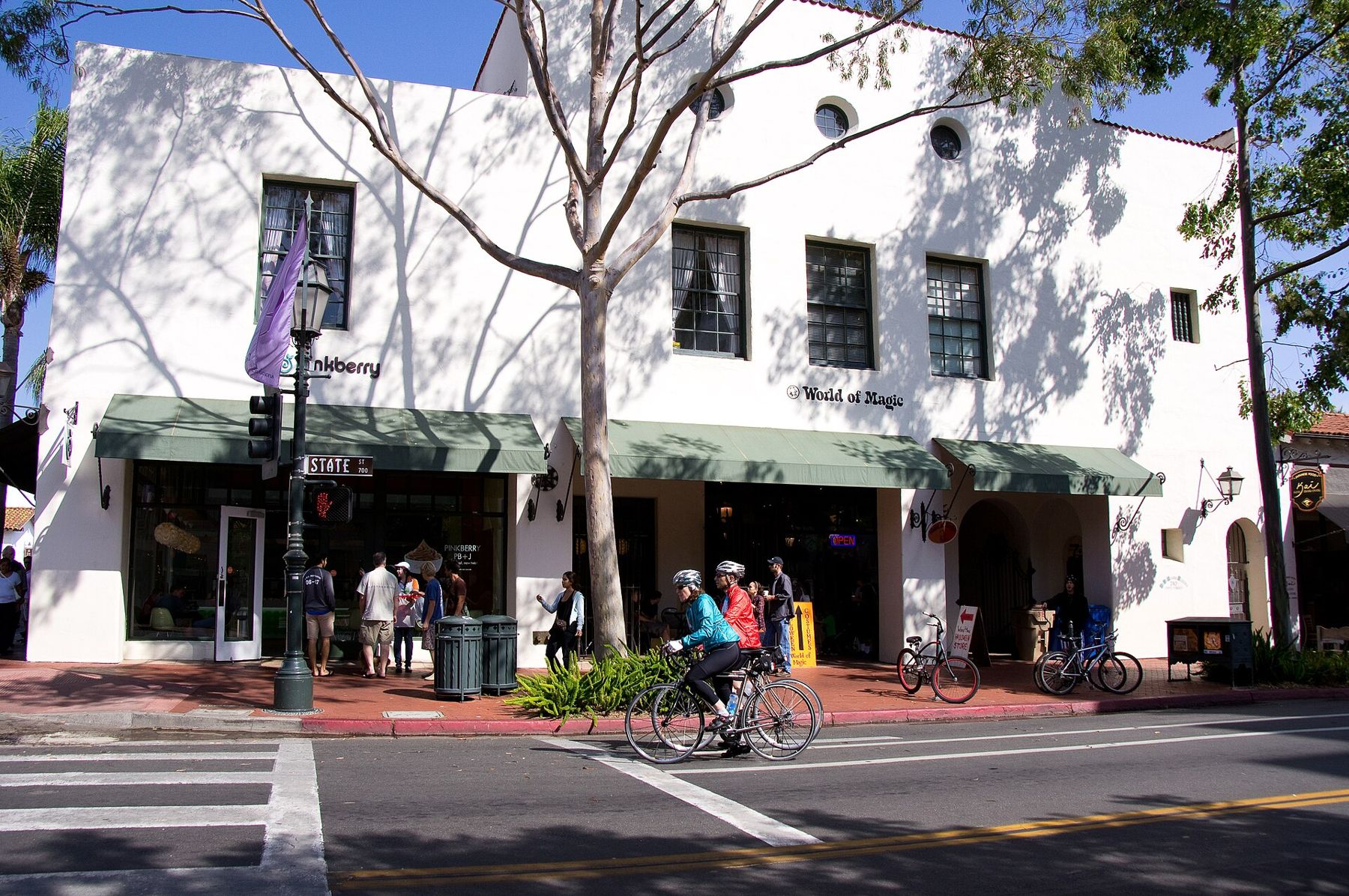
Across State Street in the 600 and 700 blocks is Paseo Nuevo, an open-air shopping center that opened in 1990. It was designed to fit the rules of the old downtown, with white walls, tiled roofs, fountains and passages open to the sky, and it is a fair example of how the 1920s style was carried into late twentieth-century building.
Inside the center is a small theatre. The stores and anchors have changed more than once since it opened, and the area's future has been part of the wider discussion of the promenade.
Moreton Bay Fig Tree
Below Ortega and Cota the shops thin out. The street passes under the freeway and crosses the railway, and the mood changes. A block west of State, at Chapala and Montecito streets beside the train station, stands the Moreton Bay Fig, planted in the 1870s and now among the largest of its kind in the country. Its branches spread so wide that they have needed support, and its roots run across the ground in great buttresses.
East of State here is the Funk Zone, the old warehouse district of tasting rooms, galleries and murals. Lower State Street also holds MOXI, the Wolf Museum of Exploration and Innovation, a hands-on science museum for families that opened in 2017.
Stearns Wharf
At the bottom, State Street meets Cabrillo Boulevard and runs straight out onto Stearns Wharf, built in 1872 by John Peck Stearns and the oldest working wharf in California. Walk to the end over the old planks. Look back from there: the whole street you just walked is laid out in a straight line, rising from the beach to the theatres and the mountains behind. More on the wharf is in our story Stearns Wharf, end to end.
The practical part
The walk is about a mile and a half from the Arlington to the end of the wharf and is downhill all the way, so it is easiest done in this direction. Allow an hour without stops. With the museum, a coffee and a look around La Arcada and El Paseo it fills half a day.
The car-free blocks change. The promenade has been rearranged several times since 2020, and the city has been working on a long-term plan for the street, so parts of the layout, the bike lanes and the outdoor dining may differ from what is described here. Cyclists share the promenade, so keep to one side when you stop.
Parking downtown is mostly in city lots a block off State Street, with rates and free periods that change. To get back uphill without walking, the downtown and waterfront shuttle and city buses run along or near State Street; routes and schedules change, so check before you rely on them. Our guide to getting around without a car has more.
Bring water on a warm day. The upper blocks are well shaded by street trees and arcades, but the lower stretch below the freeway is more open, and the wharf has little shade at all. Public restrooms can be found in the city parking lots near State Street and on the wharf.
Go at the end of the afternoon if you can. By the time you reach the wharf the sun is low over the Mesa, the water has gone gold, and the lights are coming on all the way back up the street.