The first sound on Stearns Wharf in the morning is not the gulls. It is a car rolling off Cabrillo Boulevard onto the planks, a low wooden drumroll that travels out over the water ahead of it. Pelicans on the rail lift their heads, decide it is nothing, and go back to watching the sea. Below the deck, the pilings stand in the swell like a forest that has waded in up to its knees.
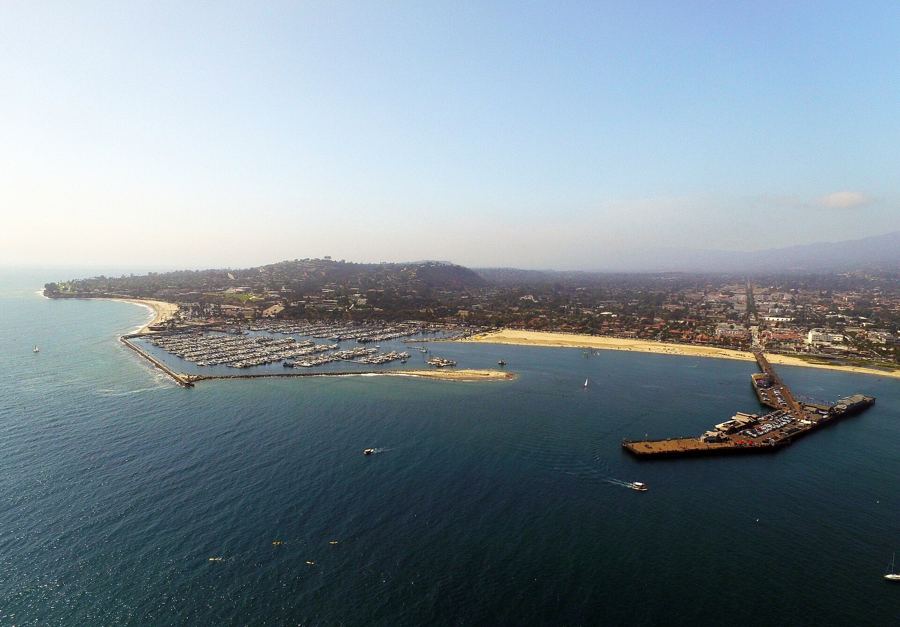
Santa Barbara has prettier places, but none that explains the town so quickly. The wharf runs straight out from the foot of State Street into the channel, and at its end the city turns around to face you: the beach, the palms, the red roofs, and the wall of the Santa Ynez Mountains behind it all.
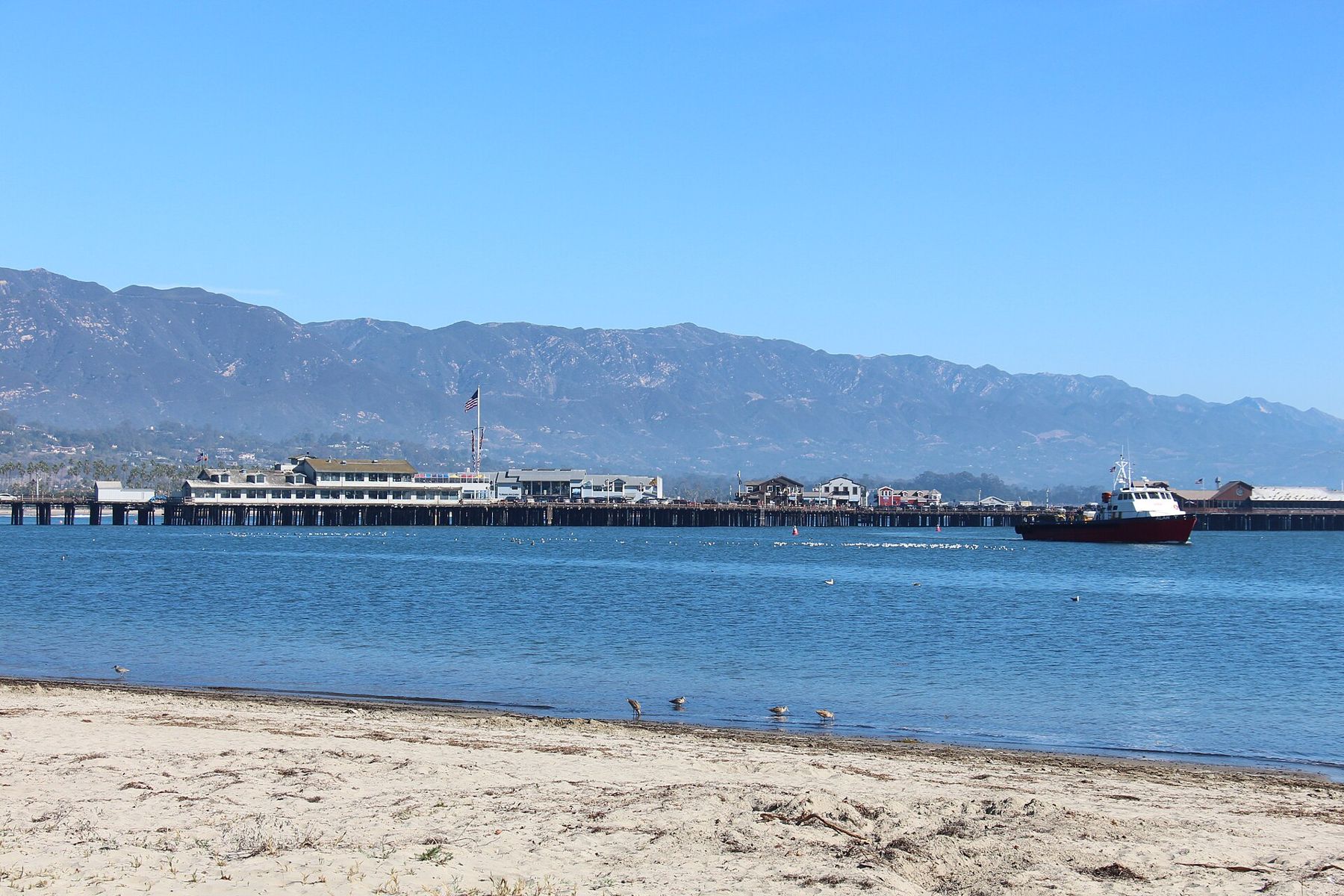
A wharf for a town without a harbor
For most of the nineteenth century, arriving in Santa Barbara by sea meant getting wet. The coast here has no natural harbor, only an open anchorage, and ships lay offshore while passengers and cargo came through the surf in small boats. In the rancho years, hides went out the same way, carried on men's heads through the breakers to the boats.
The beach was not empty before the boats came. The Chumash town of Syuxtun stood close to this shore, and its people launched plank canoes from the sand and paddled them across the channel to the islands, long before any European ship appeared offshore.
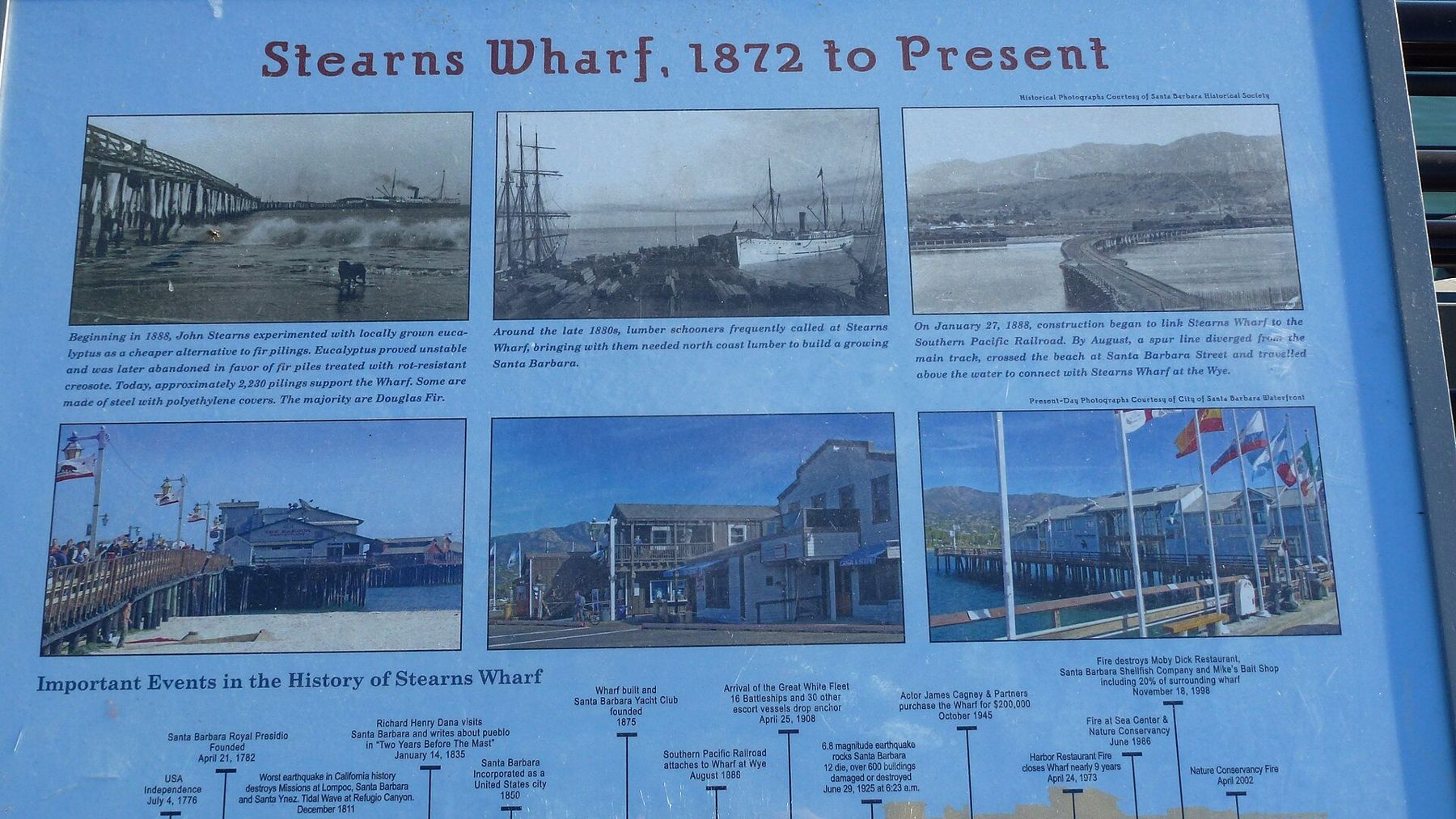
John Peck Stearns, a lumberman, changed that. He built the wharf in 1872, and for a time it was the longest deep-water pier between Los Angeles and San Francisco. Coastal steamers could tie up at its end. Lumber, freight and visitors came ashore dry, and the old adobe town began to fill with wooden buildings and the people who would open its first resort hotels.
The wharf's working life lasted about as long as the town had no other way in. When the railroad arrived from Los Angeles in 1887, freight moved to the rails, and the wharf slowly became what it is now: a place people walk out on for the walk. It is often called the oldest working wharf in California, a title it has earned less by surviving than by being rebuilt every time it did not.
Planks, tires and pelicans
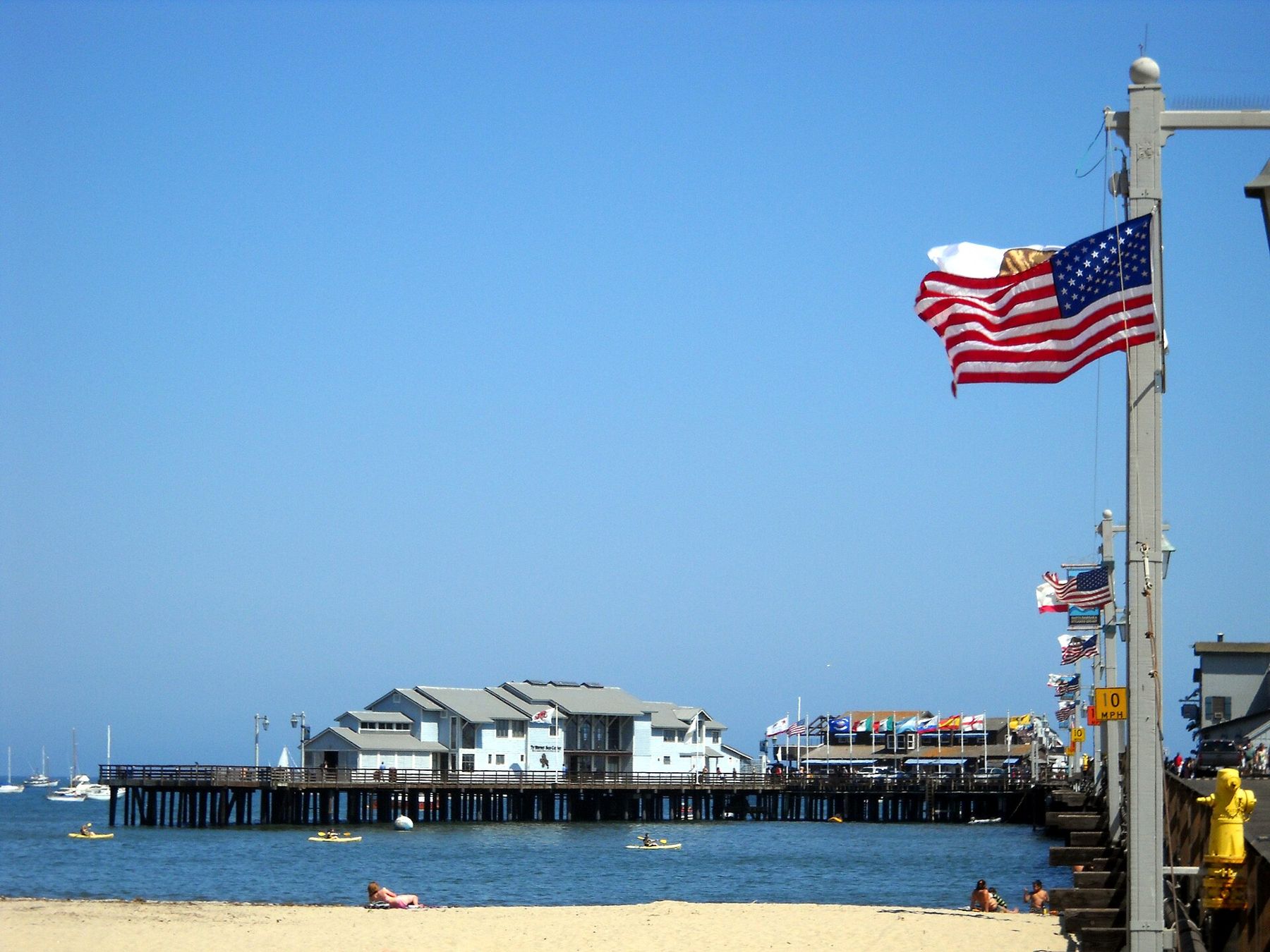
Most piers in California keep cars off. This one lets them on. You can drive the length of the deck at walking pace and park on the wharf itself, which feels faintly wrong the first time and then turns out to be very useful with small children, beach chairs or a grandparent who would rather not walk. Parking rules, time limits and fees change, and the signs at the entrance give the current ones.
On foot, the wharf rewards going slowly. The deck is wide, the boards are worn silver, and the rails are lined with people fishing. California does not require a fishing license on a public pier, so the anglers range from regulars with coolers and carts to families sharing one borrowed rod. Mackerel come up flashing in the sun; so do a great many small fish that go straight back.
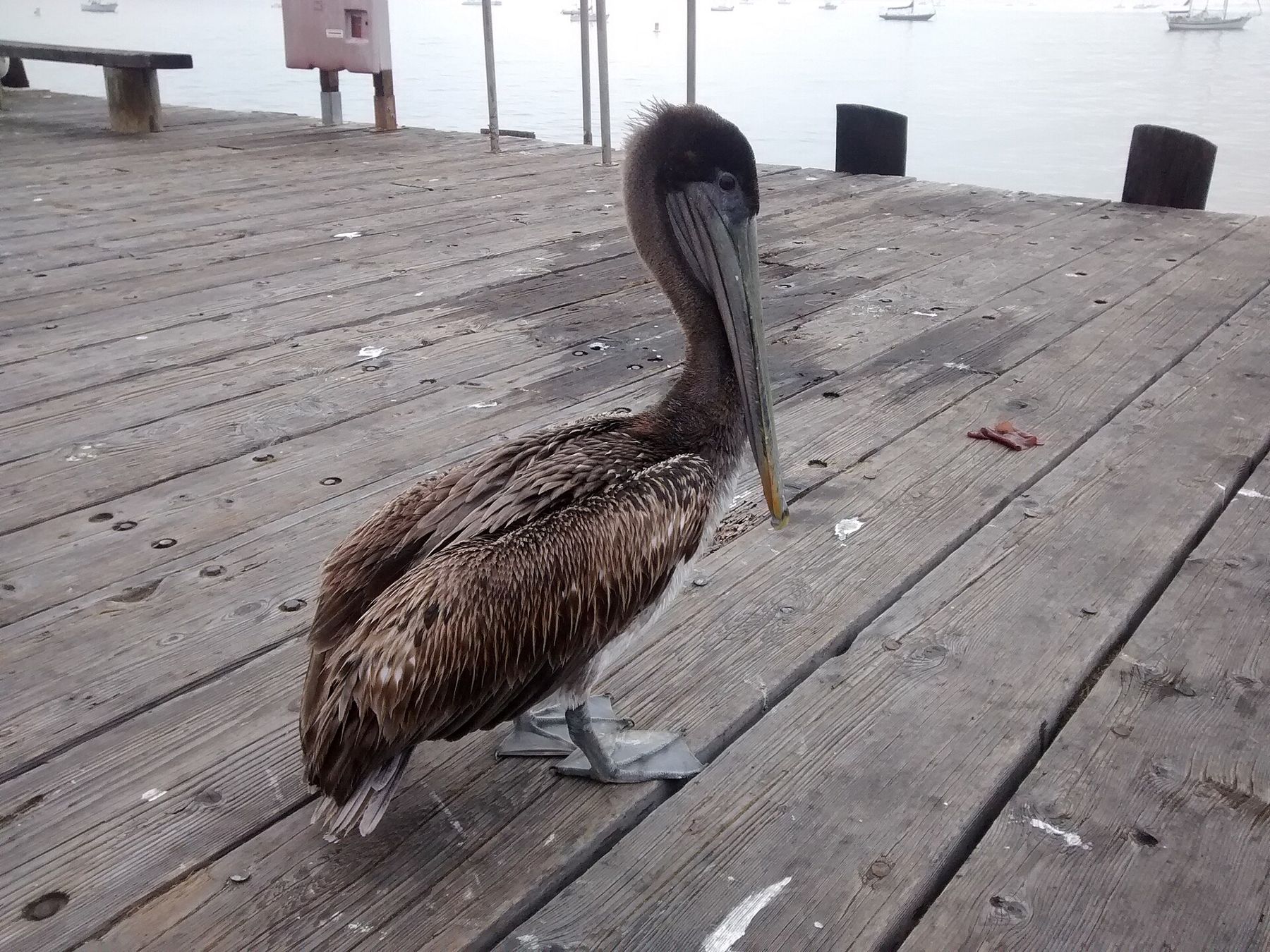
The pelicans know all of this. Brown pelicans work the wharf for much of the year, standing on the rail within arm's length of the lines and waiting, with great patience and no shame at all, for scraps. Do not feed them. A pelican that learns to hang around fishing lines is a pelican that ends up hooked.
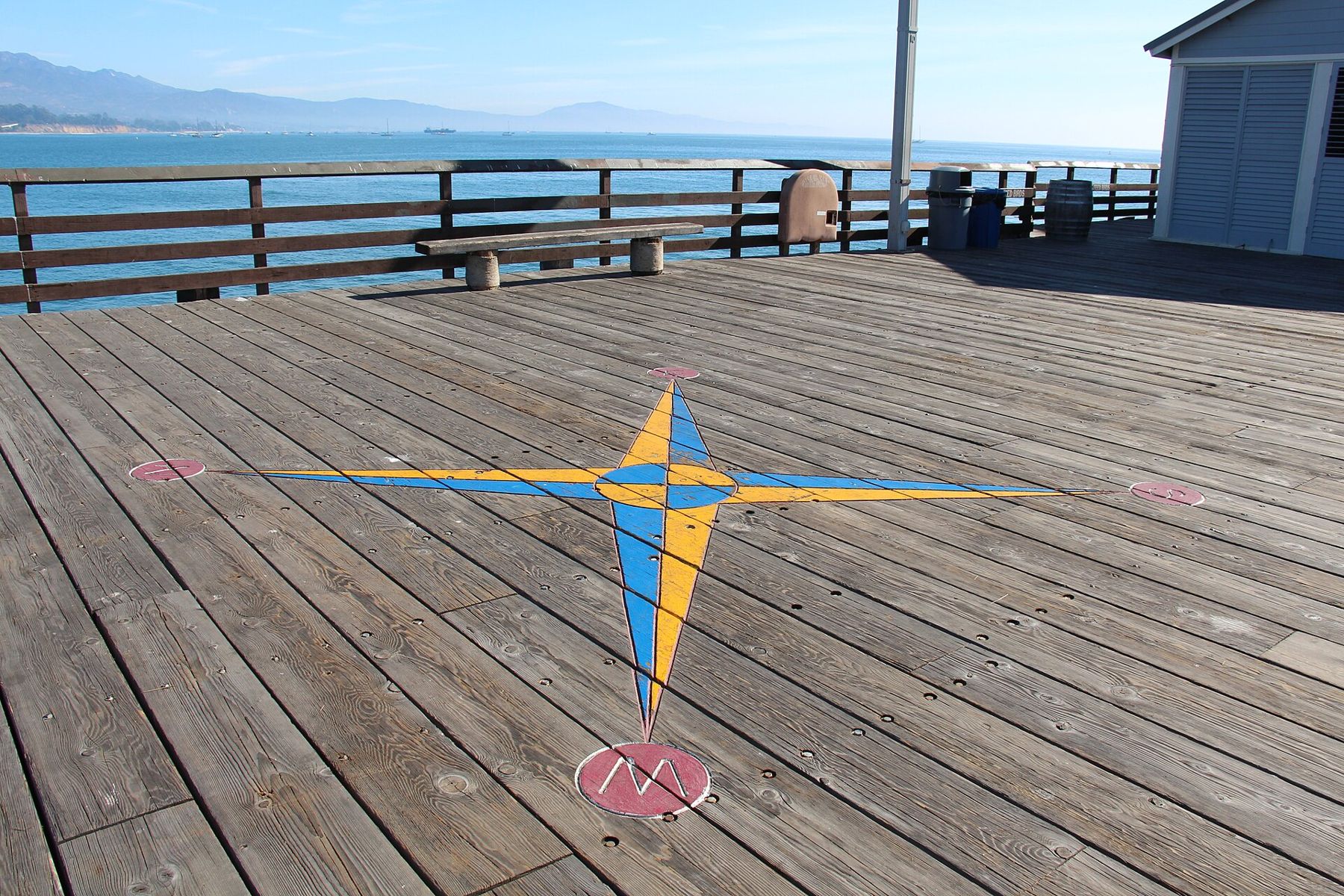
Set into the deck is a compass rose, a large inlaid circle marking the points of the compass. Stand on it and the geography of the place makes sense at once. North is not out to sea, as visitors tend to assume. North is behind you, up in the mountains. The sea lies to the south.
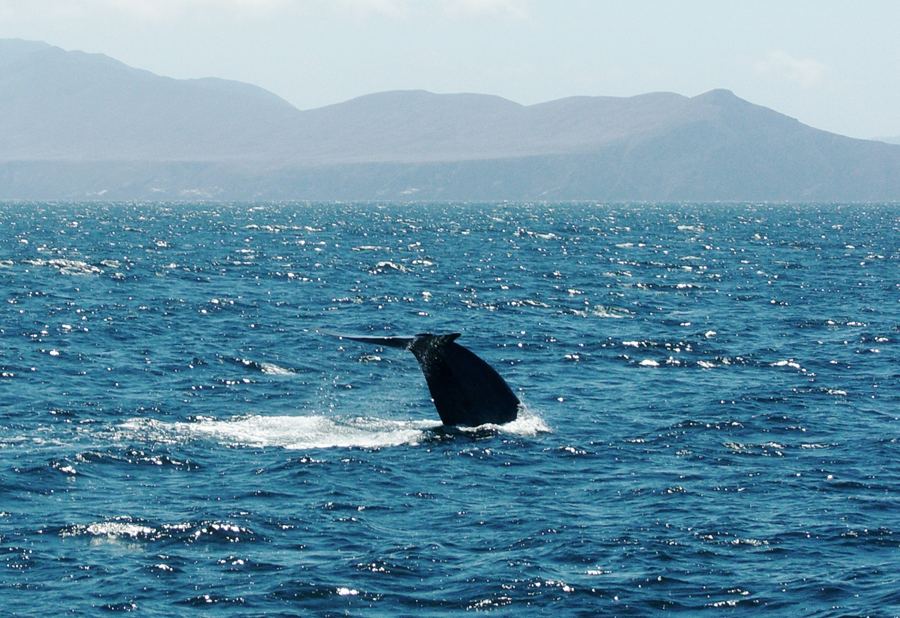 Also on Presidio PostWhales in the channel
The town that faces south
That is the oddity the wharf makes plain. From Point Conception east past Santa Barbara, the California coast runs nearly east and west instead of north and south, so the town looks south across the channel toward the islands, with the mountains at its back.
Walk to the end and turn around. The beach curves away on both sides, East Beach toward Montecito and West Beach toward the harbor, and the city climbs from the sand to the foothills in a long, gentle rise of palms, red tile and green. Above it stand the Santa Ynez Mountains, close and steep, rising to nearly 4,000 feet at La Cumbre Peak. On clear winter days after rain, the ridge looks near enough to touch. On early summer mornings it may not be there at all, swallowed by the marine layer until the low cloud thins, often around midday.
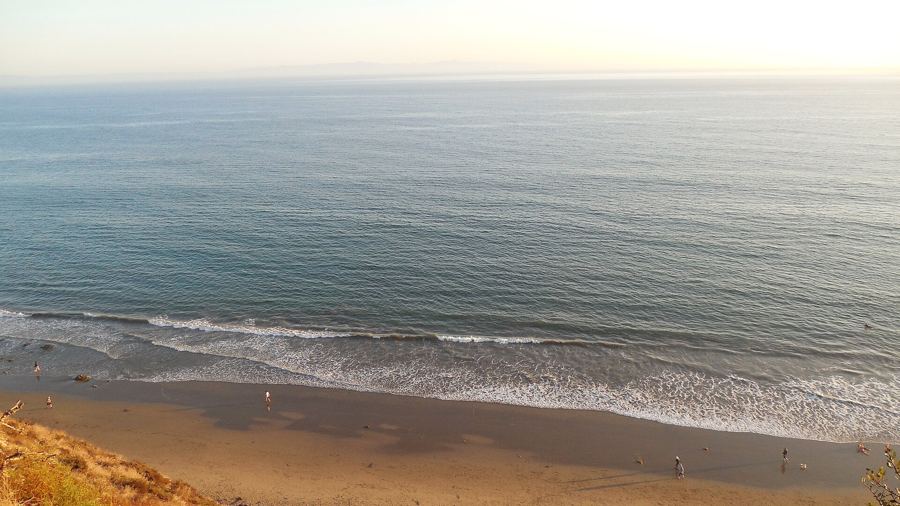
Then look south. Santa Cruz Island lies across the channel, more than 20 miles out, long and mountainous, the largest of the Channel Islands. Its outline changes with the weather more than anything else in view: sharp and brown one day, a pale stroke the next, gone the day after. The open water between is some of the richest on the California coast, and dolphins are often seen from the end of the wharf.
North is behind you, up in the mountains.
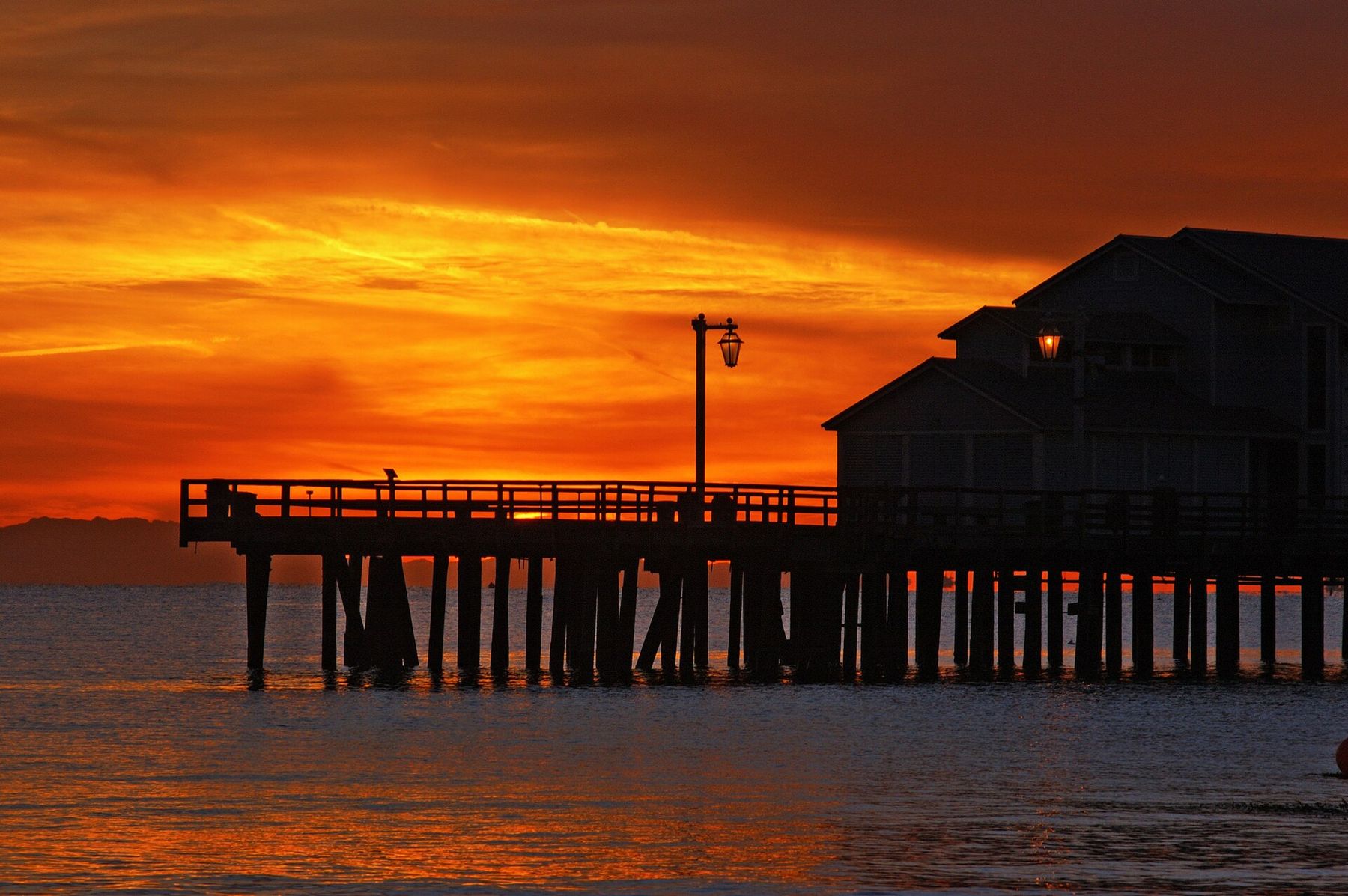
The Sea Center
Out on the wharf, the Santa Barbara Museum of Natural History runs the Sea Center, a small marine museum devoted to the channel just outside its windows. It is not an aquarium in the big-city sense. It is better described as a close look at the neighbors: tanks of local fish and kelp, tide-pool animals, and touch pools where children learn to rest two fingers on a sea star or an anemone without harming it.
It is a good place to spend an hour before a boat trip to the Channel Islands, or on a gray morning when the view is not cooperating. Opening hours and admission change through the year, so check before planning around it.
The other buildings along the deck hold seafood counters, sweet shops, souvenir stands, a tasting room or two and a few restaurants with windows on the water. They change hands over the years, as businesses do, and none of them is the point.
Fire and the habit of rebuilding
Every wooden pier on an open coast is a temporary arrangement with the sea. Stearns Wharf has been battered by winter storms, eaten by marine borers and burned. Its list of owners is long and occasionally strange: in the 1940s it belonged for a time to the actor James Cagney and his brothers. In 1973 a fire closed it, and the wharf stayed shut for most of a decade before it reopened, rebuilt and in city hands, in 1981.
Fire came back in November 1998, burning buildings and a section of the deck and closing the wharf again for repairs. Then the city did what Santa Barbara has always done with its wharf: it rebuilt. The pilings and planks you walk on today are a patchwork of decades, and nobody minds.
How to see it
Come early. Before nine the wharf belongs to people fishing, runners and the pelicans; by afternoon on a summer weekend it is busy with visitors, and the cars move at a crawl among them. Late in the day the low sun lights the city from the side and the mountains turn gold, the best time to look back at the town. In winter, when the sun sets farther south, the end of the wharf is one of the few places near downtown to watch it go down over the water, which is why it is on our list of places to watch the sun go down.
From the foot of the wharf, the beach path runs east under the palms of Cabrillo Boulevard and west toward the harbor, ten minutes away on foot. Across the boulevard, the blocks of the Funk Zone fill old warehouses with tasting rooms and galleries. At the entrance to the wharf, the bronze dolphins of the fountain leap out of their basin, and most people photograph them without quite knowing why.
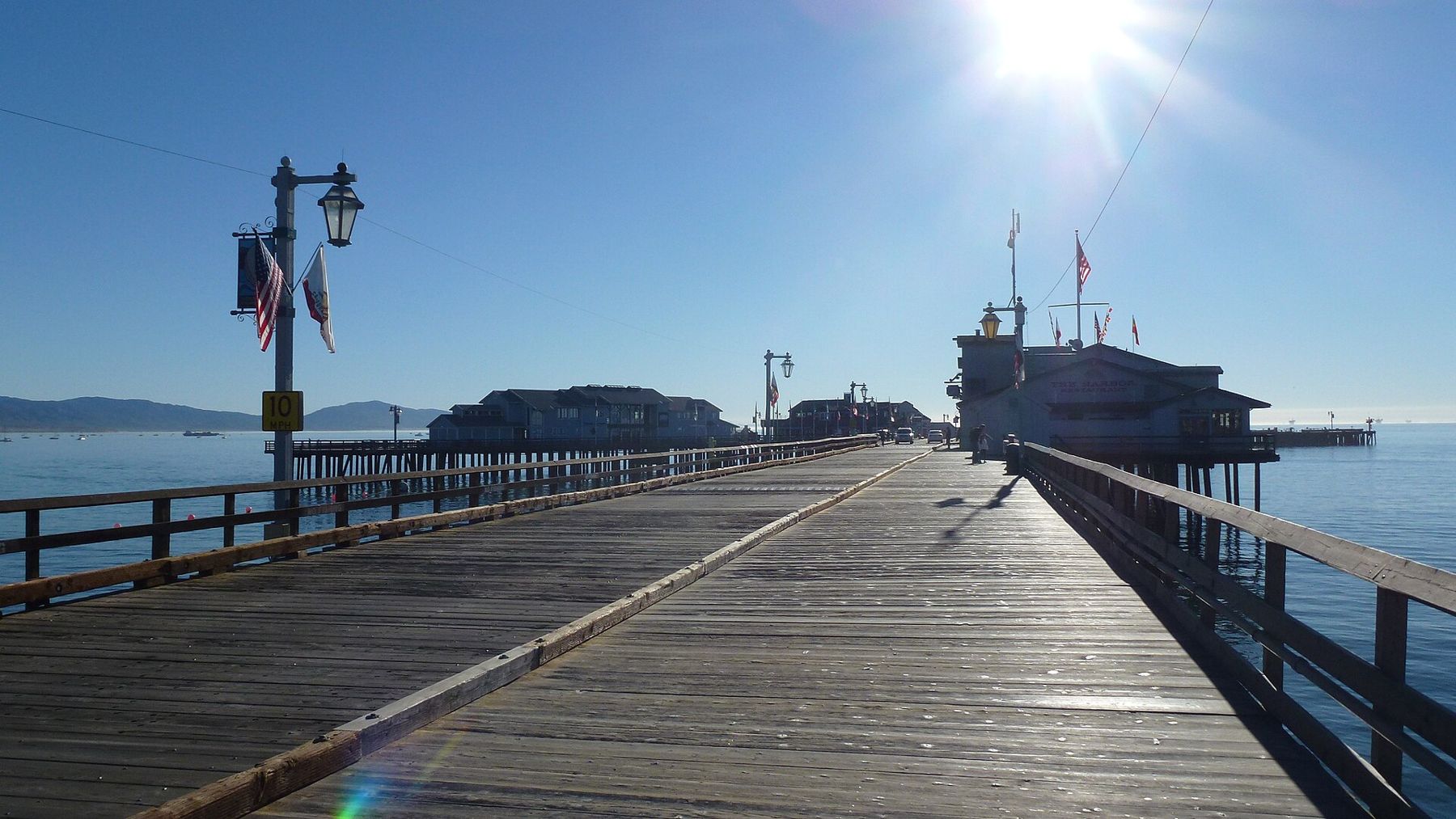
Bring something warm, even in summer. The wharf runs out into the wind, and the air at the end is often noticeably cooler than on State Street. Bring nothing for the pelicans. And when you reach the end, stand still for a minute and listen: water slapping the pilings, the deck creaking, a car rumbling slowly out over the boards behind you.