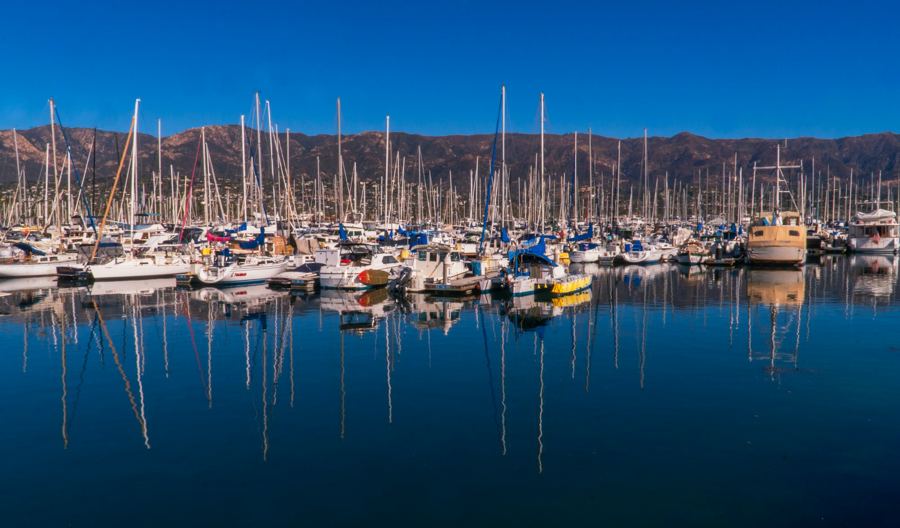
Stand at the foot of State Street, by the bronze dolphins, and almost every choice is in view. Behind you is the sea. Ahead, the street climbs toward the Courthouse tower and the mountains. To the right the palms of Cabrillo Boulevard run east toward Montecito; to the left they run west to the harbor masts. The whole of central Santa Barbara fits between the water and the foothills, and the question of where to stay is mostly a question of which end of that view you want to wake up in.
The city is compact, but it is not one place. A room two blocks from the beach and a room two blocks from the Courthouse give you different mornings, different evenings and a different relationship with the car. Decide what the trip is for, then pick the area. The hotel comes last.
The waterfront
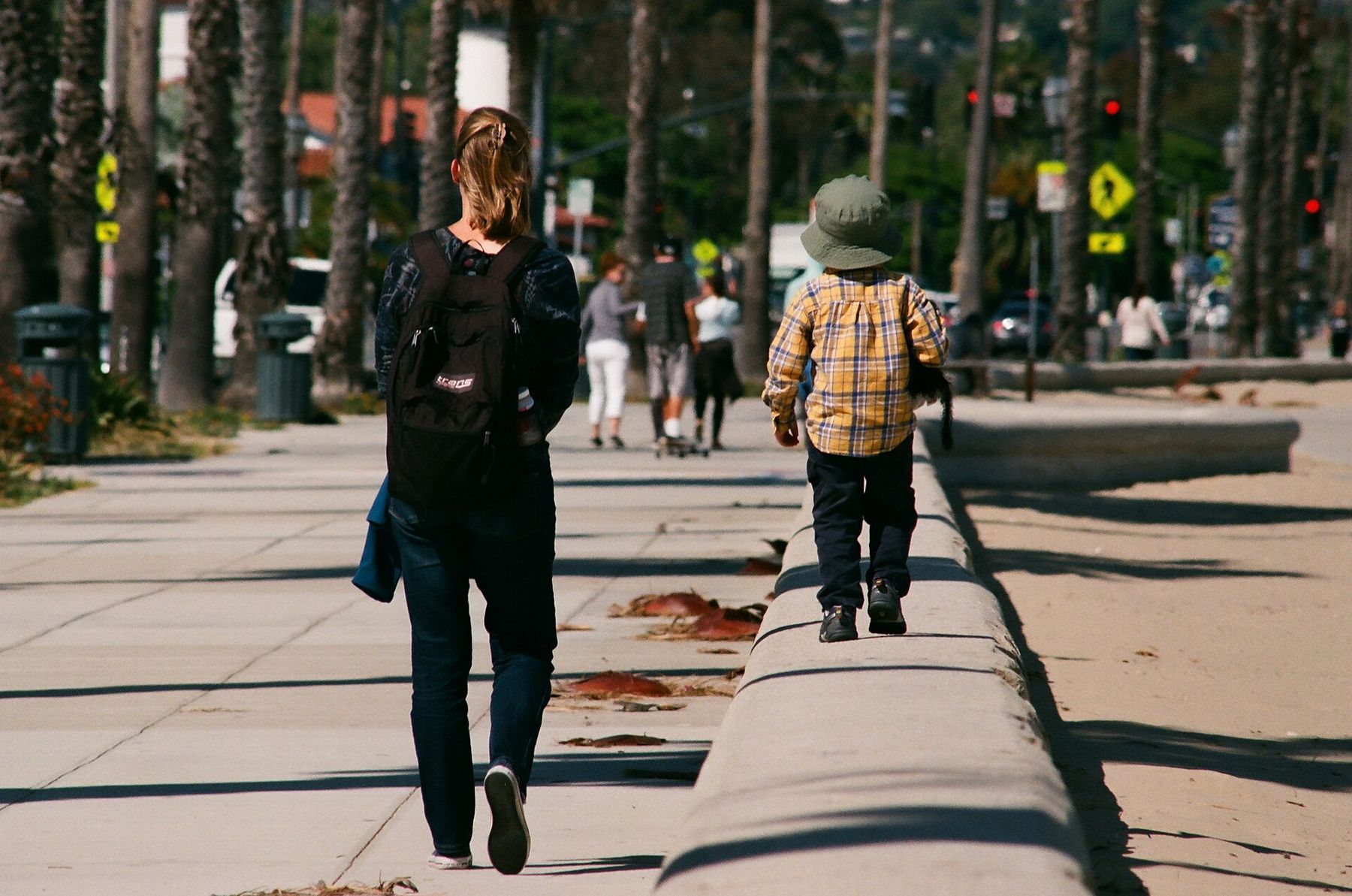
Cabrillo Boulevard is the postcard. It runs along the shore from the harbor past Stearns Wharf to East Beach, with a wide path, a bike lane and a strip of lawn and palms between the road and the sand. Almost all the lodging sits on the inland side of the boulevard and in the blocks behind it, a long run of low, mostly Spanish-style hotels and older motels.
This is the base for a beach trip. You walk to the sand in the morning, to the wharf or the harbor for lunch, and to the Funk Zone in the evening. The trade-offs are traffic on the boulevard in summer, the rail line and Highway 101 a few blocks inland, and a longer walk to the Courthouse and the museums. We look at it block by block in staying on the waterfront.
Downtown and the old Presidio quarter
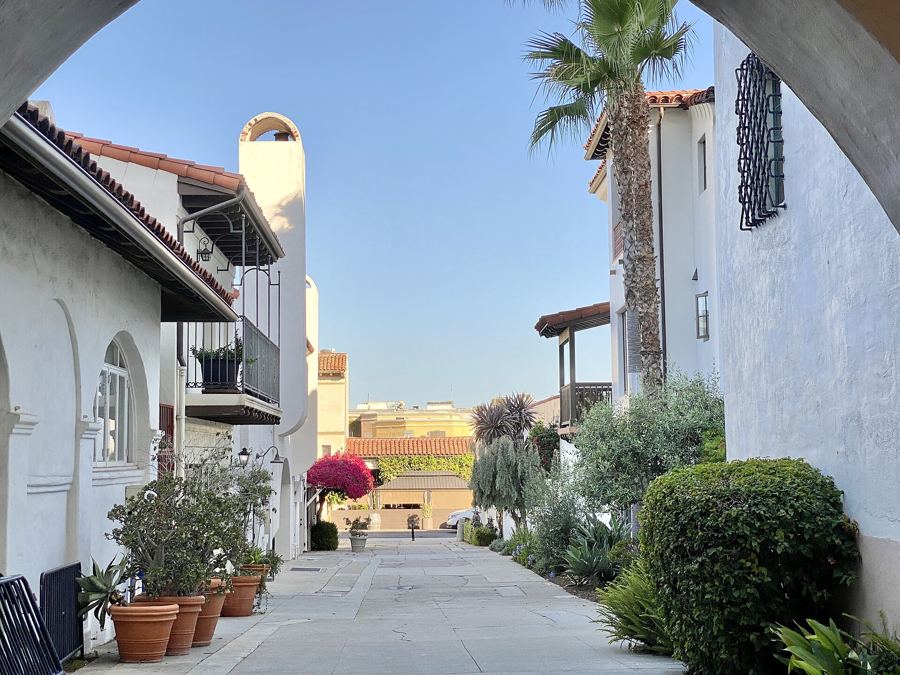
Downtown is the grid around State Street, from the train station up past the Arlington Theatre. Here the reason to stay is that everything else is close: the Courthouse and its tower, the Presidio, the Lobero, El Paseo, the museums and most of the city's restaurants. The streets are shaded by arcades, and the Spanish Colonial Revival that the city chose after the 1925 earthquake is everywhere you look.
What you give up is the sea at the door. The beach is a long walk or a short bus ride away down State Street, and nights near the busy blocks can be loud. Small inns in old houses on the side streets west of State are the quiet alternative. More in staying downtown, on foot.
The Funk Zone
Between lower State Street and the beach, east of the wharf, a few blocks of former warehouses and workshops have turned into tasting rooms, galleries, cafes and murals. It sits between downtown and the waterfront, close to both, and it has gained lodging over the past decade, including large new hotels at its edges.
It suits a trip built around eating and drinking. It does not suit light sleepers: the bars stay busy late on weekends, and freight and passenger trains run straight through the neighborhood, sounding their horns. Read about the place itself in the Funk Zone, block by block.
Montecito
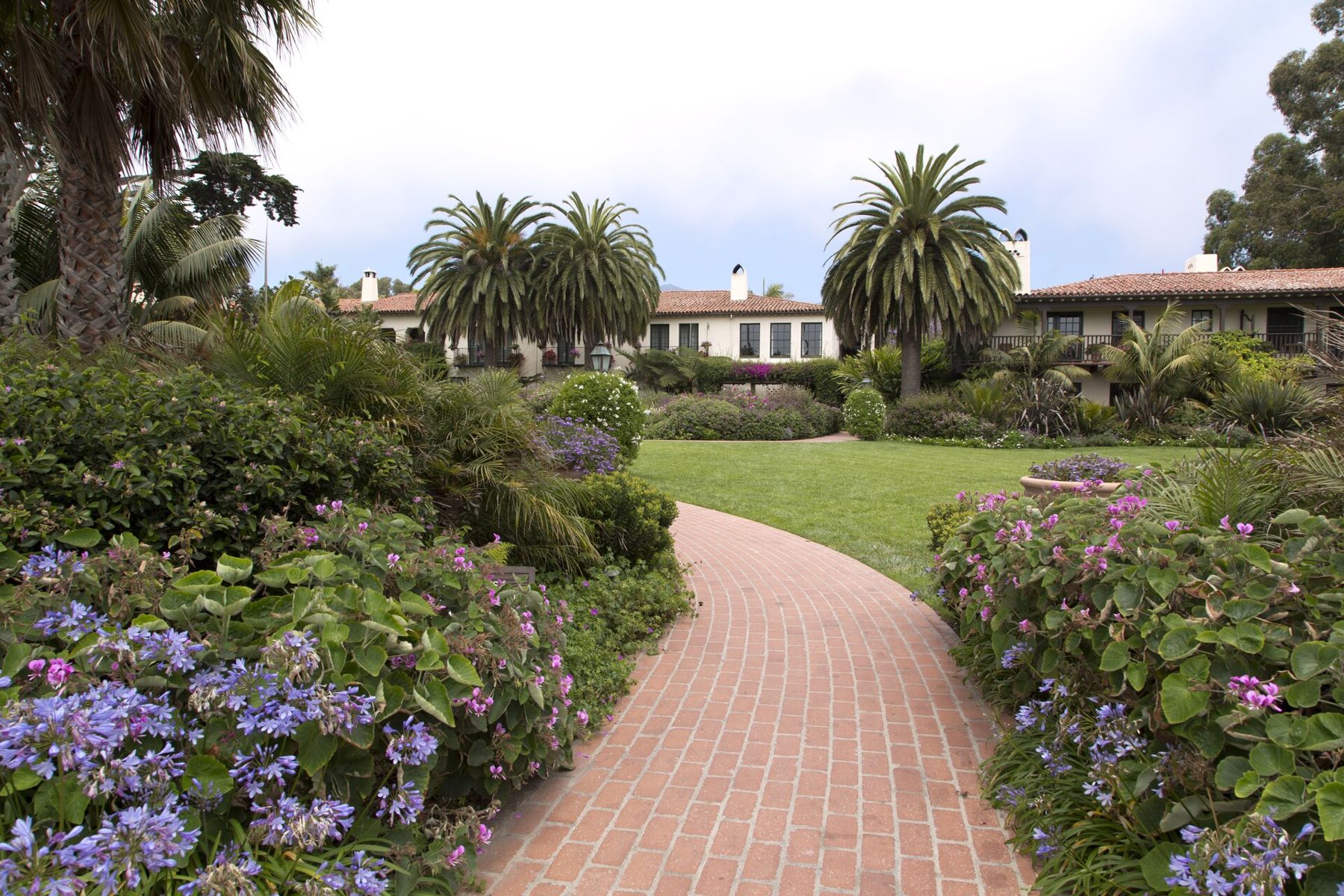
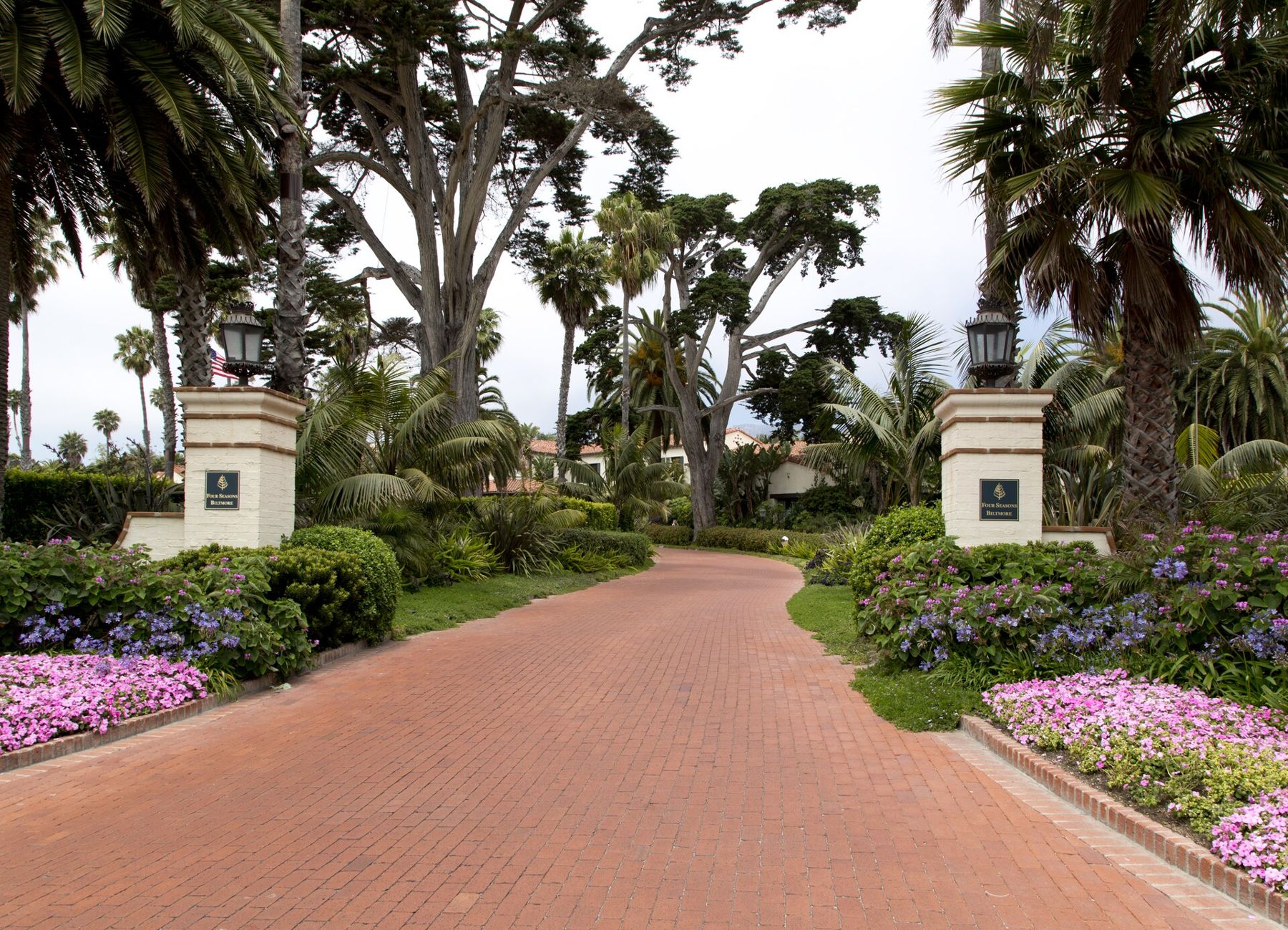
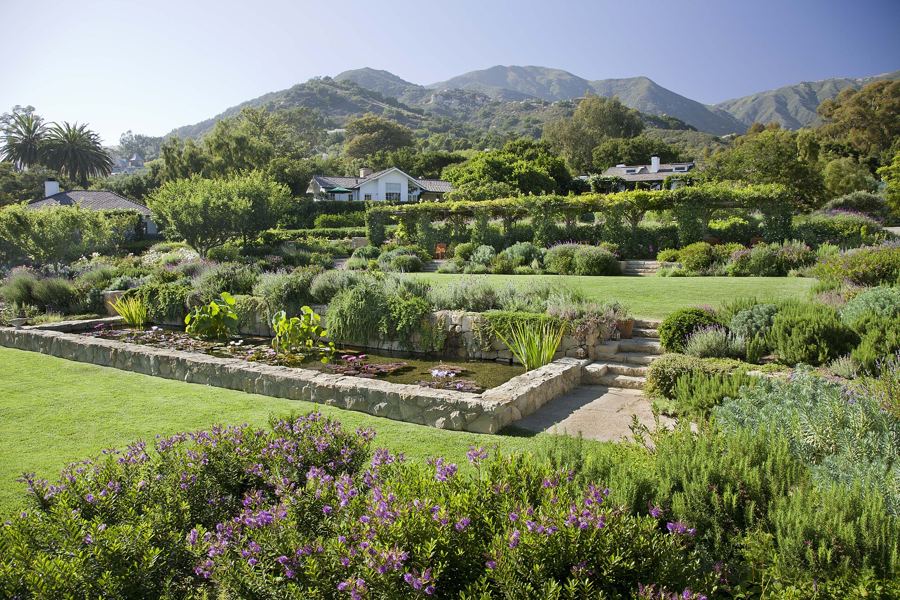
Montecito begins just east of the city line and is a different world: oaks, walls, hedges and long drives, with almost no sidewalks once you leave Coast Village Road. It has some of the oldest and most famous hotels on this coast. The Biltmore has stood across Channel Drive from Butterfly Beach since 1927; the Miramar, rebuilt and reopened in 2019 as Rosewood Miramar Beach, sits by the sand farther east; San Ysidro Ranch lies up in the foothills, where it has taken guests since the 1890s.
Montecito is for quiet, gardens and the beach at Butterfly. Prices here sit at the top of the local range, and you will drive or take a taxi into town most evenings. See Montecito without the gossip for the village and its streets.
 Also on Presidio PostHotels with a history
Upper State Street
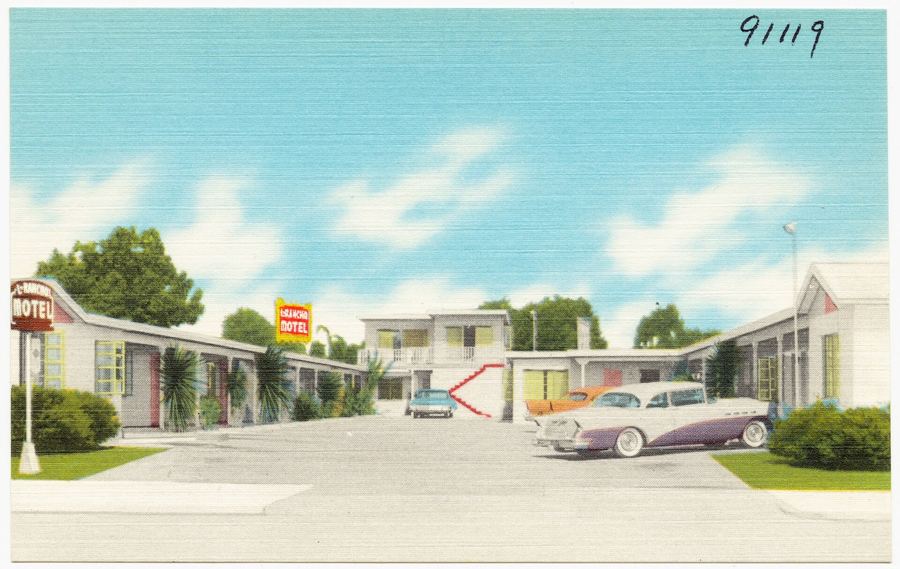
North of Mission Street, State Street keeps going for miles, past shopping centers, offices and a long string of motels and mid-sized hotels toward La Cumbre and the 101. This is the older highway side of town. It is less charming than downtown and has no beach, but parking tends to be easier and rates are often lower, especially in summer.
It works for a driving trip, for families who want room to spread out, and for anyone using Santa Barbara as a base for the Santa Ynez Valley over the hills on Highway 154. Buses run down State Street to downtown, so an evening out does not have to involve the car.
Upper State has a quieter appeal, too. The neighborhoods on either side are residential, the Mission and the botanic garden are a short drive up the hill, and the trailheads of the front country are closer than they are from the beach.
Goleta
Goleta is its own city, about eight miles west of downtown, wrapped around the airport and the University of California campus. Its hotels are mostly newer and practical, with a few on the coast. It makes sense for an early flight, a visit to the university, or a trip aimed west toward the Ellwood bluffs and the Gaviota coast. For a first visit to Santa Barbara itself, it puts you a drive away from the reasons you came.
Goleta has its own pleasures, though: the bluffs and the winter monarch grove at Ellwood, the beaches below the campus, and quieter streets than the city's. Traffic on the 101 between Goleta and downtown can be slow at rush hour.
Carpinteria and Summerland
East on the 101, Summerland is a small village on a slope above the sea, and Carpinteria, about a dozen miles from downtown, is a beach town with a walkable main street that runs down to a gentle beach. Both are quieter than the city and feel like their own places. They suit a family beach week or a slow weekend, with Santa Barbara as a day trip rather than a doorstep. The drive in can be slow at commuter hours.
Choosing by the trip
For a first visit of two or three nights without much driving, stay on the waterfront or downtown. The waterfront gives you the sea and the light; downtown gives you the history and the restaurants. The two are about twenty-five minutes apart on foot, and the city's downtown and waterfront shuttle has long linked them, though its routes and hours change.
For a couple's weekend with no plans beyond the beach and dinner, Montecito. For a food and wine trip, the Funk Zone or the blocks of downtown near it. For a family with a car and a budget, upper State Street or Carpinteria. For an early flight or a conference at the university, Goleta.
Whatever the area, rates move sharply with the calendar. Summer weekends, graduation season and Old Spanish Days in early August fill the city, while a weekday in winter can feel half empty. Many places set two- or three-night minimums on busy weekends. Check before you plan around a price you saw last year.
And if the choice still will not settle, go back to the foot of State Street and look both ways. Sea on one side, mountains on the other, and a mile of town in between.