At seven in the morning the waterfront belongs to people who are moving. Runners on the path. Rowers carrying a shell down to West Beach. A volleyball net going up at East Beach. Pelicans fly the length of the shore in a line, low over the swell, as if they were following the boulevard. Across the road, the hotels are still dark, and the mountains behind them are catching the first sun.
Staying on the waterfront means having this on the doorstep. It also means trains, traffic and a mile between you and the Courthouse. Both are worth knowing before you choose.
The lay of the shore
Santa Barbara's coast faces south, which surprises most people. The sun rises over the sea to the east and, for much of the year, sets over the land and the Mesa to the west. The waterfront is a single curve of beach along that south-facing shore, with Cabrillo Boulevard running beside it the whole way.
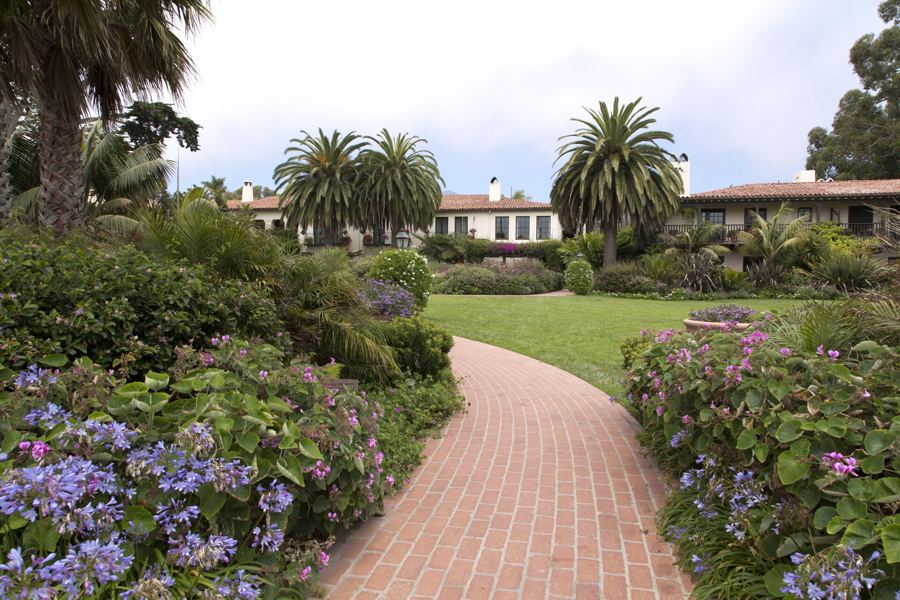
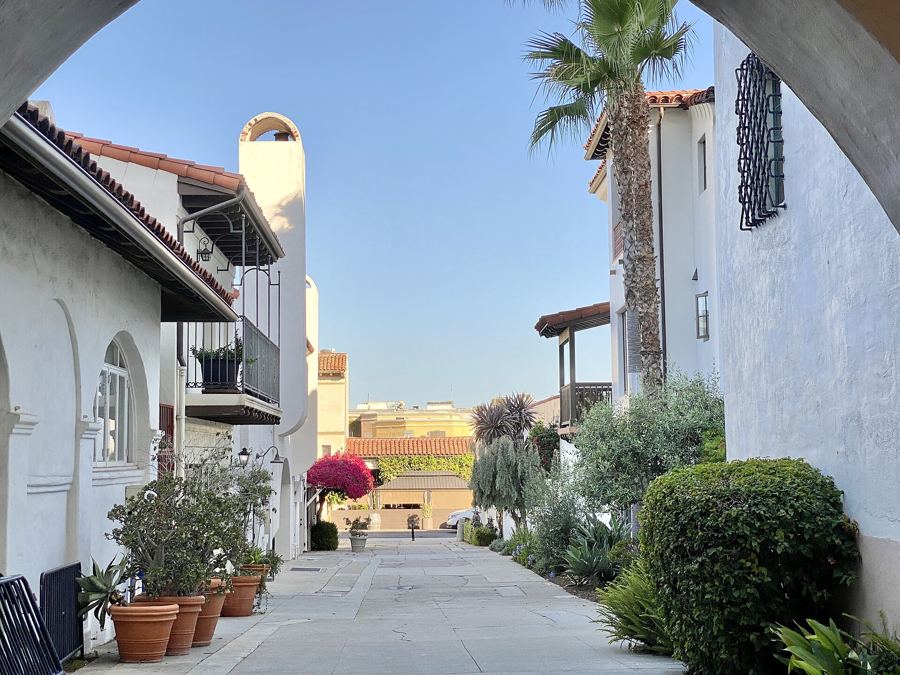
The seaward side of the boulevard is public: sand, palms, lawns and a wide path. Lodging sits on the inland side and in the blocks behind it. Nothing but the road and the park stands between the front row and the beach, and the city's long-standing limits on building height keep the hotels low, mostly two or three stories, in white stucco and red tile.
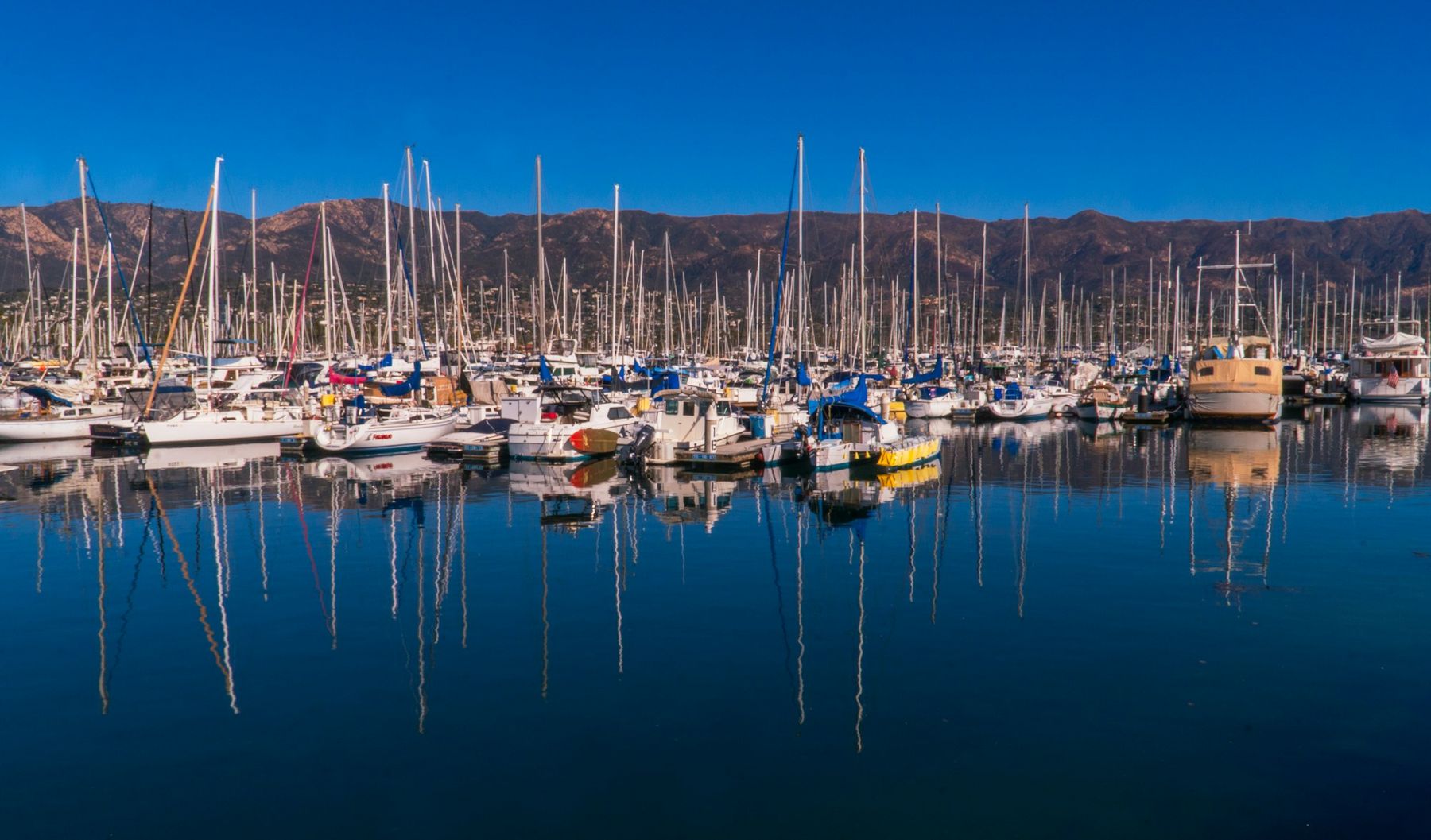
Mission Creek reaches the sea near the wharf, and the Funk Zone fills the blocks between the beach and the freeway east of State Street. Above the harbor to the west, the Mesa rises in a line of cliffs. Behind everything, the Santa Ynez Mountains stand close and steep, which is why nearly every waterfront view has two halves: water in front, mountains behind.
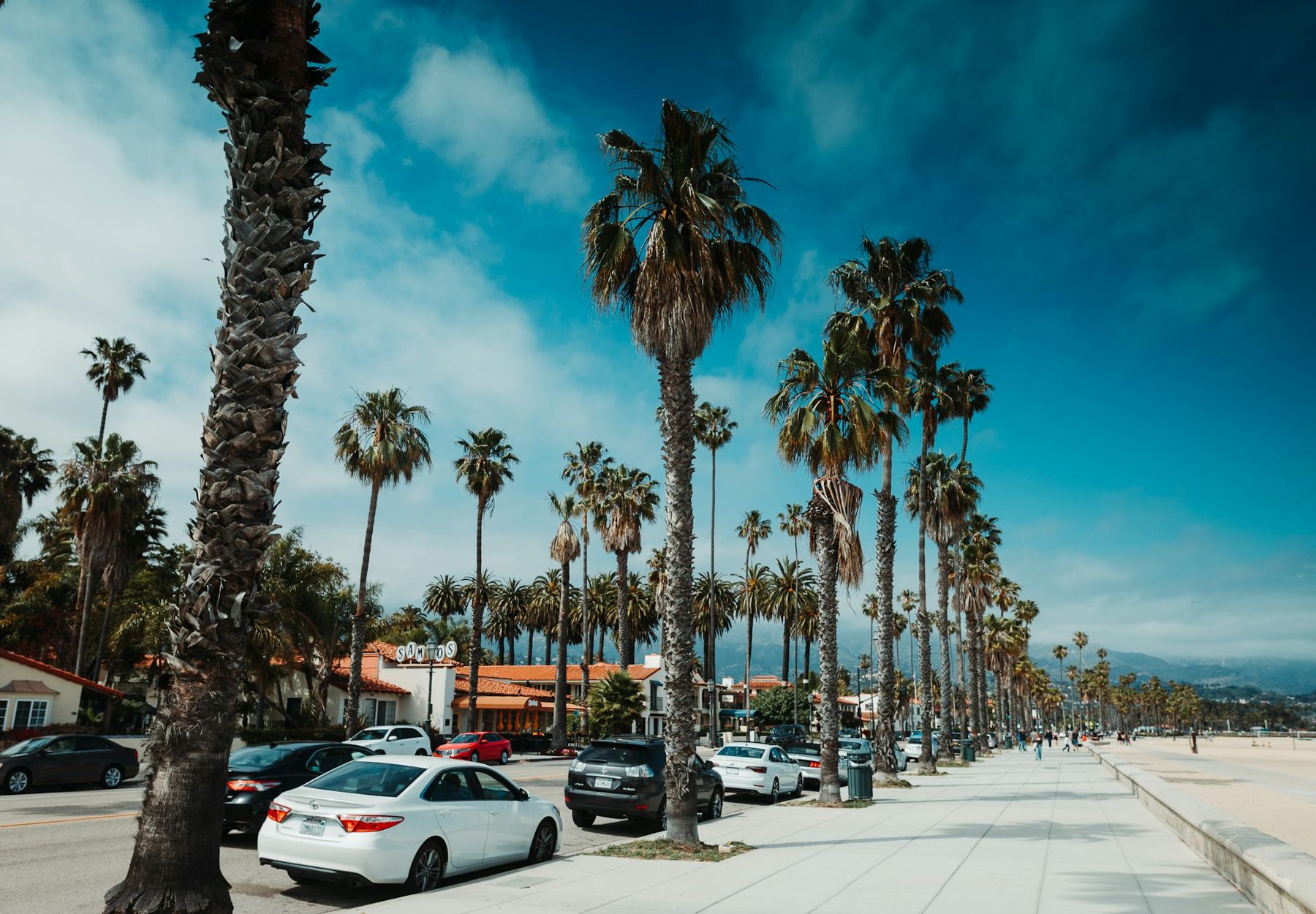
East Beach
East of Stearns Wharf, the beach widens and the boulevard grows grander. East Beach has the city's volleyball courts, the old bathhouse and long, open sand. On Sundays, artists set up their work along the path east of the wharf, a tradition that goes back decades. Farther east, the Andrée Clark Bird Refuge lies behind the dunes, a lagoon with a footpath around it, and the zoo sits on a hill above the shore.
This end is the most open and the most resort-like. It is also the farthest from the harbor and from downtown, which puts more of your evenings on wheels or on a longer walk. It suits beach days, morning runs and families who want the sand without crowds of people walking past.
The path around the bird refuge is one of the easiest walks in the city, flat and short, with herons and ducks on the water and the mountains reflected behind them on a still morning. Beyond it, the road continues toward Montecito and Butterfly Beach.
Around the wharf
The middle of the waterfront is where State Street meets the sea. Stearns Wharf runs out from the foot of the street, the dolphin fountain stands at its entrance and the Funk Zone begins a block inland. This is the busiest stretch and the most convenient. Downtown is a straight walk up State Street, the harbor is a stroll west, and the restaurants of the Funk Zone are around the corner.
The cost is people. On a summer weekend the path at the foot of the wharf is crowded from late morning until well after sunset, and traffic on Cabrillo backs up at the lights. Early and late, it is very good.
Walking out to the end of the wharf and back is the simplest pleasure of staying here. From the end, the whole town turns around to face you, with the mountains behind it. On a clear winter evening, the sun goes down over the water off its western rail.
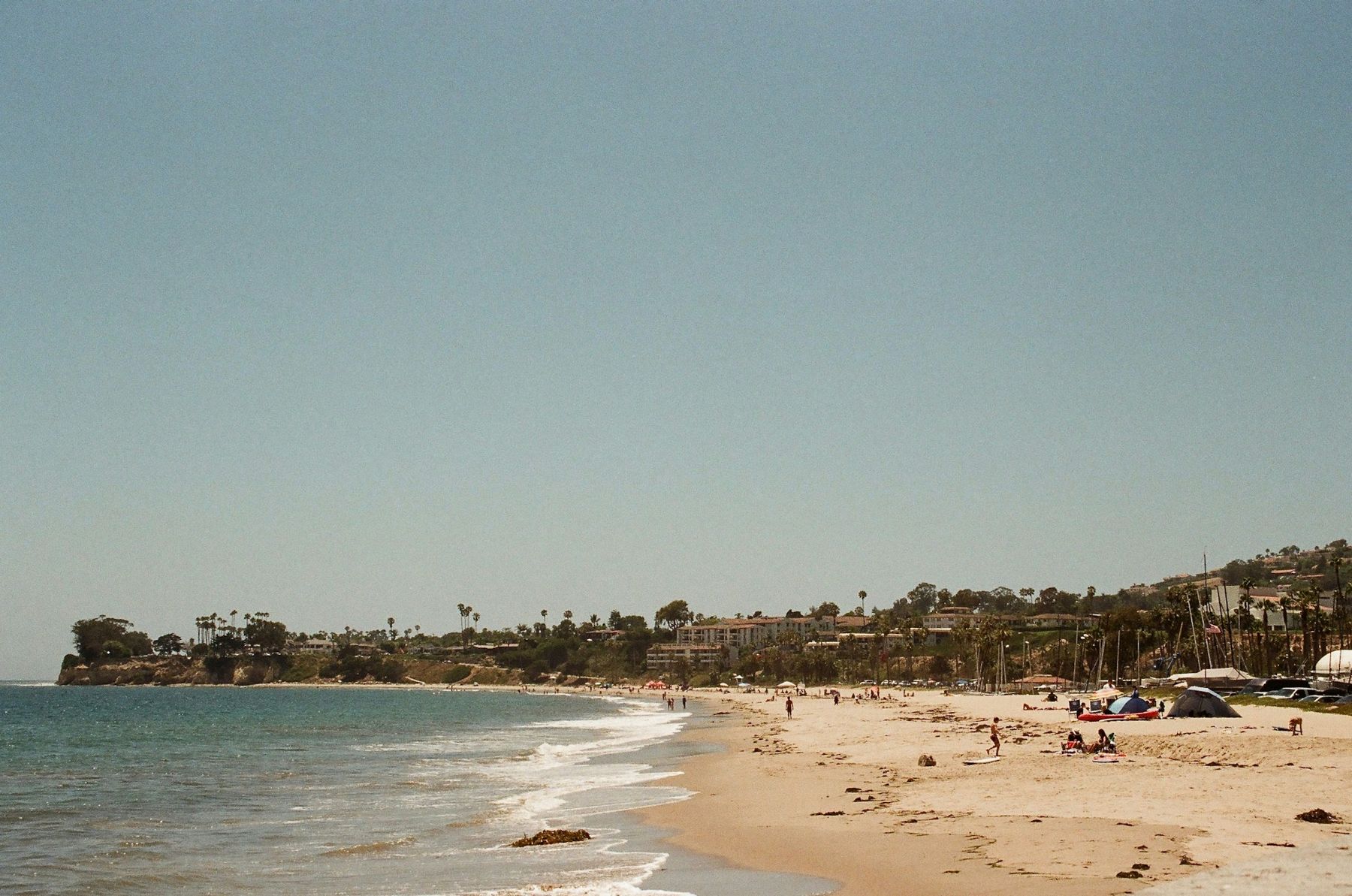
West Beach and the harbor
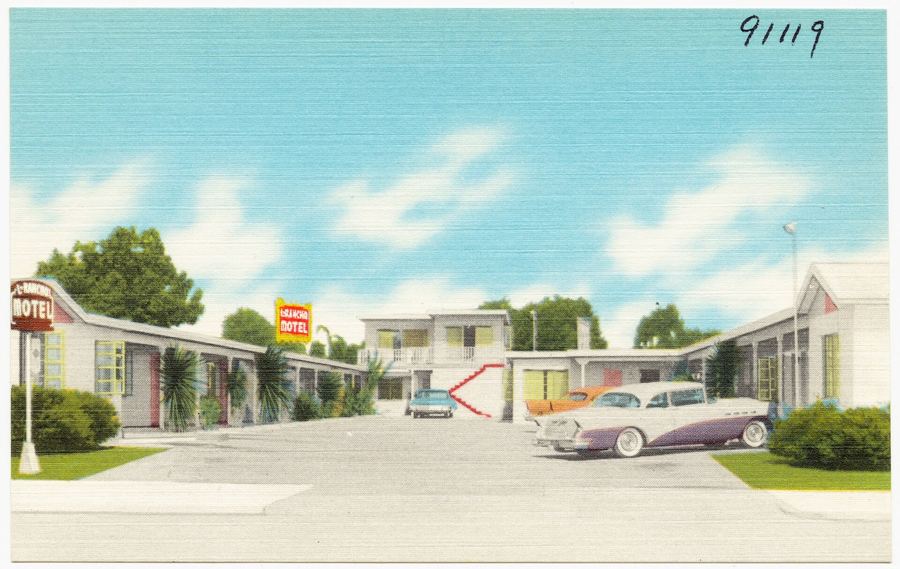
West of the wharf, the boulevard runs past West Beach, a calm, modest strip of sand in the lee of the breakwater, and on to the harbor. The blocks behind it, between Cabrillo and the freeway, hold the densest cluster of waterfront lodging: hotels, inns and a good number of mid-century motels on streets such as Bath, Castillo and West Montecito.
This is the practical end of the waterfront. Rooms a block or two back tend to cost less than those facing the beach, and the walk is short. You are close to the harbor and its breakwater, the Saturday fishermen's market and the sandy beach at Leadbetter, with the Mesa rising beyond it. Downtown is about a twenty-minute walk.
 Also on Presidio PostStaying downtown, on foot
Trains, the 101 and other noise
Here is the part the postcard leaves out. The railroad runs parallel to the shore a few blocks inland, and Highway 101 runs beside it. Passenger trains stop at the station on State Street, freight trains pass through at any hour, and horns sound at the crossings. Rooms on the inland side of the waterfront blocks hear the most of both. The freeway is a steady hum; the trains come and go.
The boulevard has its own noise on summer evenings, and the Funk Zone's bars are loud on weekends. Light sleepers should ask which way a room faces and how close it is to the tracks, and should not assume a beach view means a quiet room. Earplugs are a reasonable precaution.
Getting around from the waterfront
The great virtue of this area is that you can leave the car parked for days. The beach path runs the whole length of the waterfront, shared by walkers, runners, bikes and surreys, and bike rental is easy to find. The city has long run an electric shuttle between the waterfront and downtown, though its routes, fares and hours have changed over the years. Buses run up State Street. Our guide to getting around without a car has the details.
Parking is the catch. Many places charge for it, the beach lots are metered or ticketed, and street spaces near the wharf fill early. Rules and rates change, so read the signs and ask when you reserve.
The waterfront through the year
Summer brings the crowds and, often, the fog. The marine layer known as June gloom can keep the beach gray until midday or longer in early summer. September and October are frequently the warmest and clearest months on this coast, with the water at its warmest and fewer families after school starts.
Winter is quiet. The beach is wide, the light is clean after storms, and gray whales pass offshore on their migration. Rates drop on weekdays, though holidays still fill the city. Spring is a fine compromise, green on the mountains and calm on the path.
Waterfront or downtown?
Choose the waterfront if the sea is the point of the trip: morning swims, runs on the path, sunsets from the wharf, the harbor at dawn. Choose downtown if the point is the Courthouse, the museums, the Mission and restaurants within a few blocks. Within the waterfront, the east end is the most open, the wharf end the most convenient, and the West Beach blocks the most practical.
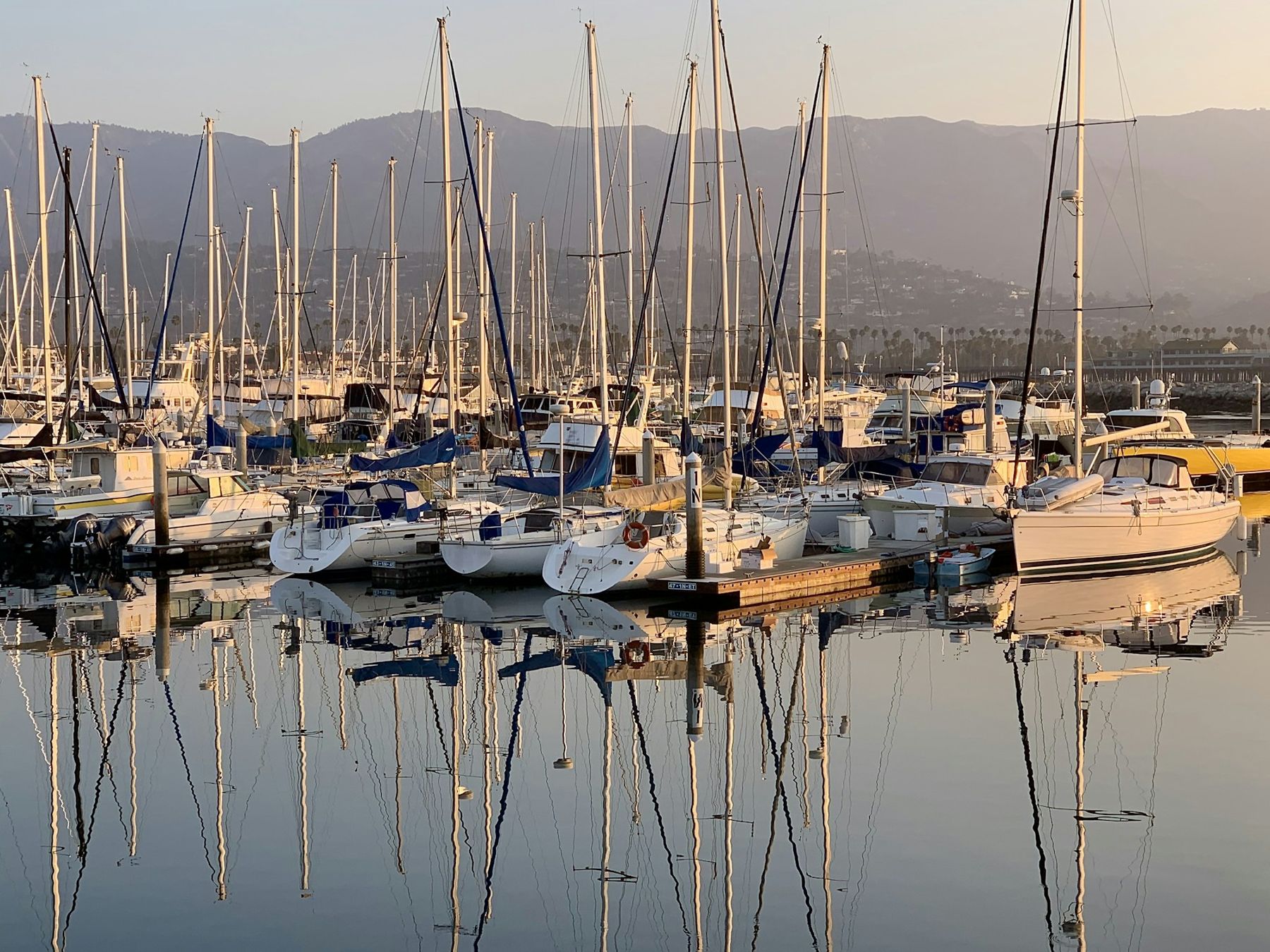
And whichever you choose, get up early once. At first light the harbor is glass, the masts stand upside down in the water and the mountains wait behind them, turning from gray to gold.