In the 1870s, people came to Santa Barbara to get well. Doctors and travel writers in the East praised the mild winters and the clean air, and invalids arrived by steamer at the new wharf with letters of introduction and trunks full of wool. They needed somewhere to stay, and the little adobe town began to build hotels.
It has been building them ever since, and losing them too. Santa Barbara's hotel history is a story of fire, earthquake and renovation, and of a handful of places that came through all three.
The health-seekers' town
The first great hotel was the Arlington, which opened on State Street in 1875, in the blocks where the Arlington Theatre stands now. It was a grand wooden building with verandas and gardens, the place where wealthy winter visitors stayed for weeks or months. It burned and was rebuilt, and the earthquake of June 1925 finished it. The theater that replaced it opened in 1931 and keeps the name.
In 1903 a hotelier named Milo Potter opened the Potter Hotel near the beach, on the rise above West Beach where the Chumash town of Syuxtun had once stood. It was enormous, with hundreds of rooms and gardens running toward the sand, and it was the town's answer to the great resort hotels of Southern California. It burned to the ground in 1921 and was never rebuilt.
The railroad, which reached the city from the south in the 1880s and completed the coast line to San Francisco in 1901, brought visitors in larger numbers. The old town on the channel was becoming a winter resort.
Most of these first hotels were built of wood, and wood burns. Of the grand hotels of the resort era, almost none survive. What remains is a handful of smaller places that escaped fire, and a set of photographs and postcards that show verandas and carriages lined up in front, under the same mountains that stand over the town today.
The Upham, since 1871
One hotel from that first era is still taking guests. On the corner of Sola and De la Vina Streets, a few blocks west of State, a Boston banker named Amasa Lincoln built a boarding house in 1871 in the style of a New England home. It was the Lincoln House at first; it later took the name of a new owner, Cyrus Upham.
The Upham is often described as the oldest continuously operating hotel in Southern California. It is still a Victorian wooden building set among gardens, a rare survivor of the wooden town that the earthquake and the Spanish style later replaced. Stand across the street and you can see what Santa Barbara looked like before it decided to look Spanish.
El Encanto on the Riviera
Above the Mission, the hillside known as the Riviera rises steeply in curving roads and terraces. In the early twentieth century, the state teachers' college stood here, and El Encanto grew up on the slope nearby, opening as a hotel in 1918. The hill falls away below it toward the town and the sea.
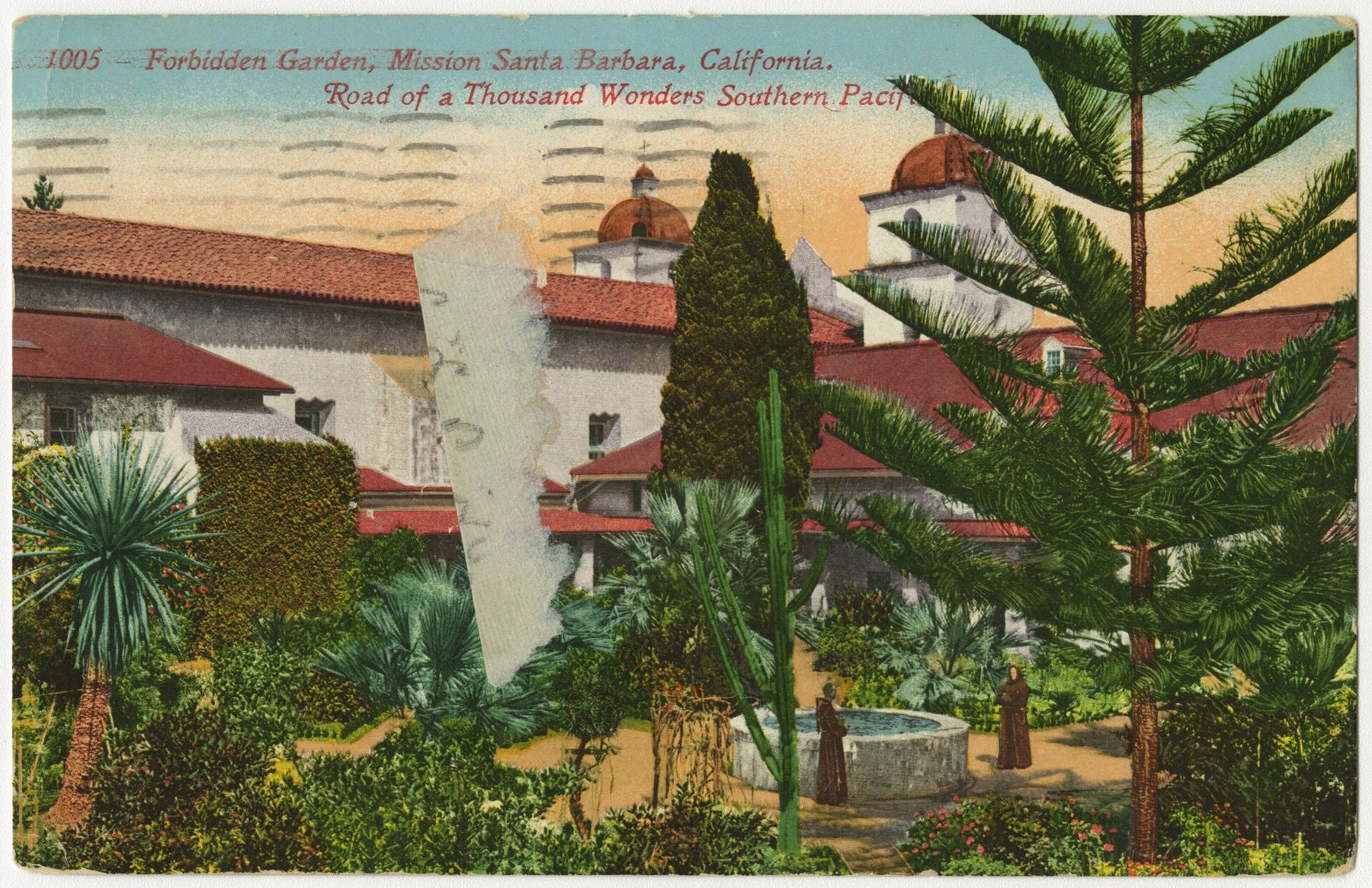
El Encanto has changed hands and been renovated more than once. It closed for a long restoration in the 2000s and reopened in 2013, keeping its scattered cottages on the hill. The postcard above, a view of the Mission's garden, was sent from El Encanto in March 1920, two years after it opened.
 Also on Presidio PostWhen Santa Barbara was a motel town
Montecito's shore: the Biltmore and the Miramar
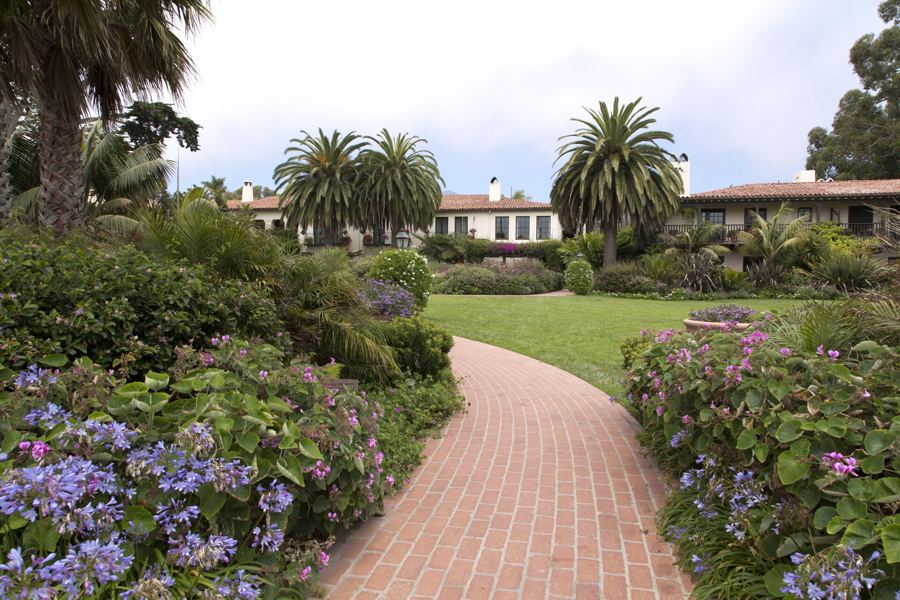
East of the city, Montecito had become a place of estates by the 1920s, and it gained a grand hotel on its shore in 1927. The Biltmore was designed by the architect Reginald Johnson in the Spanish and Mediterranean style the region had embraced, with white walls, red tile, arched walks and gardens of palms, set behind Channel Drive above Butterfly Beach. It has had several owners since and is still a hotel today, still in its gardens.
A little farther east, the Miramar began in the late nineteenth century as a boarding house beside the railroad and the beach, and grew into a resort of cottages that generations of families returned to. It closed around the turn of the century and stood empty for years while plans came and went. It reopened in 2019 as a new resort, Rosewood Miramar Beach, on the same strip of sand.
The two hotels show what drew people to this stretch of coast. Montecito was quieter and greener than the city, with oaks and long drives, and its shore faces almost west at Butterfly Beach, so the sun sets over the water in the cooler months. Wealthy families had built estates on the hills behind it since the turn of the century, and the hotels gave their guests a taste of the same life.
Up the canyon: San Ysidro Ranch
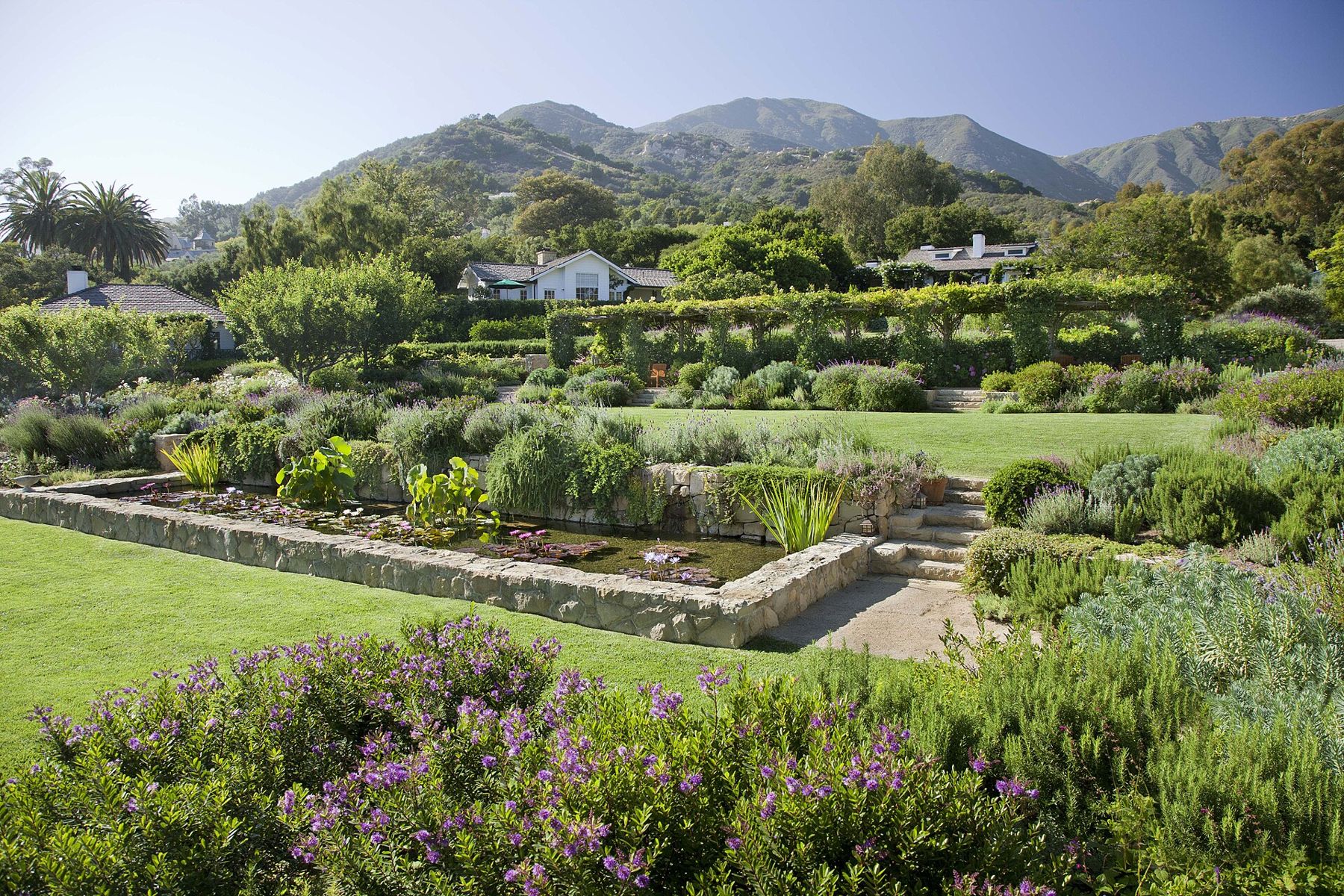
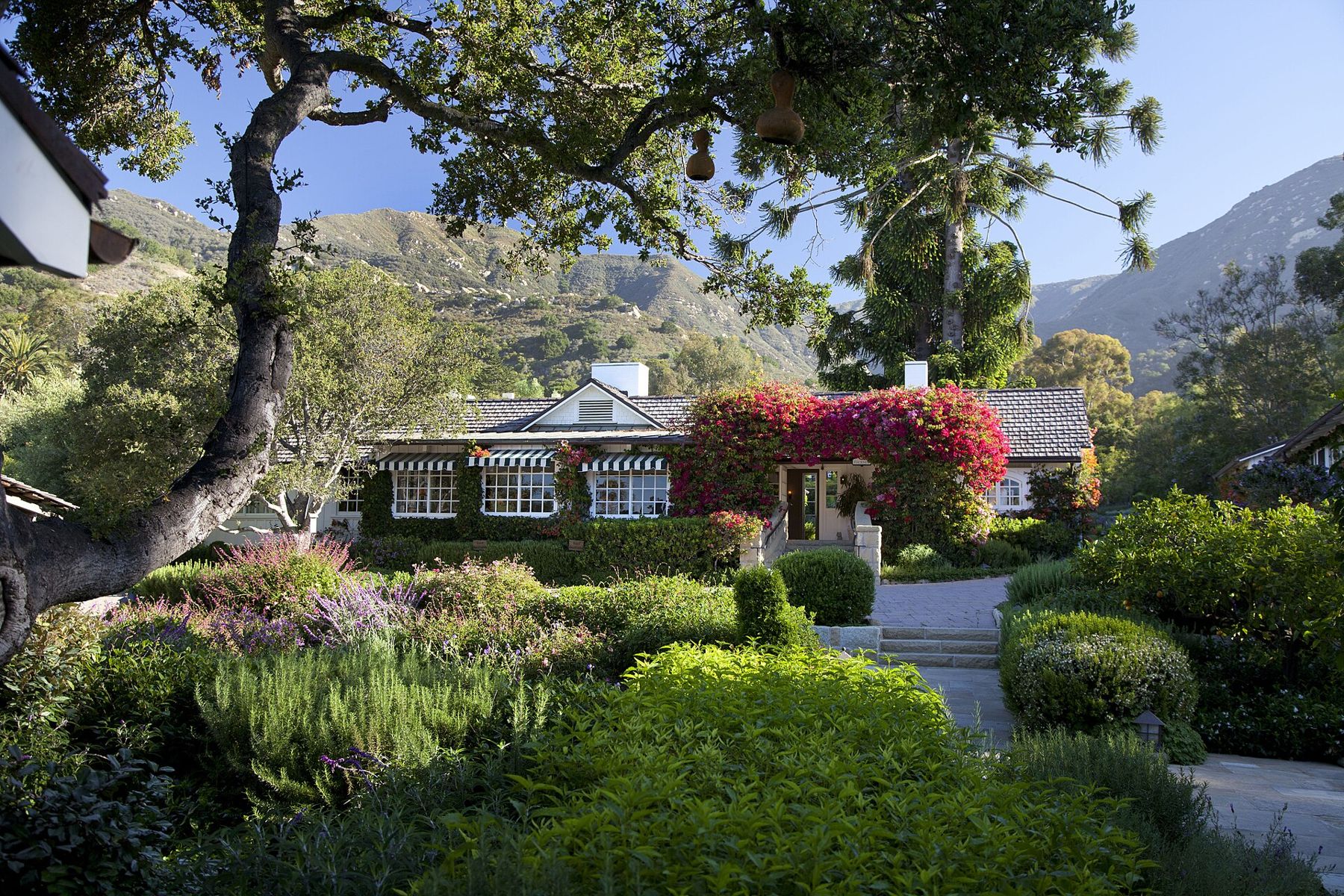
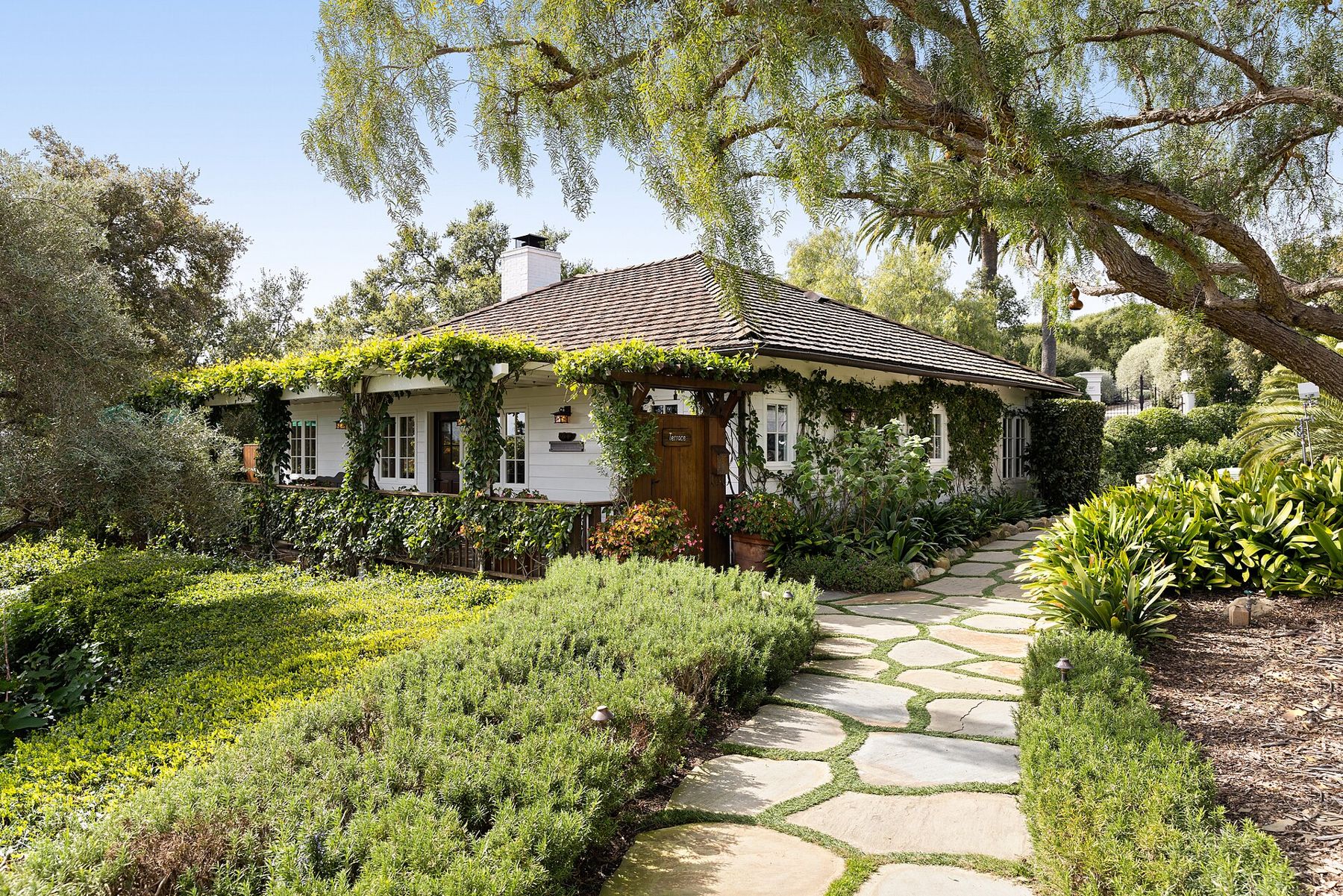
San Ysidro Ranch sits in the Montecito foothills, at the foot of the Santa Ynez Mountains, on land that was once a working ranch, and it began taking guests in the 1890s. Its cottages are scattered across a hillside among gardens and old trees, with the mountains close behind.
The ranch's fame came from its guests. The actor Ronald Colman was a part owner from the 1930s. Laurence Olivier and Vivien Leigh married there in 1940, and John and Jacqueline Kennedy spent part of their honeymoon there in September 1953. In January 2018 the debris flow that struck Montecito after the Thomas Fire damaged the ranch, which closed for many months before reopening.
Lost and rebuilt: the Californian
The Californian opened at the foot of State Street, at the corner of Mason, in 1925. Its timing was terrible. Weeks later, on June 29, the earthquake struck and badly damaged it, along with much of the rest of State Street. The old building had a long, uneven life after that, and for years the corner stood largely unused.
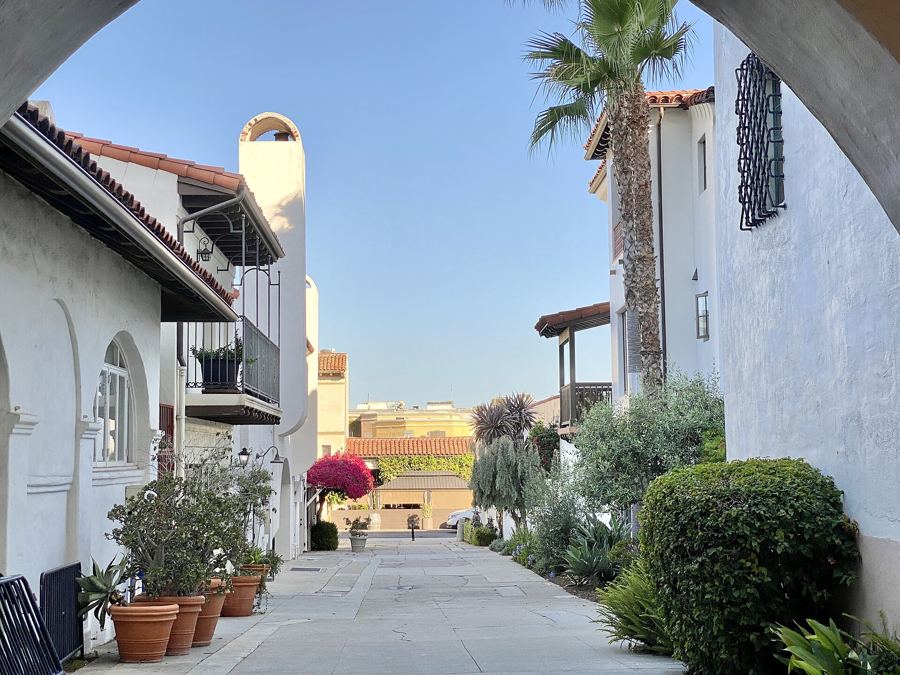
The new Hotel Californian, rebuilt and greatly enlarged on the old site in a Spanish Colonial Revival style with Moorish touches, opened in 2017. It stands at the meeting point of lower State Street, the Funk Zone and the waterfront, and it is the clearest sign of how much that end of town has changed. The 1925 earthquake is the hinge of this whole story: it destroyed the wooden hotels of State Street and gave the city the white walls and red tile that every later hotel adopted.
What you can see today
Most of this history is visible from the street. The Upham's wooden Victorian still stands on De la Vina Street. The Arlington Theatre stands where the Arlington Hotel did, its tower visible from State Street. The Californian anchors the corner of State and Mason. Below the bluff at West Beach, nothing marks the Potter except the lie of the land.
In Montecito, the Biltmore's gardens face Channel Drive, and anyone can walk the seawall and the sand of Butterfly Beach in front of it. The Miramar's beach is reached by public paths. San Ysidro Ranch and El Encanto keep restaurants and terraces where non-guests have long been able to eat, on terms that change, so check before going.
The Mission that appears on the old El Encanto postcard is a short walk below the Riviera, and its garden and towers still stand. The roads up the hill behind it lead past the old college grounds and into the curving streets where El Encanto keeps its place on the slope.
Climb the Riviera on a clear evening and look down. The roofs of the town, mostly red, run down to the shore, and among them are the hotels that made Santa Barbara a place people came to rather than passed through.