In December 1925, a new kind of roadside hotel opened in San Luis Obispo, about a hundred miles up the coast highway from Santa Barbara. Its builder wanted a word that would fit on a sign, and he squeezed "motor hotel" into "mo-tel". The word went down the road faster than the building did.
Within a generation, the road into Santa Barbara was lined with motels. Their neon signs, low wings of rooms and parking courts became as much a part of the town's arrival as the palms and the red tile. Many of them are still here, and the era they came from explains a good deal about the shape of the city.
The road that made them
Before the freeway, the coast road was the only way through. It followed, more or less, the old Camino Real that linked the Spanish missions, and in 1926 it became U.S. Highway 101. Every traveler between Los Angeles and San Francisco passed through Santa Barbara, and many of them stopped for the night.
They came by car, and they wanted what a downtown hotel with a lobby and a bellhop could not easily give them: a place to park outside the door, a room they could walk into with their own bags, and a price a family could manage. The first answer was the auto camp, then the tourist cabin, then the motor court, a ring of small cottages or rooms around a central yard. By the 1950s the motor court had become the motel, often two stories, with a sign by the road and, by then, a swimming pool.
The motor court was a simple idea built well. A row of rooms, each with its own door to the outside. A carport or a space in front. An office by the road with a bell on the counter and a sign that lit up at dusk. Inside, a bed, a chair, a lamp and perhaps a small kitchen for families staying the week. Nobody carried your bags, and nobody expected a tip.
A motel strip on upper State
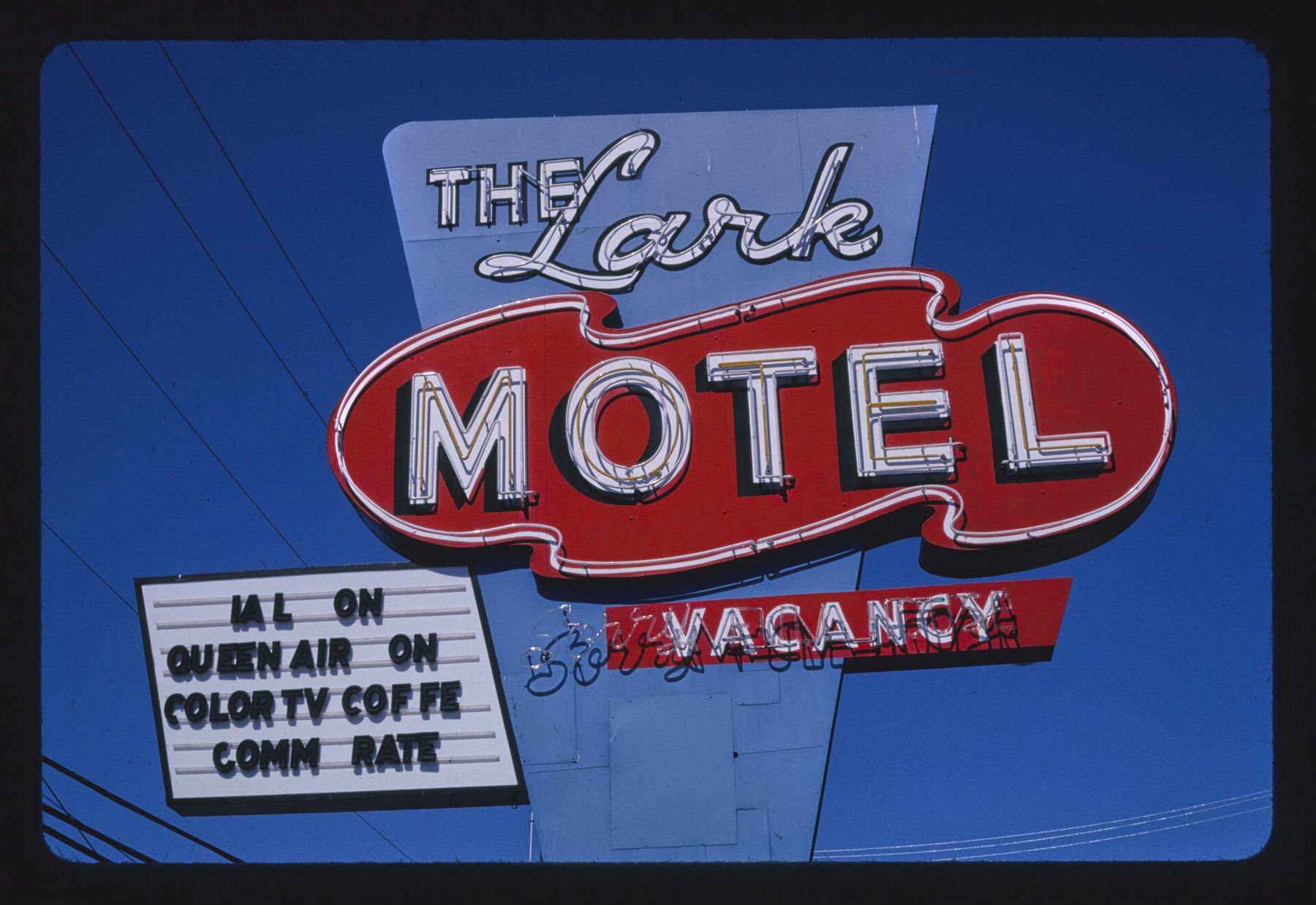
In Santa Barbara, the highway came into town from the north along upper State Street. That is why, even now, the long stretch of State north of Mission Street has so many motels and small hotels, with their parking lots in front and their signs angled toward the traffic. Drivers looked for them as they slowed down coming into town, and the motels competed for their attention with neon, color and promises painted on the sign: air conditioning, television, the pool.
The same years filled the blocks behind West Beach. On Bath, Castillo, West Montecito and the streets around them, between the beach and the highway, small motels went up on lots that had held houses and workshops. They were a few minutes' walk from the sand and from the harbor, and they were built for families on a summer week at the beach.
Postcards from the highway
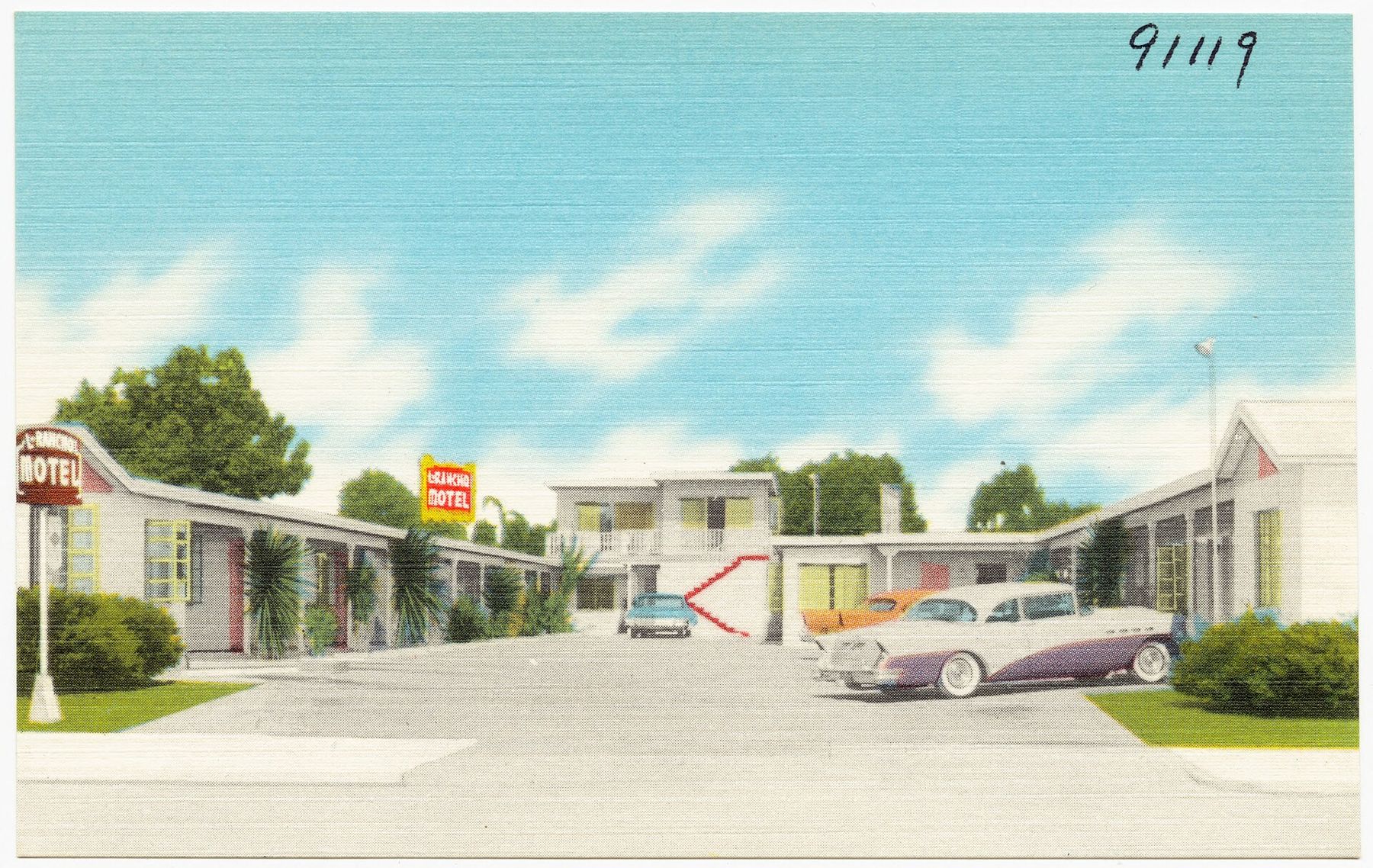
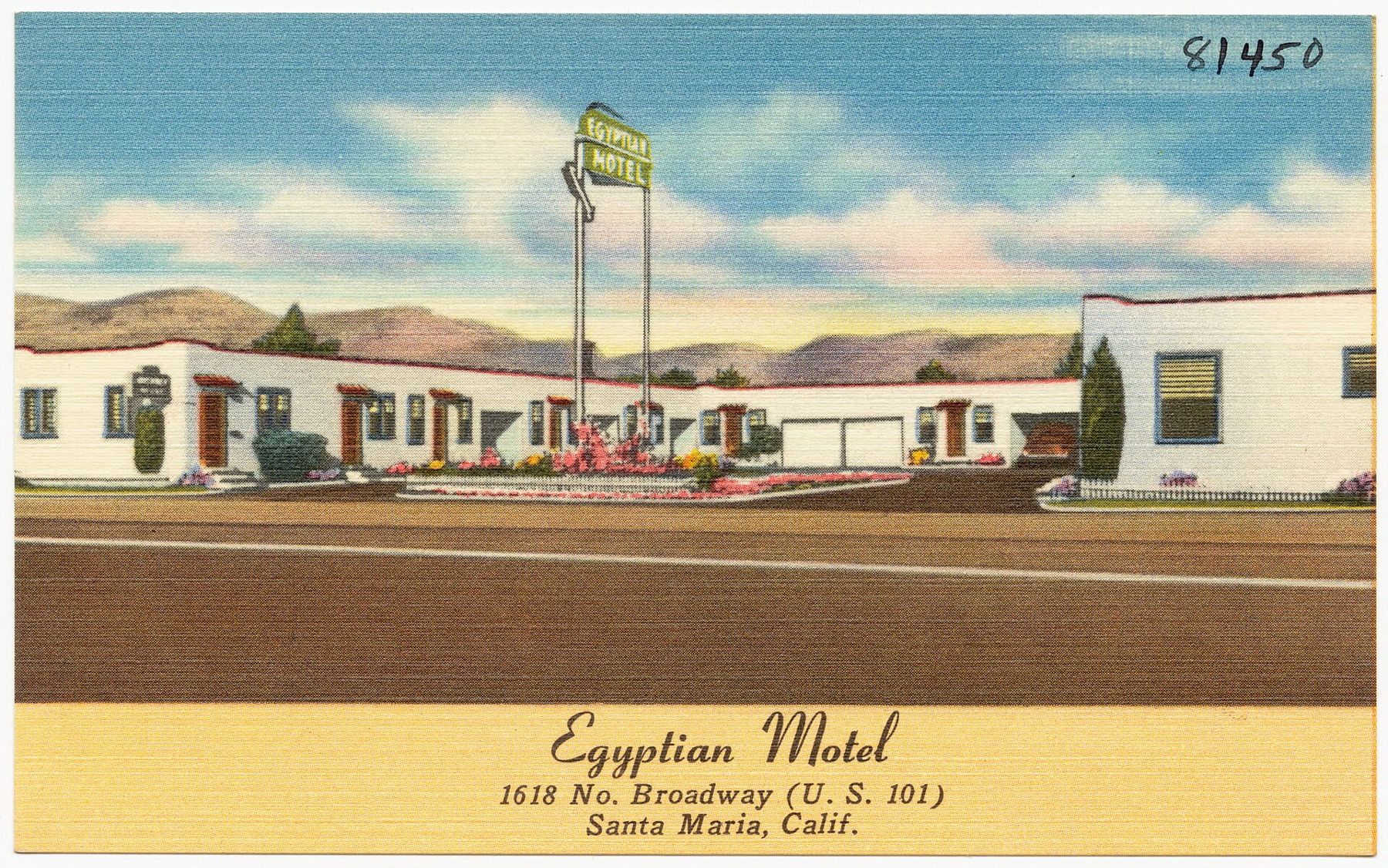
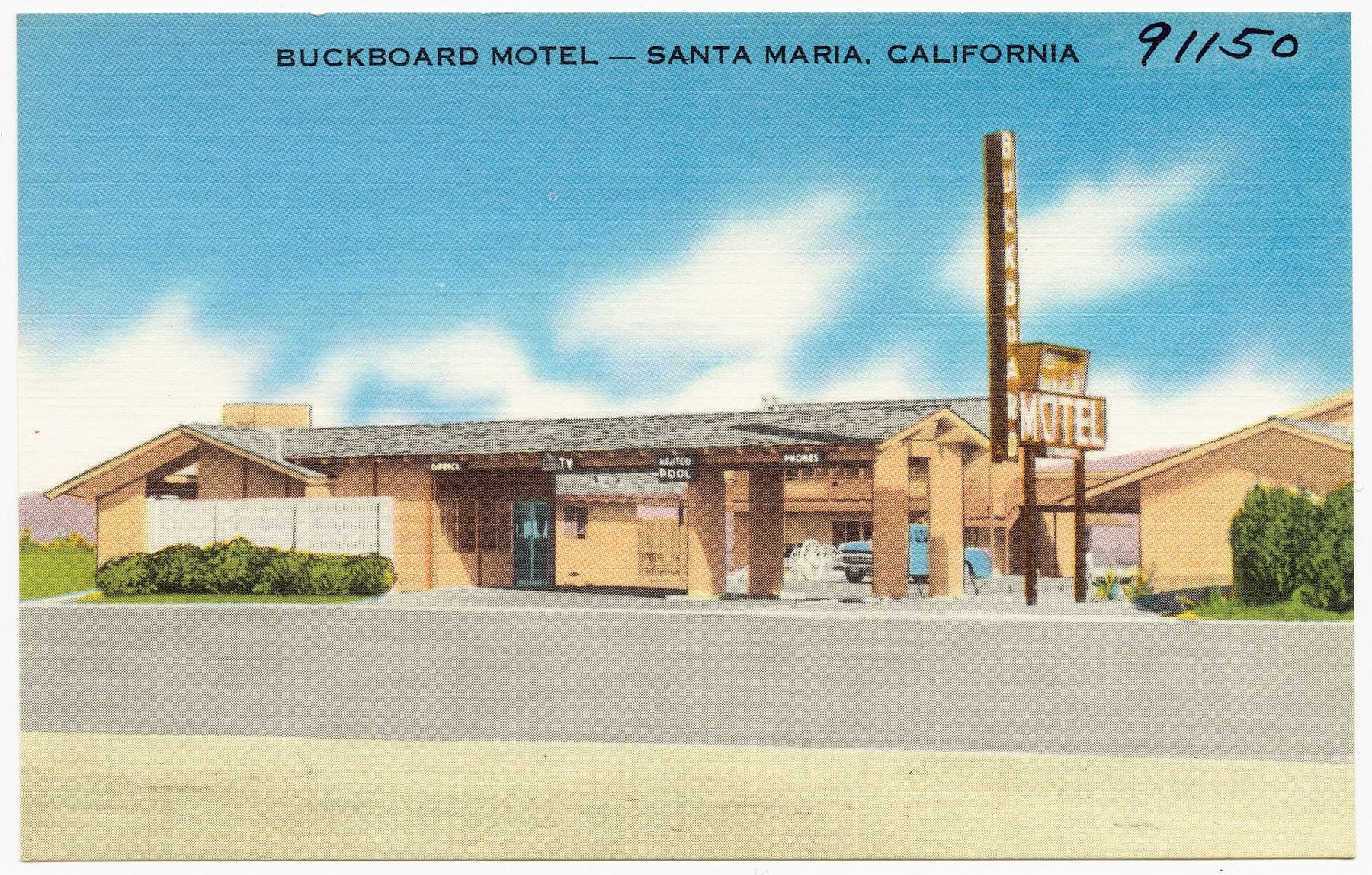
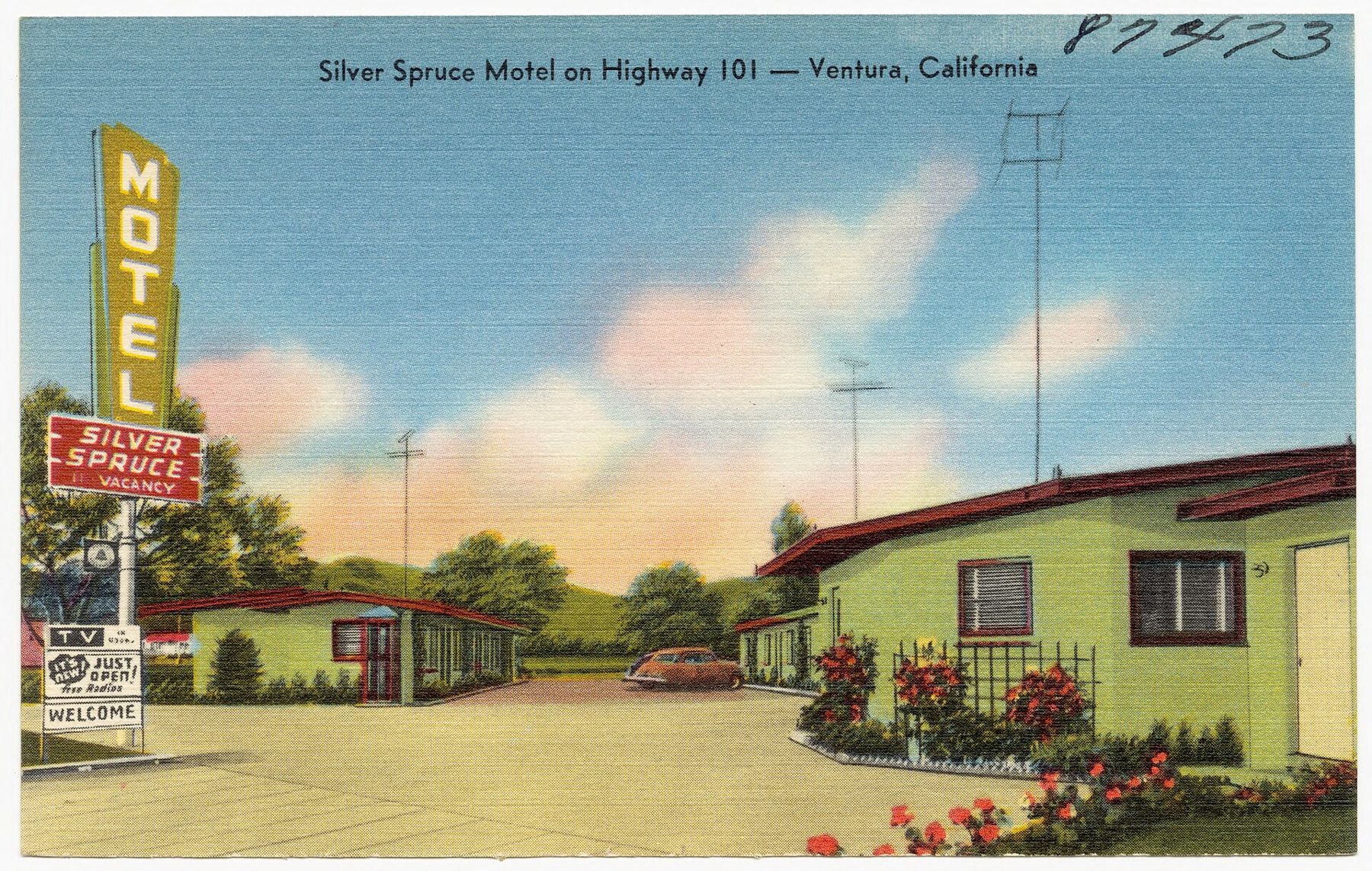
Motels sold themselves with postcards, and the postcards are now the best record of the era. Printed on textured linen-finish card in saturated color, they show the same scene again and again: a clean white or pastel building, a clipped lawn, a few flowers, an enormous blue sky and a car parked in front, polished and empty. The rooms are never shown. The point was the arrival.
The postcards in this story come from up and down the highway, from Santa Maria to Ventura, and they show how alike the motels of the coast road were. The Spanish touches of Santa Barbara, the arches and tile, appear on some; others are pure 1950s modern, with flat roofs and angled signs. Travelers mailed them home to say they had made it this far.
Collectors and libraries have kept thousands of them, and they are worth a slow look. The palms are a little too green, the skies a little too blue, and the cars are always the newest models. The signs in the pictures list the selling points of the day: heated pools, television, air conditioning, vacancy.
 Also on Presidio PostHotels with a history
Stoplights on the 101
For decades after the war, Highway 101 through Santa Barbara was not quite a freeway. Through the middle of town it ran at street level, and traffic stopped at signals near downtown, the last stoplights on the highway between Los Angeles and San Francisco. Summer weekends brought long lines of cars waiting at the lights.
New freeway sections elsewhere on the coast steadily bypassed the old roadside strips, and many motels lost the drivers who had once had no choice but to pass their doors. In Santa Barbara, the signals were removed in 1991, when the freeway through downtown was finished with underpasses. Upper State Street had long since stopped being the highway. The motels stayed, serving a different traveler: the one who had already decided to come here.
The freeway changed the shape of the town in other ways. With the signals gone, State Street passed under the highway instead of meeting it at a light, and the walk from downtown to the beach became one long, unbroken line, past the station and the old warehouse blocks to the sand.
What survives, and what changed
The motel era did not end so much as fade. Many of the buildings survive on upper State Street and in the West Beach blocks, some with their original layout of rooms around a parking court. Others have been renovated beyond recognition, with new paint, new names and a new kind of guest. A few have been torn down for apartments or larger hotels. The city's housing shortage puts steady pressure on every low-rise lot near the beach.
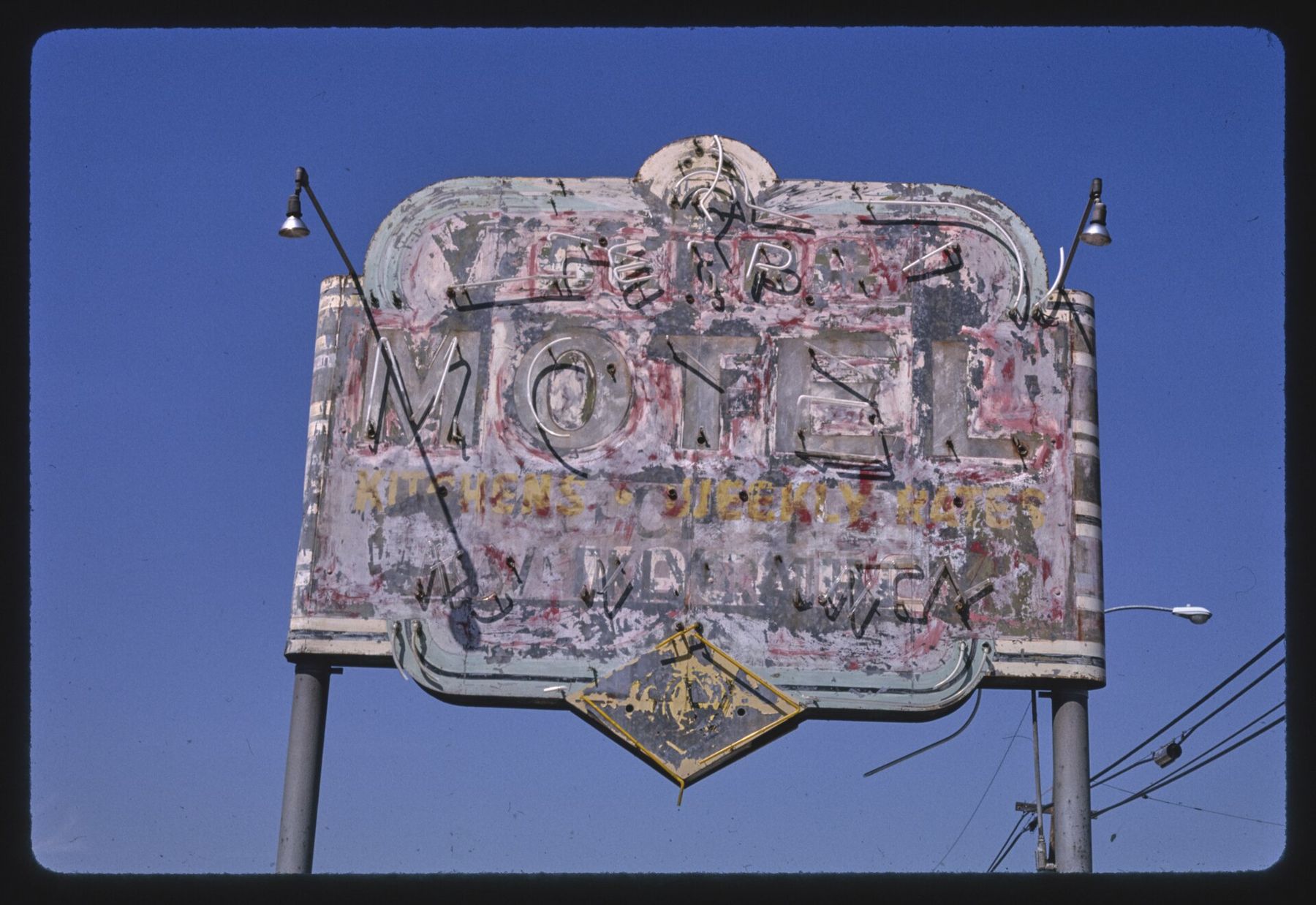
The neon has mostly gone. The signs that survive are often painted, repainted or relit, and the ones that still glow at night are worth noticing. The 1925 earthquake led to the architectural review that still shapes how Santa Barbara builds, one reason the motels here lean toward stucco and tile rather than the space-age shapes found on other highways.
What has survived best is the plan. Walk the blocks behind West Beach and you can still read the motel courts: rows of rooms around a paved yard, set at right angles to the street, a pattern that belongs to the age of the car as clearly as the adobe belongs to the age of the Presidio.
Staying in a motel today
A motel stay in Santa Barbara is still a sensible choice for some trips. The format suits a road trip, a family with a car full of gear, or anyone who wants to park at the door and come and go without a lobby. The West Beach blocks put the beach and the harbor a short walk away; upper State Street is quieter, closer to the freeway and handy for the Santa Ynez Valley. Our guide to staying on the waterfront covers the noise of the trains and the 101 in those blocks.
The old rules of motel pricing no longer hold here. Rates rise sharply on summer weekends, holidays and in Old Spanish Days week in early August, and minimum stays are common at busy times. Rooms vary greatly in age and condition, even within a single building, so read recent descriptions, ask what you are getting and check prices for your dates rather than assuming a motel is a bargain. Without a car, the waterfront blocks work better than upper State; see getting around without a car.
Drive up State Street after dark and look for what remains: a sign by the road, a light behind the word vacancy, a car parked at a door. The highway moved away decades ago, but the motels are still facing the road, waiting for it.