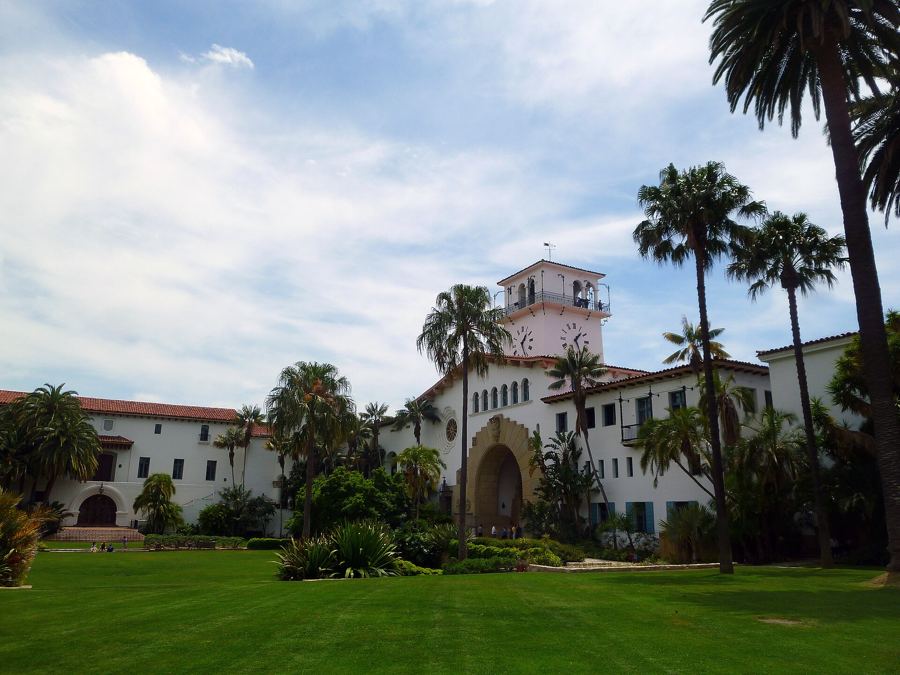
- Santa Barbara County CourthouseClimb El Mirador first to see the whole route
- Lobero TheatreGeorge Washington Smith's 1924 theatre with a stage tower
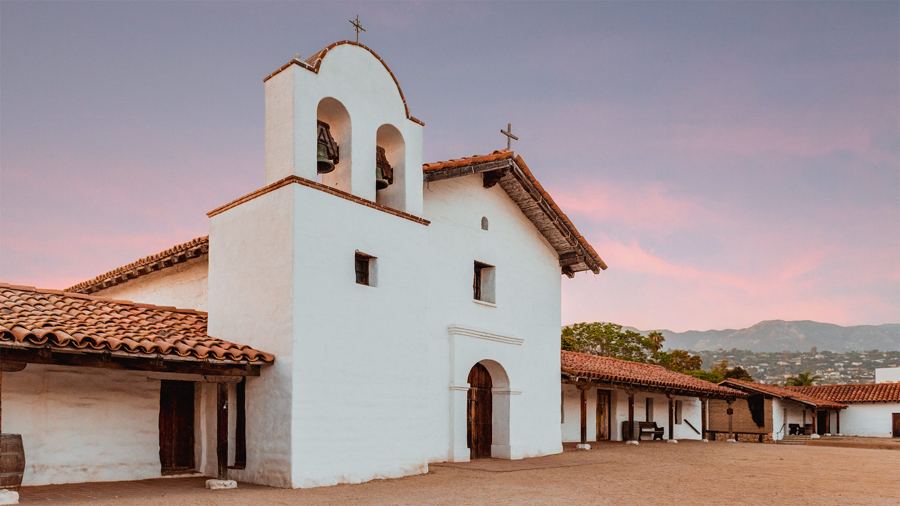
- El Presidio de Santa BárbaraThe 1782 fort's chapel and El Cuartel adobe
- Santa Barbara Historical MuseumAdobe courtyards and the county's long story
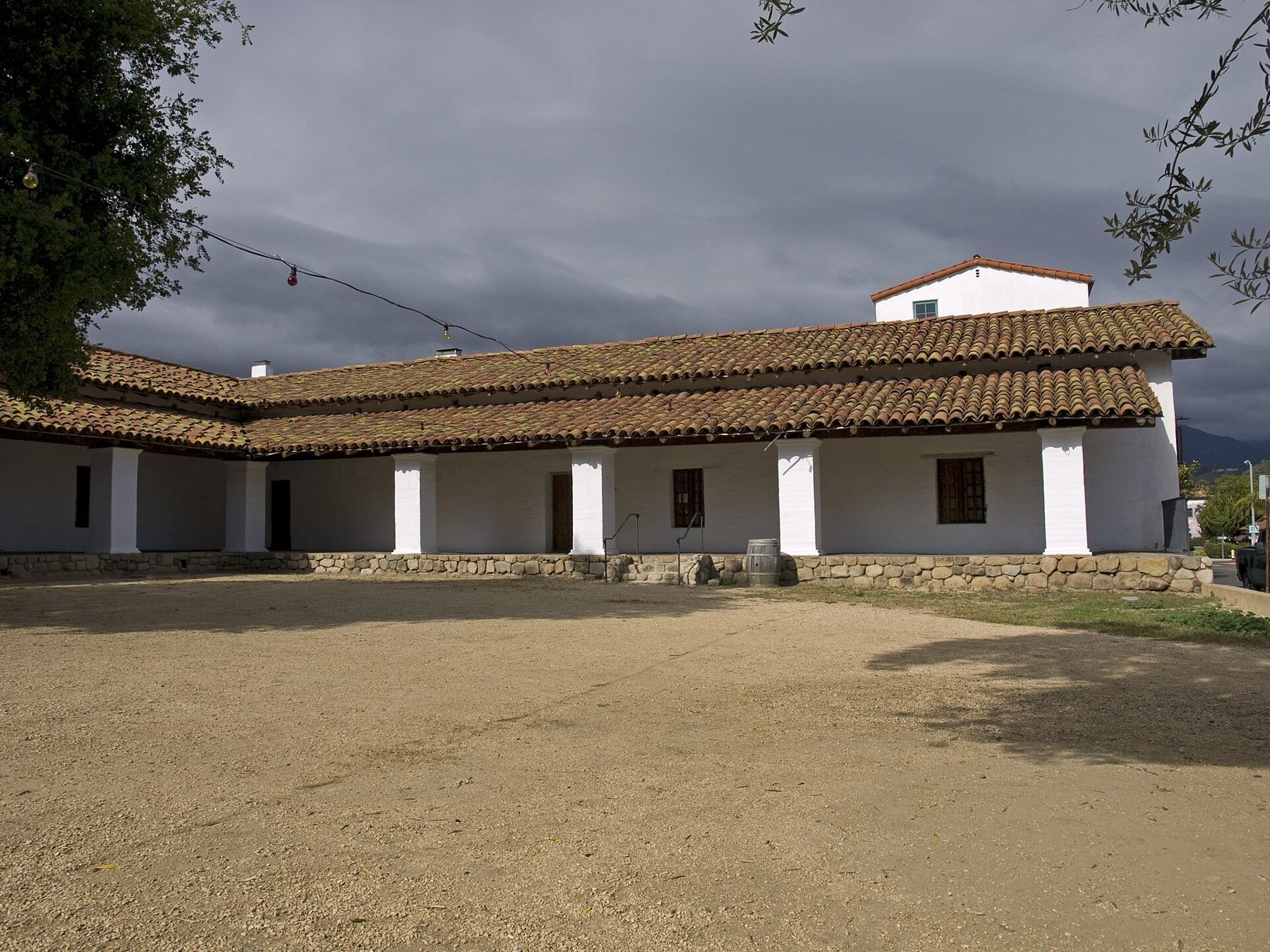
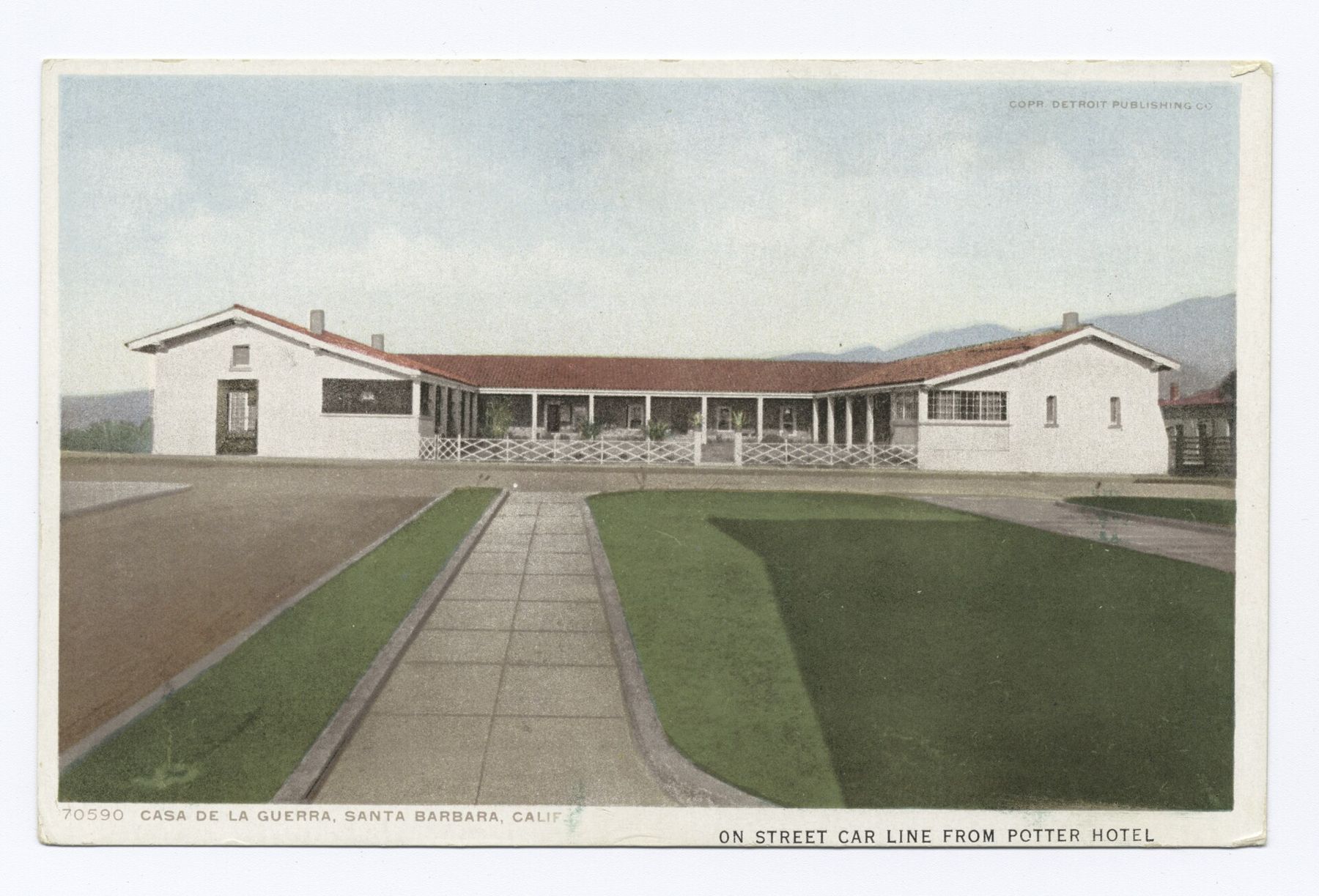
- Casa de la GuerraA presidio commander's house on De la Guerra Plaza
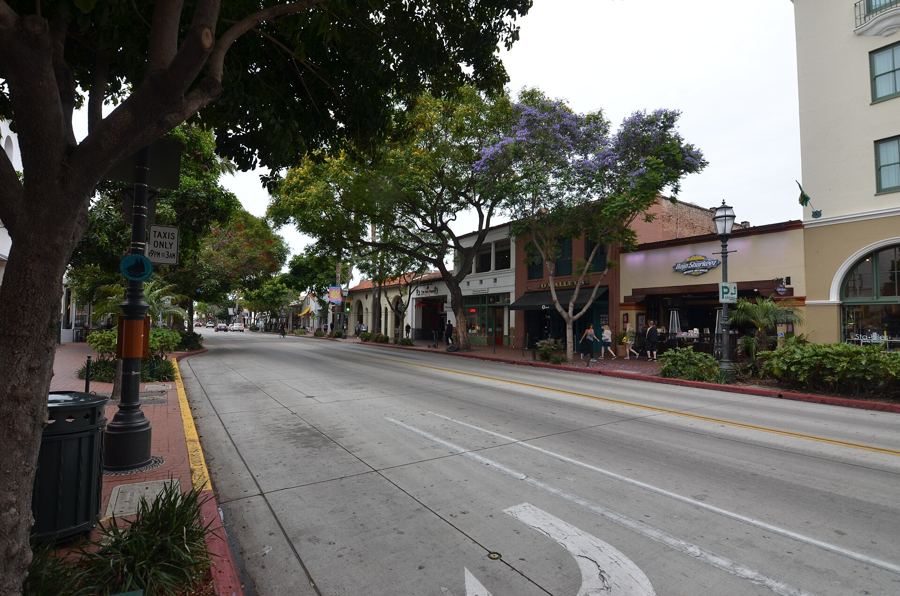
- El PaseoArcaded lanes built in the early 1920s
Santa Barbara has an official walking route through its old center, marked on maps as the Red Tile Walking Tour, and the name is a fair description. Everything on it has white or cream walls and a roof of curved clay tile. Some of it was built by Spanish soldiers in the 1780s. Most of it was built, or rebuilt, by Americans in the 1920s who wanted the town to look as if the soldiers had never left.
The loop is about a mile and a half and covers a dozen blocks between State, Anacapa, Santa Barbara and De la Guerra streets. It is flat by Santa Barbara standards, shaded in places, and full of courtyards that you are allowed to walk into. Start at the Courthouse in the morning, end on El Paseo for lunch, and take the museums as slowly as you like.
Santa Barbara County Courthouse
Begin with the view. The Courthouse, finished in 1929 to a design by William Mooser III, fills the block at Anacapa and Anapamu streets. Walk in through the great arch on Anacapa, cross to the sunken garden, and then go up El Mirador, the clock tower. Entry and the climb are free.
From the deck you can see almost every stop on this walk. The Lobero's tall stage house is close by to the southeast, the Presidio chapel is a small white block beyond it, and the roofs of El Paseo sit near State Street. It is worth a minute just to look at the pattern of tile in every direction, the result of design rules adopted after the 1925 earthquake.
On the way down, stop in the Mural Room on the second floor, with its painted history of the county. Our full story on the Courthouse clock tower has more on the building.
Lobero Theatre
Walk two blocks down Anacapa Street to Canon Perdido. On the corner stands the Lobero Theatre, which has the strongest claim of any building in town to being a working piece of history. An Italian musician, José Lobero, opened an opera house on this spot in 1873. It was replaced in 1924 by the present theatre, designed by George Washington Smith with Lutah Maria Riggs, two of the architects who defined the Santa Barbara style.
Look at the massing from across the street. The plain white walls step up from a low front toward a tall stage tower at the back, like a mission church built for actors. The details are few and careful: a wrought-iron balcony, a tiled roof, small deep-set windows. The Lobero is still a busy performance hall, and the lobby is often open before shows. Programs and ticket prices change through the season.
El Presidio de Santa Bárbara
Continue east on Canon Perdido Street for two blocks. Where it meets Santa Barbara Street, the city opens out into a dirt parade ground with a whitewashed chapel at its head. This is El Presidio de Santa Bárbara, founded in 1782 as the last of Spain's four forts in Alta California.
Most of what stands today has been rebuilt on the original foundations since the 1960s, after careful excavation. The chapel was dedicated in 1985. Across the street, on the north side of Canon Perdido, is El Cuartel, a small adobe that housed a soldier's family. It is the oldest building in Santa Barbara and one of the oldest in California. Step into the doorway and look at the thickness of the walls.
The park charges a small admission and keeps opening days and hours that change, so check before going. The story of how the fort disappeared and came back is told in El Presidio, then and now.
Santa Barbara Historical Museum
Walk one block down Santa Barbara Street to De la Guerra Street. On the corner is the Santa Barbara Historical Museum, a low adobe-style building around a courtyard, with a fountain and old pepper trees for shade. Two historic adobes stand on the grounds, among them the Covarrubias Adobe, built in the early nineteenth century.
Inside, the galleries cover the county from the Chumash to the twentieth century, with furniture, costumes, paintings and objects from the Spanish and Mexican families who ran the town. Exhibits rotate, and the museum's research library holds a large collection of photographs and papers.
Even if you skip the galleries, walk into the courtyard. It is one of the quietest spaces downtown and a good place to sit for ten minutes before the next stretch. Admission arrangements change from time to time, so check before you go. 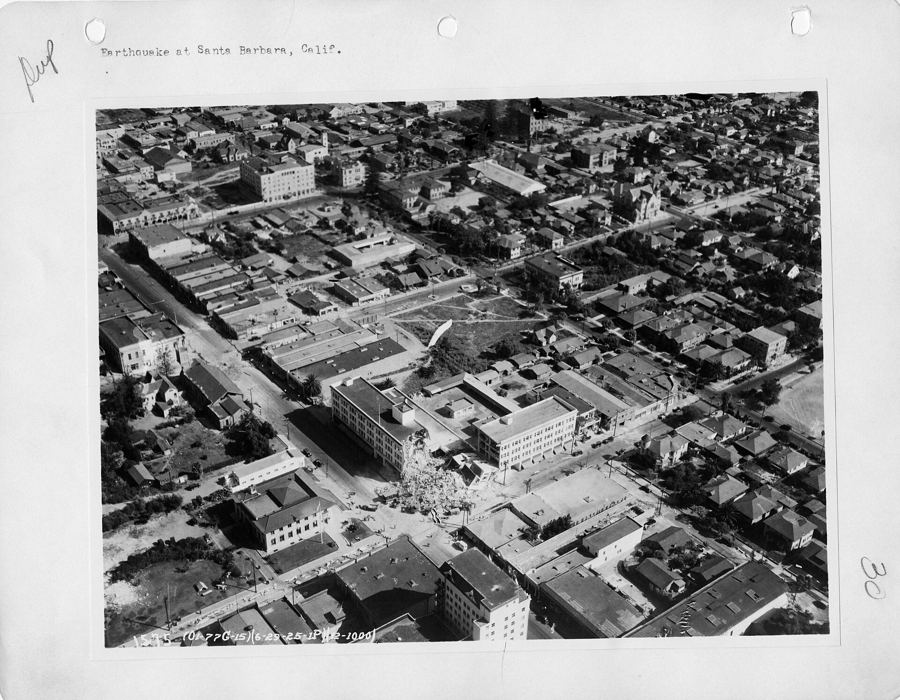 Also on Presidio PostThe earthquake that made Santa Barbara Spanish
Casa de la Guerra
Turn west on De la Guerra Street and walk two blocks toward State. On the north side, facing an open plaza, is Casa de la Guerra, the house of José de la Guerra y Noriega, commander of the presidio and for decades the most powerful man in Santa Barbara. The house was built in the 1810s and 1820s in the U-shaped form of a California adobe, with rooms opening onto a deep corredor around a central courtyard.
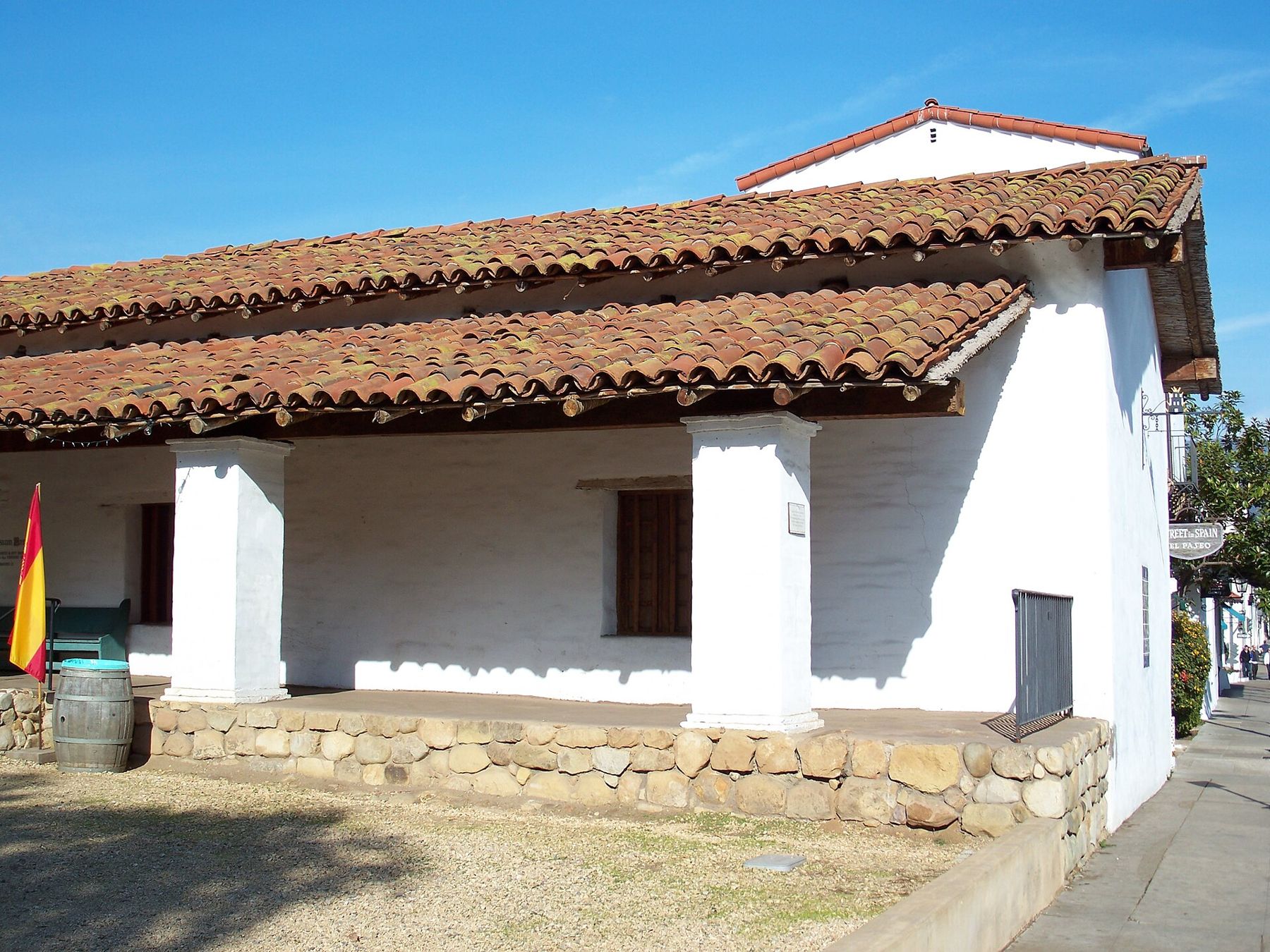
The family lived here for generations and the house became the social center of the town. When Richard Henry Dana visited Santa Barbara in the 1830s he described a wedding in the de la Guerra family in Two Years Before the Mast. Over the following century the house was altered and added to, as the old photographs show.
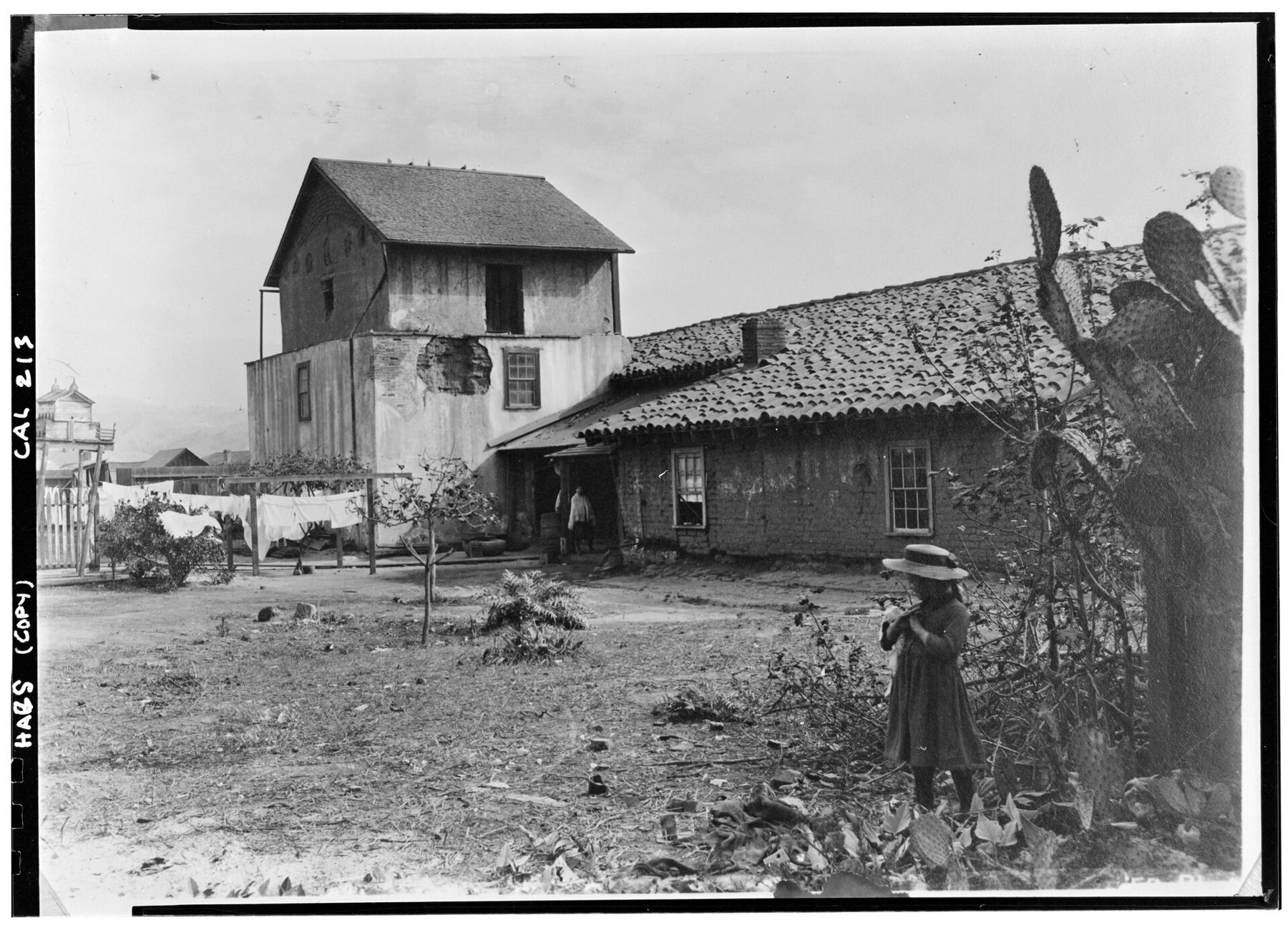
In the 1920s the house was restored and became the anchor for the new shopping lanes of El Paseo. Later the Santa Barbara Trust for Historic Preservation took it on and restored it as a house museum, with rooms furnished to the family's period. Hours are limited and change, so check ahead.
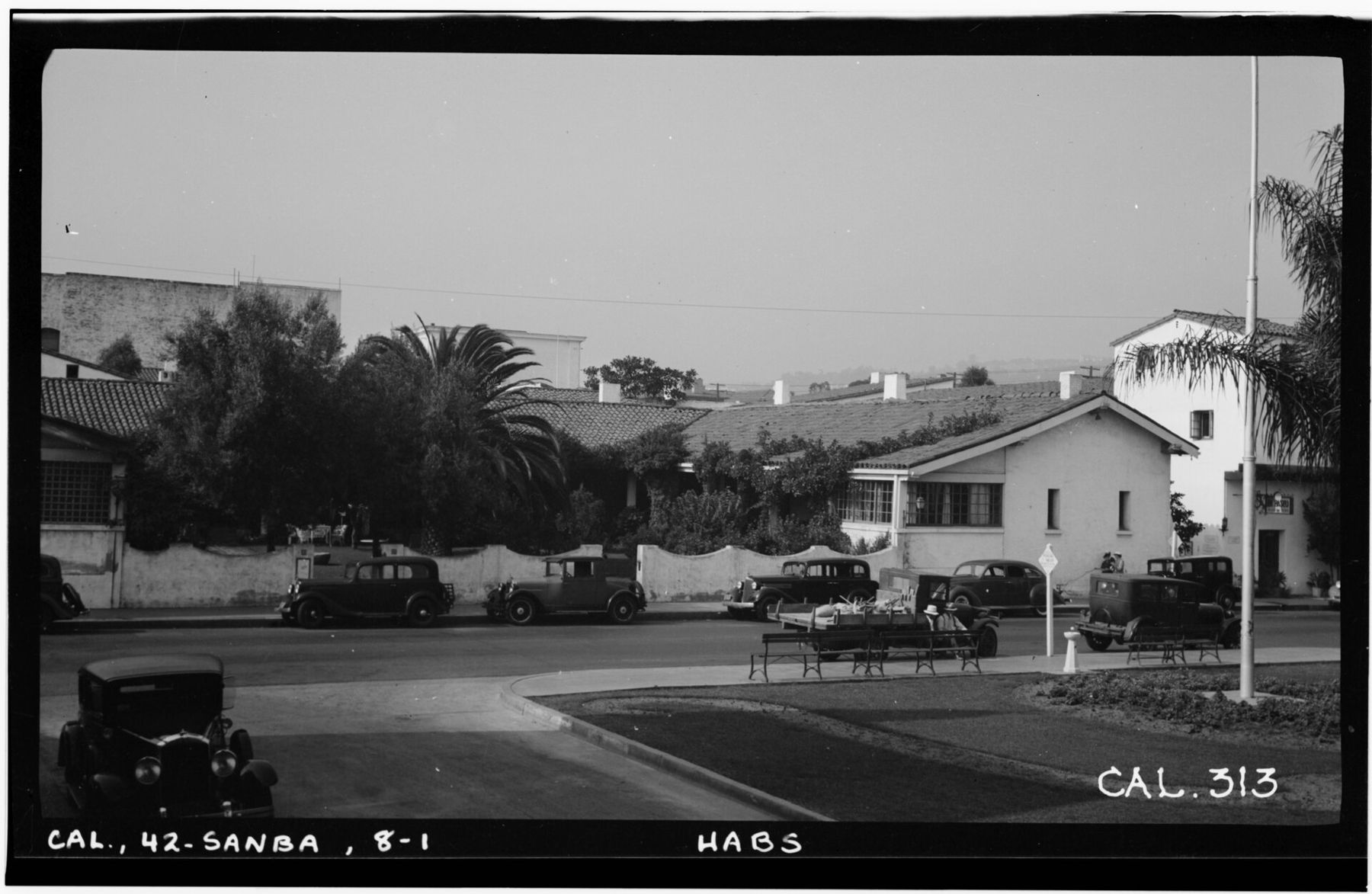
The plaza in front, De la Guerra Plaza, is the civic heart of old Santa Barbara. City Hall stands at its far end. The plaza has hosted markets, rallies and, every August, part of the Old Spanish Days celebrations.
El Paseo
The last stop is next door. El Paseo is a set of shopping lanes and courtyards that wraps around Casa de la Guerra and runs through to State Street. It was built in the early 1920s, with the Casa restoration, at the urging of Bernhard and Irene Hoffmann, and designed in large part by James Osborne Craig, who died before it was finished, with Mary Craig and others completing it.
El Paseo was the model for everything that came after. It showed that new commercial buildings could be made in the old Spanish manner, with arcades, stairs, balconies, fountains and a lot of shade, and that people would want to spend time in them. After the 1925 earthquake the city followed its lead.
Walk the lanes slowly. Look for the old adobe walls of the Casa built into the newer work, the outdoor stairs to the upper floors, the tile set into the steps. The shops and restaurants change over the years, but the courtyards stay.
The practical part
The full loop is about a mile and a half and takes two hours at an easy pace without museum visits. With the Presidio, the Historical Museum and Casa de la Guerra it fills most of a morning. Wear flat shoes: some of the old pavements are uneven.
Parking downtown is mostly in city lots, several of which sit just off State Street, and the rates and free periods change. The Courthouse makes a good start because the tower opens in the morning and the view helps you plan. You can run the walk in reverse and finish on top of El Mirador at the end of the afternoon, when the light is warmer.
Several stops charge admission or keep limited hours, and these change, so check before you set out. Public restrooms are available in the Courthouse and in city lots. When you are done, State Street is a block away, and the walk down State Street to the sea makes a natural second half to the day.