The first sign is nearly always a blow. It rises off the channel like a puff of smoke, hangs for a second in the cool air and drifts away, and by the time most people have found it, it is gone. Then another, a little farther along. Somewhere out there, between the beach and the islands, a whale is breathing on its way north.
Few cities sit this close to so many whales. Gray whales pass the beaches on one of the longest migrations of any mammal. Humpbacks and blue whales come into the channel to feed for months at a time. Dolphins, sometimes in pods of hundreds, run through it all year. You can see much of this from a boat leaving the harbor, and some of it from the bluffs, with binoculars and patience.
Why the channel
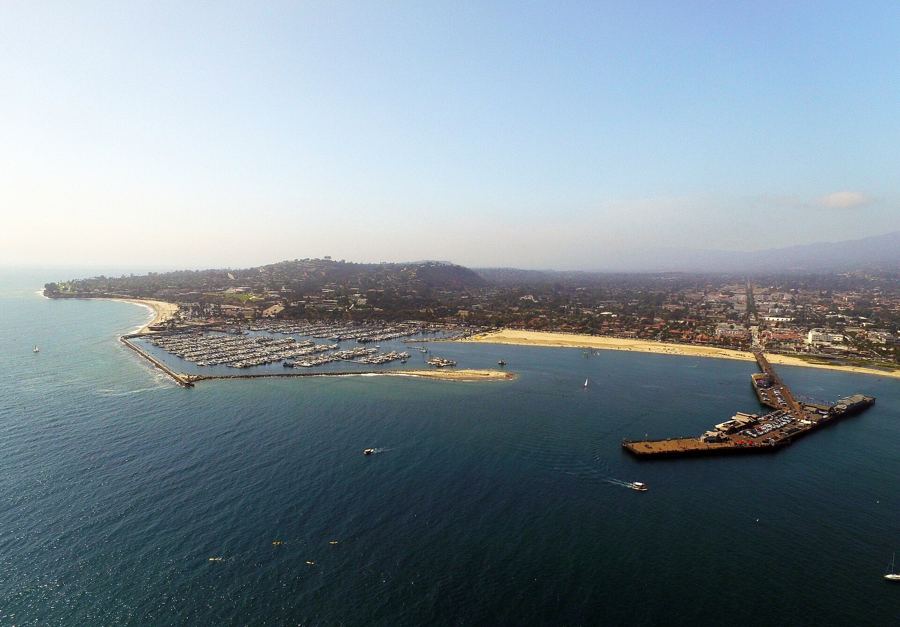
The Santa Barbara Channel lies between the mainland and the northern Channel Islands, open to the Pacific at its western end near Point Conception. The four northern islands, Anacapa, Santa Cruz, Santa Rosa and San Miguel, form a chain across its southern side, and on clear days they look close enough to swim to. They are not; the channel is deep, cold and wide. There, in spring and summer, the northwest winds push surface water away from the coast and cold, nutrient-rich water rises from the deep to replace it. That upwelling feeds plankton, the plankton feeds krill and small fish, and the krill feeds the largest animals that have ever lived.
Since 1980 the waters around the islands have been the Channel Islands National Marine Sanctuary, and the islands themselves a national park. The protection does not make whales appear, but it has helped keep the channel the kind of place they come back to.
The grays go by
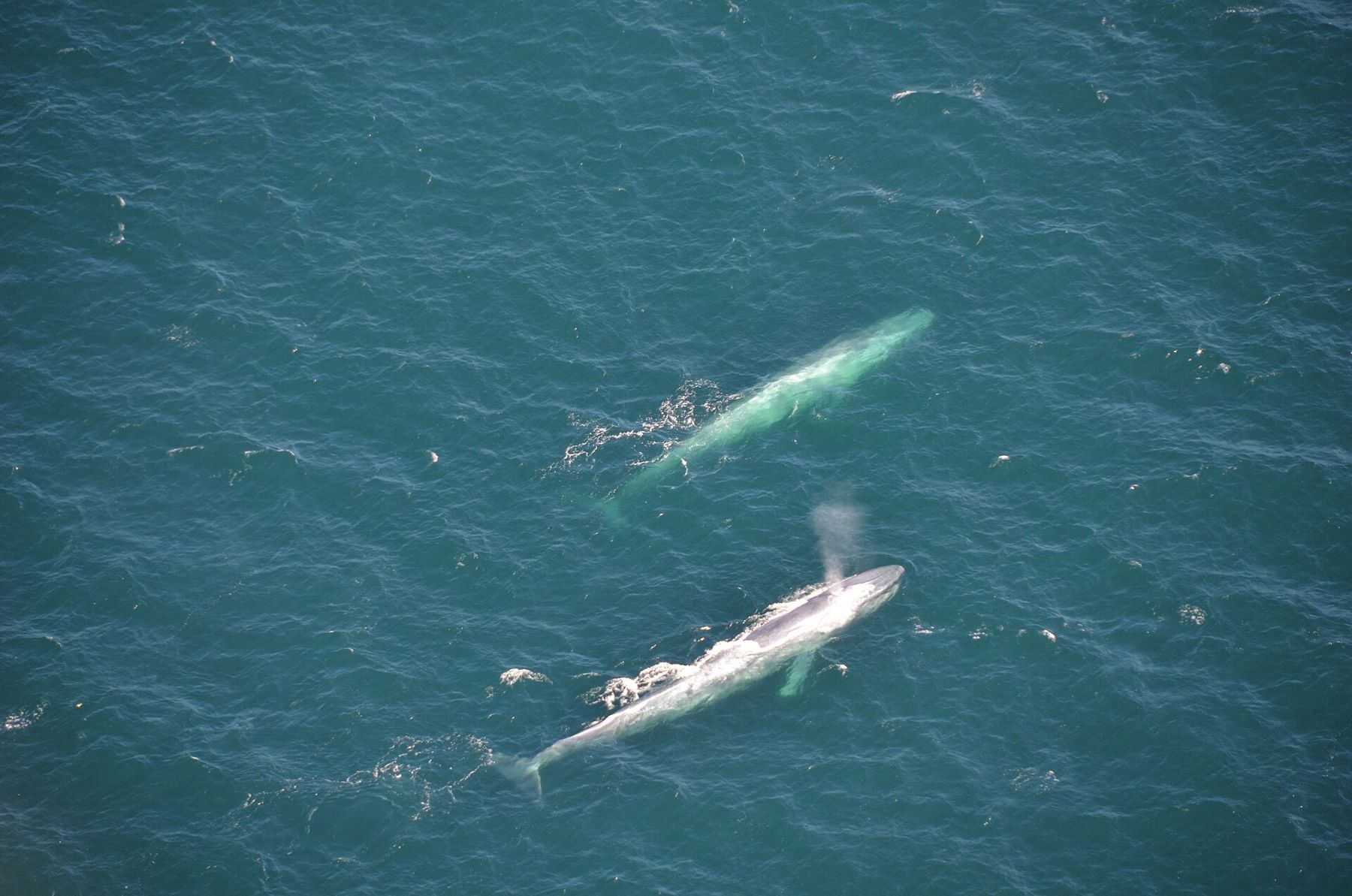
Gray whales make a round trip often put at 10,000 to 12,000 miles, between summer feeding grounds in the Bering and Chukchi seas and the warm lagoons of Baja California where they give birth. They pass Santa Barbara twice. Southbound whales come through from about December into February, pregnant females among the first, travelling steadily and not stopping for much. Northbound whales follow from about February into May, and the last of them are mothers with calves.
Those late travelers are the ones to watch for from shore. Mothers and calves often move close to the beach, sometimes just outside the surf or along the edge of the kelp, keeping to shallow water where they are harder for orcas to reach. Some whales pass inside the channel, along the mainland; others go outside the islands.
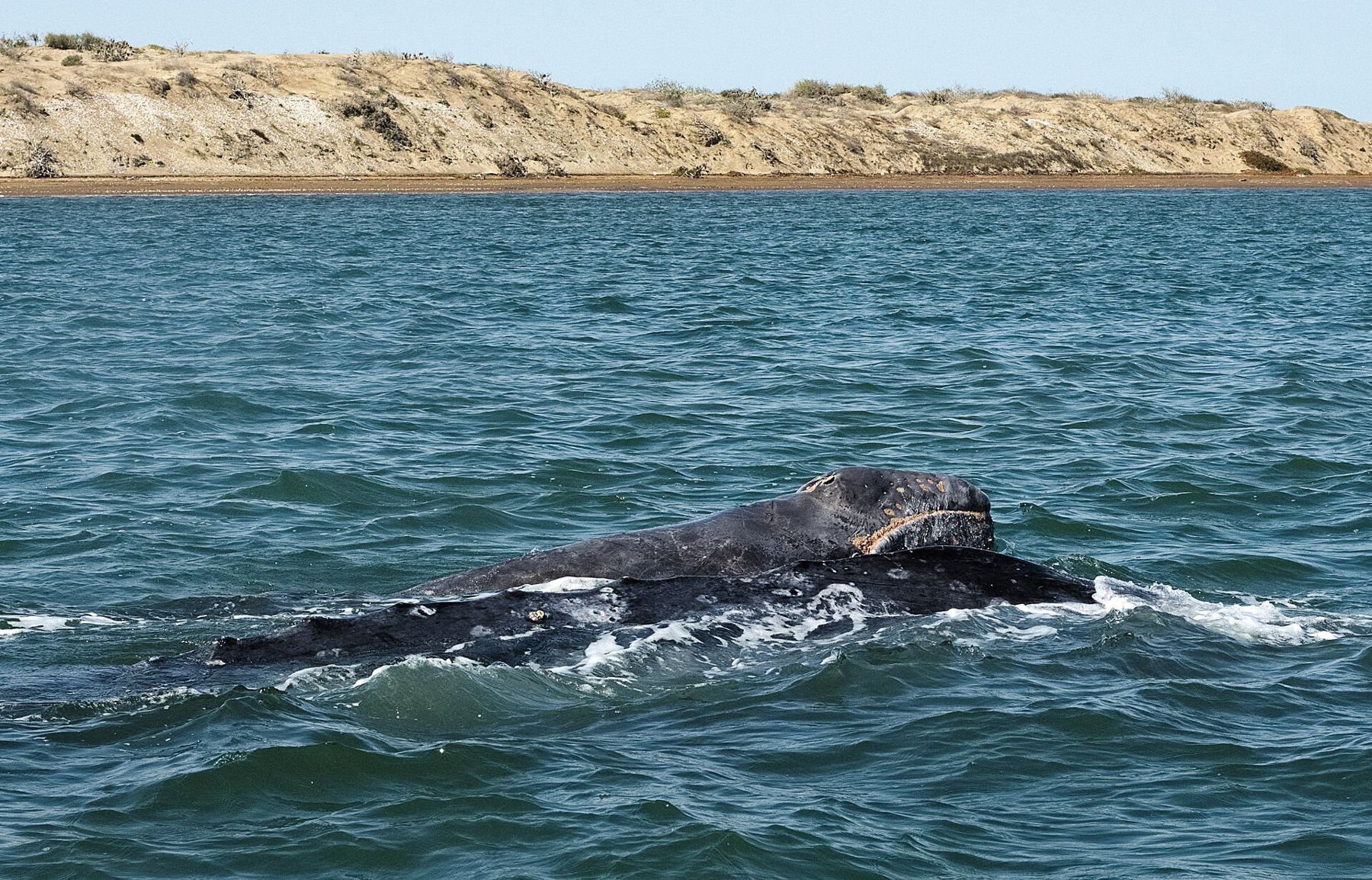
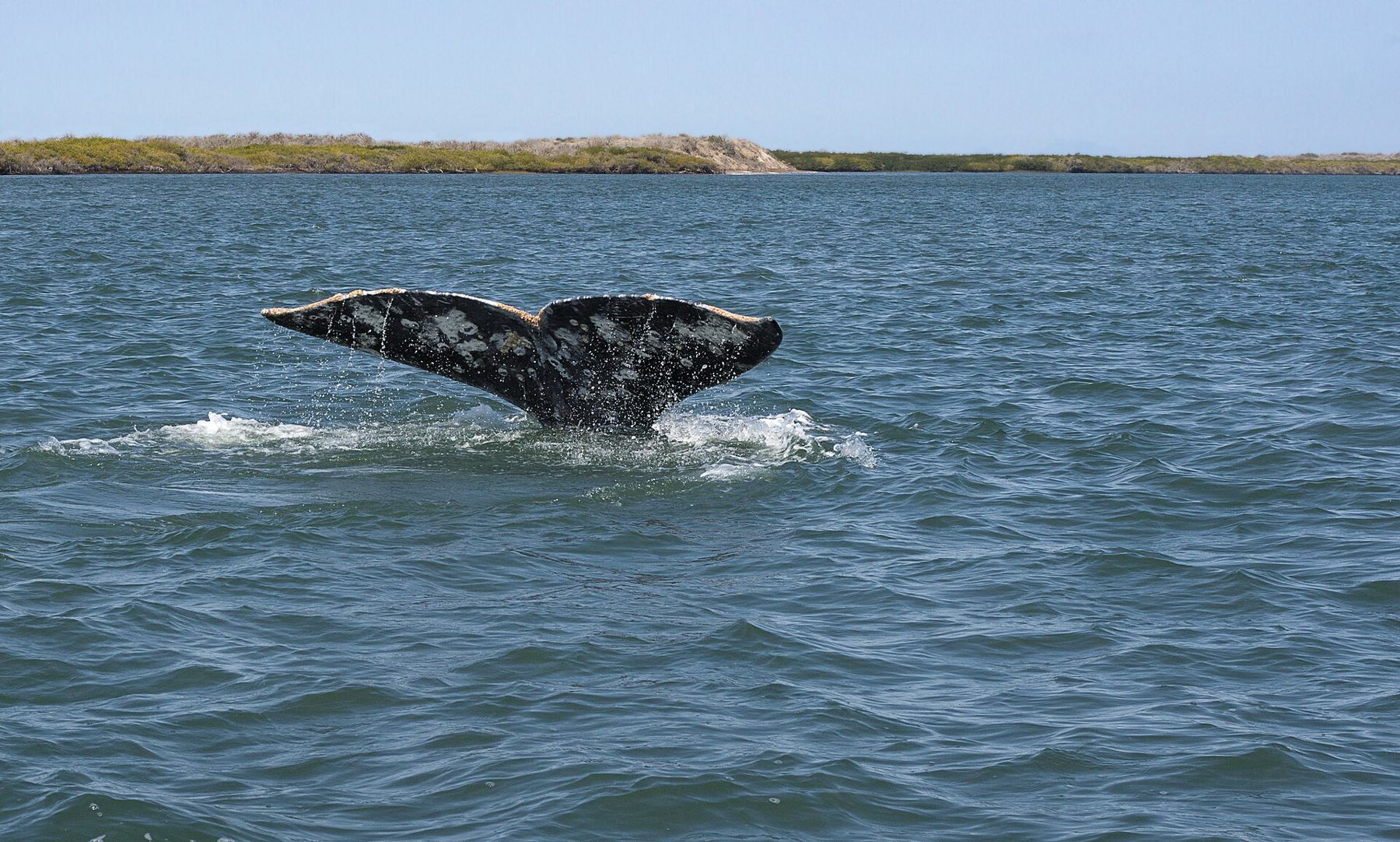
A gray whale is easy to know once you have seen one. It is mottled gray and white, patched with barnacles and pale scars, and it has no dorsal fin, only a low hump and a row of knuckles toward the tail. The blow is low and bushy, and in calm air it can look heart-shaped from behind. Before a deeper dive, the tail flukes lift clear of the water.
The eastern Pacific grays came back from near extinction after whaling ended, and they have had hard years since; numbers have fallen sharply and recovered more than once, most recently after a die-off that began in 2019. Any given winter may be a good one or a thin one.
Summer belongs to the blues
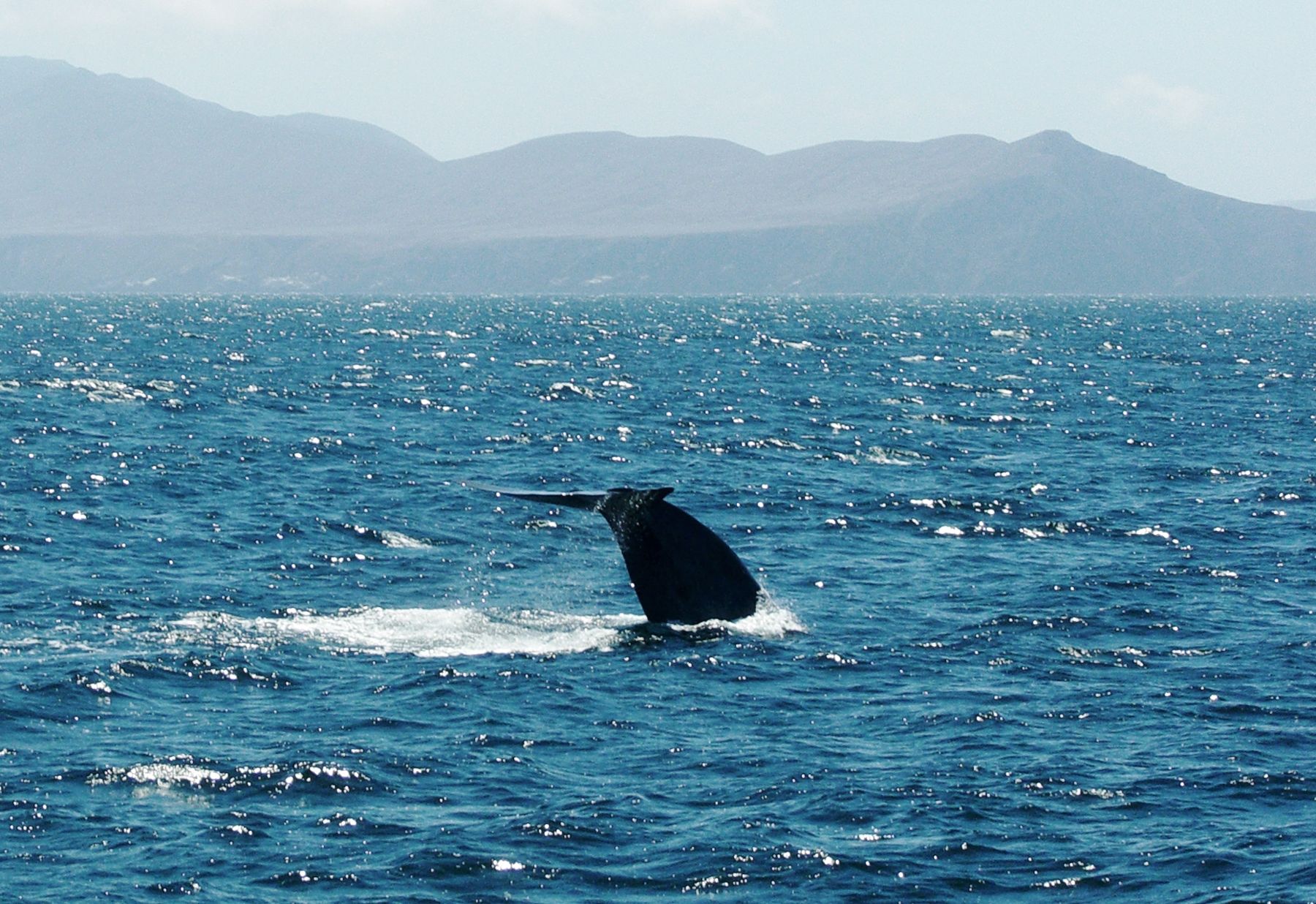
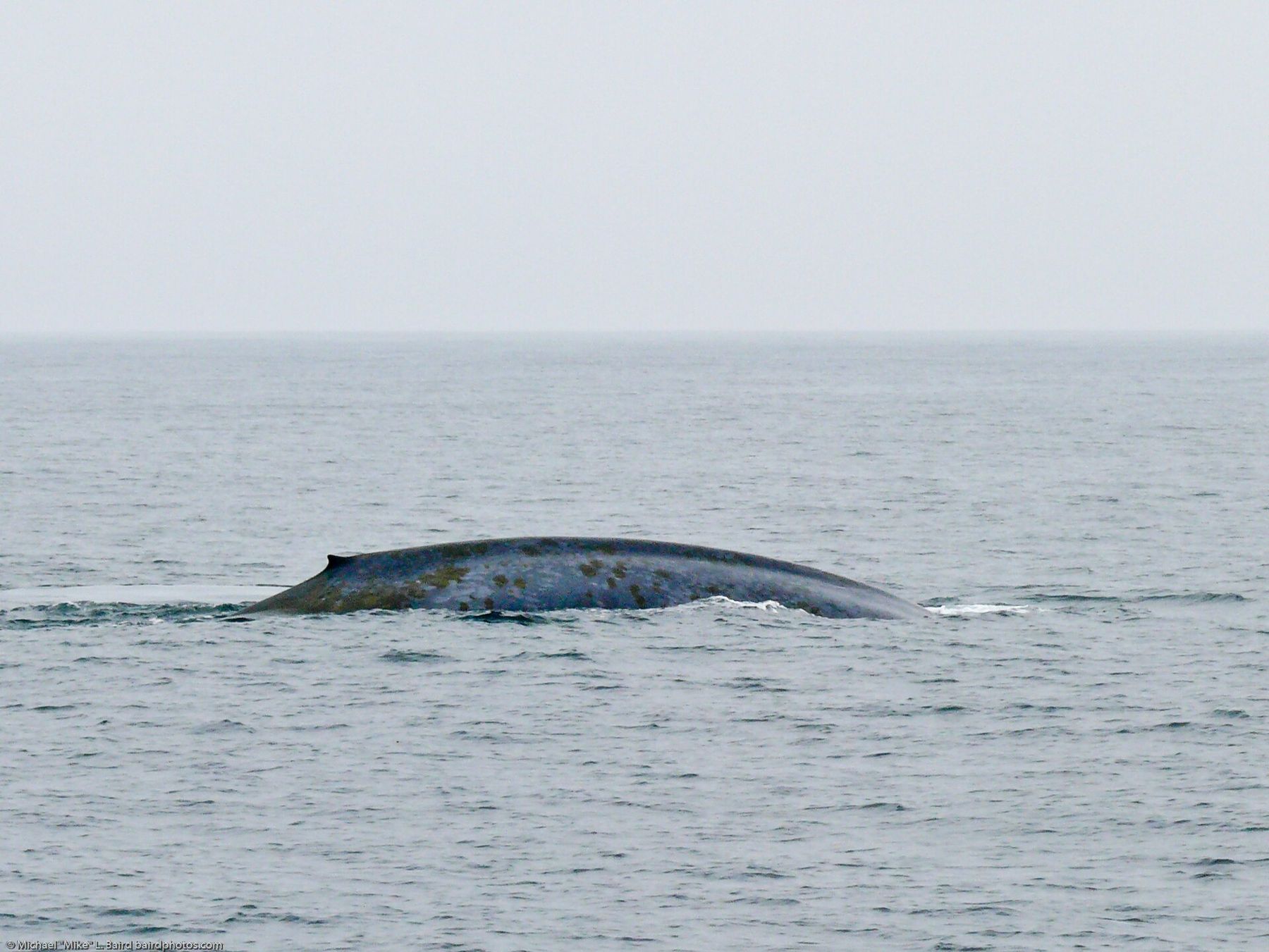
As the grays leave, the krill arrives. From late spring into fall, blue whales come into the channel and the waters around the islands to feed, and in good years the Santa Barbara Channel is one of the most reliable places in the world to see them. A blue whale here commonly runs to 70 or 80 feet, about the length of two city buses, and its blow is a straight column that can rise around 30 feet. Most of the time you see only a long blue-gray back rolling past, which seems to go on for longer than it should. Now and then one lifts its flukes on the way down.
 Also on Presidio PostWhere to find tide pools
Humpbacks are the performers. They turn up through spring, summer and fall, and some years they stay much longer, feeding on krill and on schools of anchovies and sardines. They breach, slap their long white flippers on the water, and lunge up through bait balls with their mouths open and the gulls screaming above them. The black-and-white pattern under each humpback's tail is as individual as a fingerprint, which is how researchers keep track of them.
They are not alone. Fin whales, the second largest, move fast through the channel. Minke whales appear and vanish. Common dolphins travel in pods that can stretch across the water, and Risso's dolphins, scarred almost white, are seen as well. Orcas turn up now and then, and a sighting is talked about along the harbor for days.
Most of the time you see only a long blue-gray back rolling past, which seems to go on for longer than it should.
On the water
Whale-watching boats leave from the harbor through the year. In winter and spring, trips go looking for gray whales close to the coast and tend to be shorter. In summer and fall, the blues and humpbacks are often farther out, toward the islands, and trips run longer. Schedules, trip lengths and fares change with the season and the boat, so check before you go. Trips to the Channel Islands themselves, which mostly leave from Ventura, often see whales on the crossing too.
A typical trip heads out of the harbor mouth and across the channel while the crew and the passengers watch for blows, birds working the water, or a slick where something large has just gone down. Once whales are found, the boat slows and waits. Much of whale watching is waiting, and the waiting is part of it.
The channel can be rougher than it looks from the beach, and the western end in particular is known for its afternoon wind. Mornings are usually calmer. Dress in layers, because it is always colder on the water; bring a hat, sunscreen and something to eat. If you are prone to seasickness, take a remedy before the boat leaves, not after. Keep your eyes on the horizon, not on a phone screen.
Whales are protected by federal law, and boats are expected to approach slowly and keep their distance. Paddlers should do the same: in some years whales feed close to the harbor and the beaches, and the rule for a kayak or a board is to stay well back and let the whale choose.
Ships in the lanes
The channel is also a highway. The shipping lanes for the ports of Los Angeles and Long Beach run through it, and the container ships that use them are among the largest moving objects you will ever see from a beach. Their routes pass through the same waters where blue whales feed, and collisions with ships are a known threat to the whales. A voluntary program asks the big ships to slow down during the whale season, and many do.
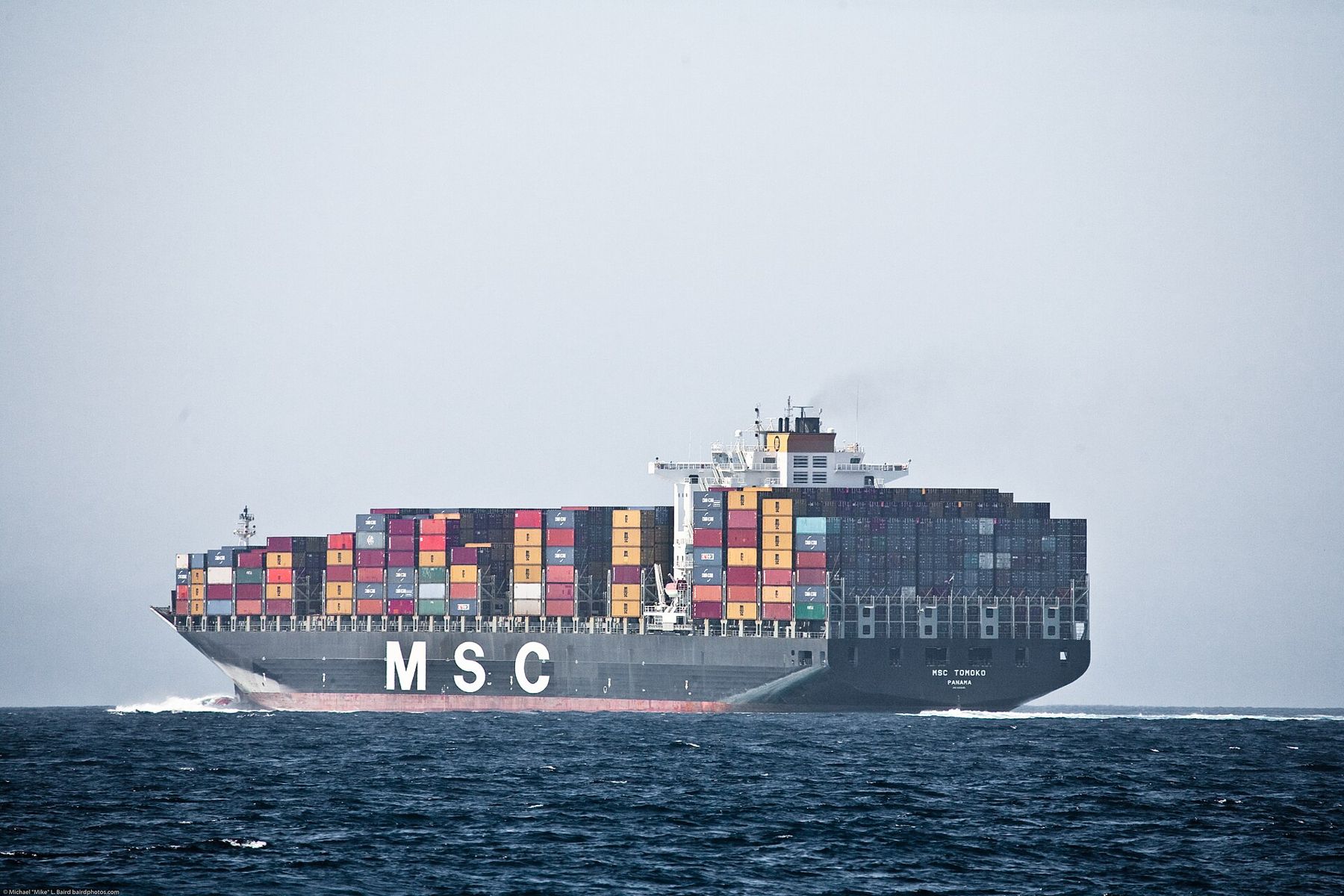
From a bluff on a clear day you can often see a ship and a whale's blow in the same view, which says more about the channel than any map.
Watching from shore
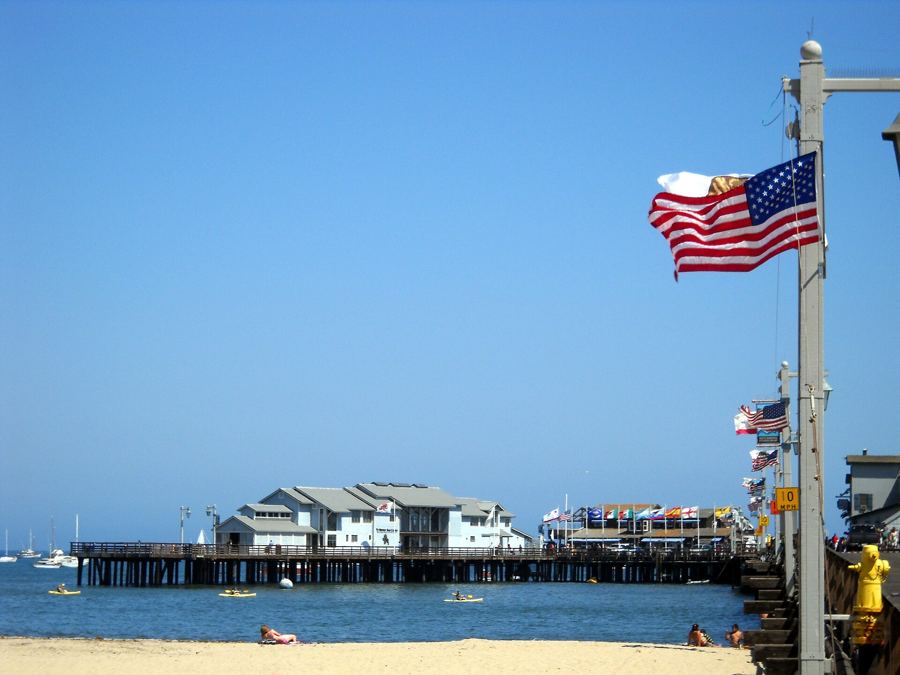
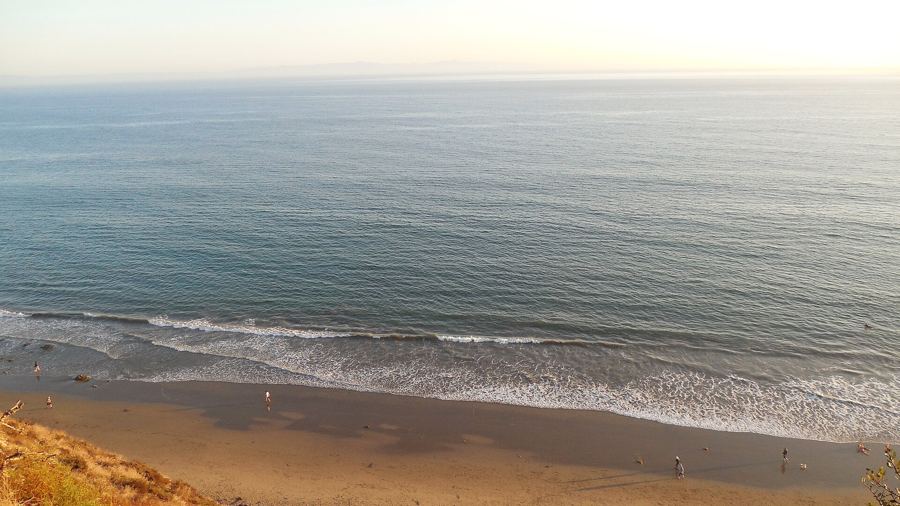
For gray whales, a high place and a calm morning are all you need. The bluffs at Shoreline Park, the cliffs of the Mesa, the end of Stearns Wharf, Coal Oil Point and the bluffs of Ellwood Mesa in Goleta, and the Carpinteria Bluffs all look out over the water the whales use. Glassy, overcast mornings are best, because a blow shows up against still gray water and the glare is low.
Scan slowly, a little at a time, and look for the blow rather than the whale. When you see one, keep watching the same patch of water; a gray whale usually breathes several times before it dives. In spring, look closer in than you think, just outside the surf, where a mother and calf may be moving along the kelp. In summer, the blues are usually too far out to see well from shore, but dolphins often pass close, and in some years humpbacks feed within sight of the beach.
The best moment rarely comes when you are expecting it. You look up from the sand, or round a bend in the bluff path, and there it is, a puff of white low on the water, hanging for a second before the wind takes it.