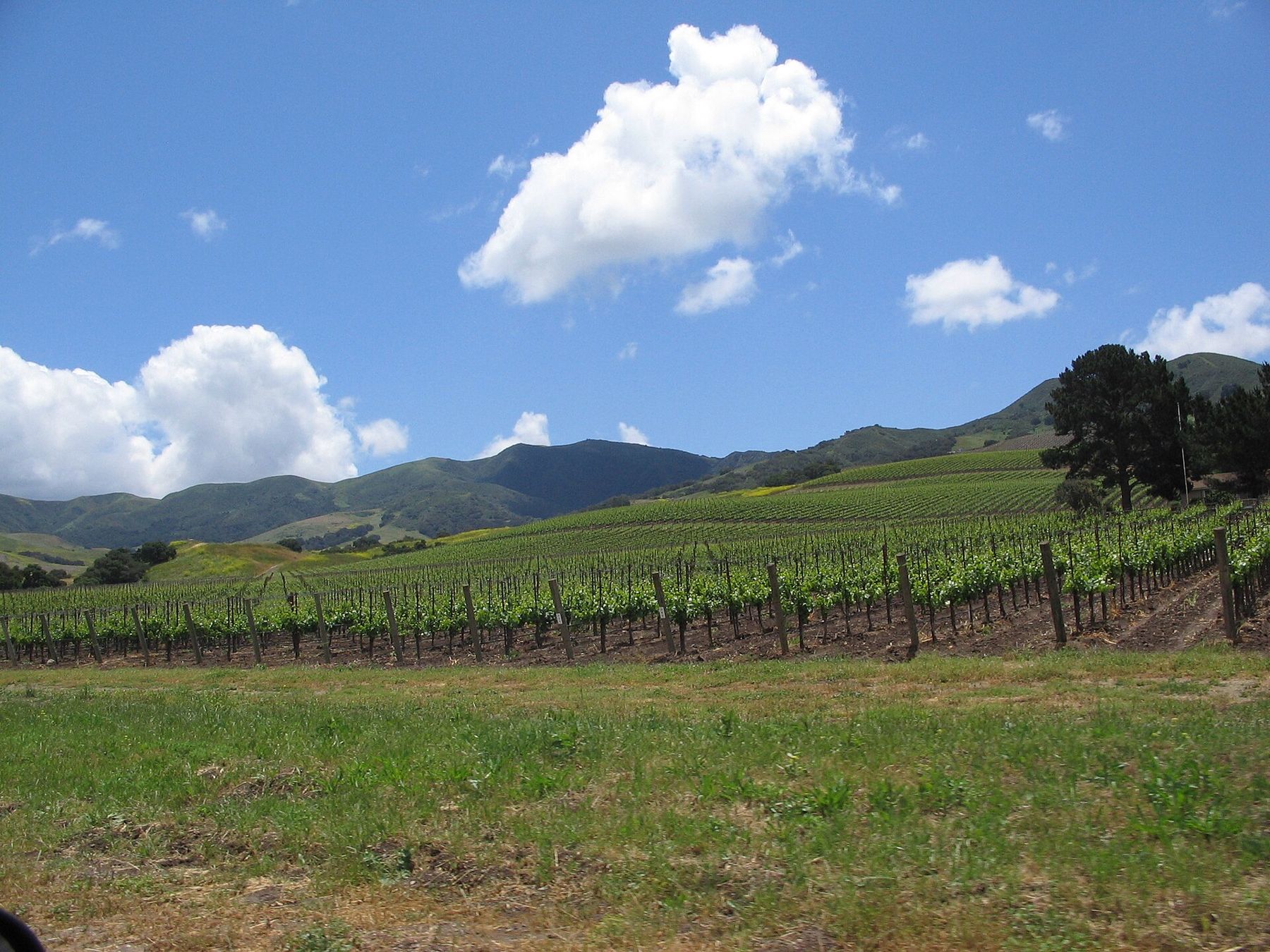
On a summer morning in Lompoc, the fog sits on the vineyards like a lid. It has come in from the Pacific overnight, a few miles to the west, and it will not burn off until late morning. Drive east on Highway 246 and it thins as you go. By Buellton the sun is out. By the time you reach the oaks of Happy Canyon, twenty-odd miles from the coast, the afternoon is hot enough to send the cattle under the trees.
That drive, about half an hour, runs through the whole range of wine that the Santa Ynez Valley makes. Pinot Noir at one end, Cabernet Sauvignon at the other, and Syrah somewhere in the middle. The reason is not the soil or the winemakers, although both matter. It is the shape of the land.
Mountains that turn east
Almost every mountain range in California runs roughly north to south, parallel to the coast. They form walls that keep the cold Pacific air out of the interior valleys. Napa and Sonoma get their sea breezes through gaps and bays, not straight off the ocean.
Santa Barbara County is different. Here the coastline bends sharply at Point Conception, and the mountains bend with it. The Santa Ynez Mountains, which stand behind Santa Barbara, run east to west. So do the San Rafael Mountains to the north. They belong to the Transverse Ranges, a rare stretch of West Coast mountains that lie across the grain of the continent.
Between them lies the Santa Ynez Valley, and it opens to the west, straight onto the ocean. Nothing blocks the cold air. Every afternoon, as the inland valleys heat up, the rising air draws the sea breeze in through the mouth of the valley near Lompoc, and every evening the fog follows it. The farther east you go, the less of that marine air reaches you, and the warmer it gets.
The result is a gradient, not a single climate. Growers speak of it the way sailors speak of wind. One valley contains the conditions of Burgundy at its western end and something closer to the Rhône or Bordeaux at its eastern end, all within an hour's drive.
Vines before the valley was famous
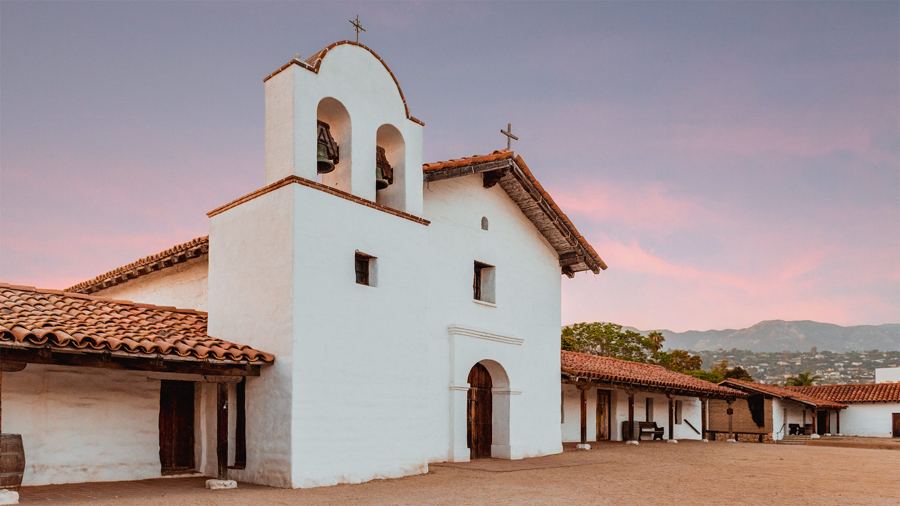
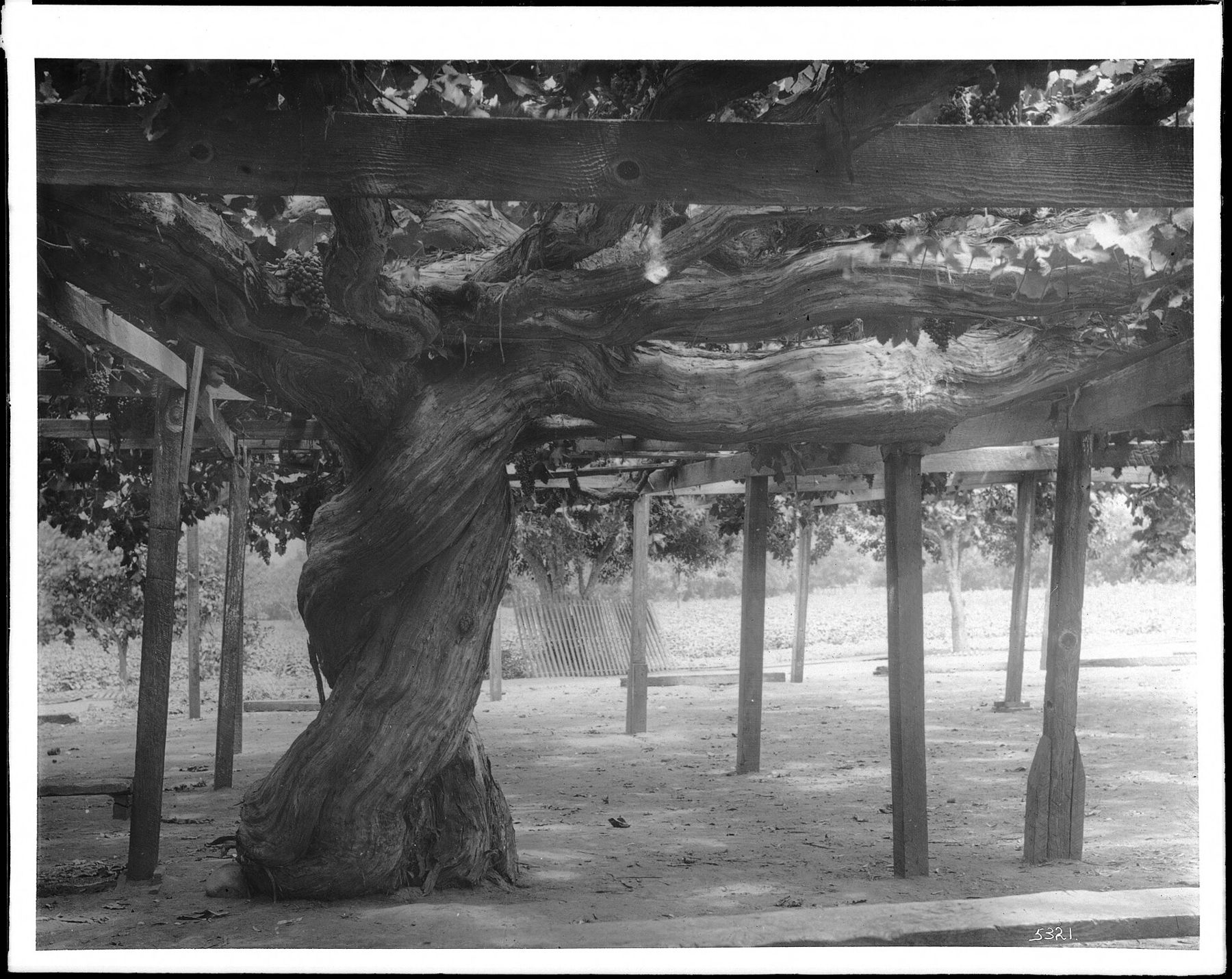
Grapes are not new here. Franciscan padres planted vines at the missions in the late eighteenth century, and Mission Santa Inés, founded in 1804 in what is now Solvang, had its vineyard like the rest. Through the nineteenth century, Santa Barbara gardens grew enormous grapevines, and one in Montecito was famous enough to draw visitors and photographers.
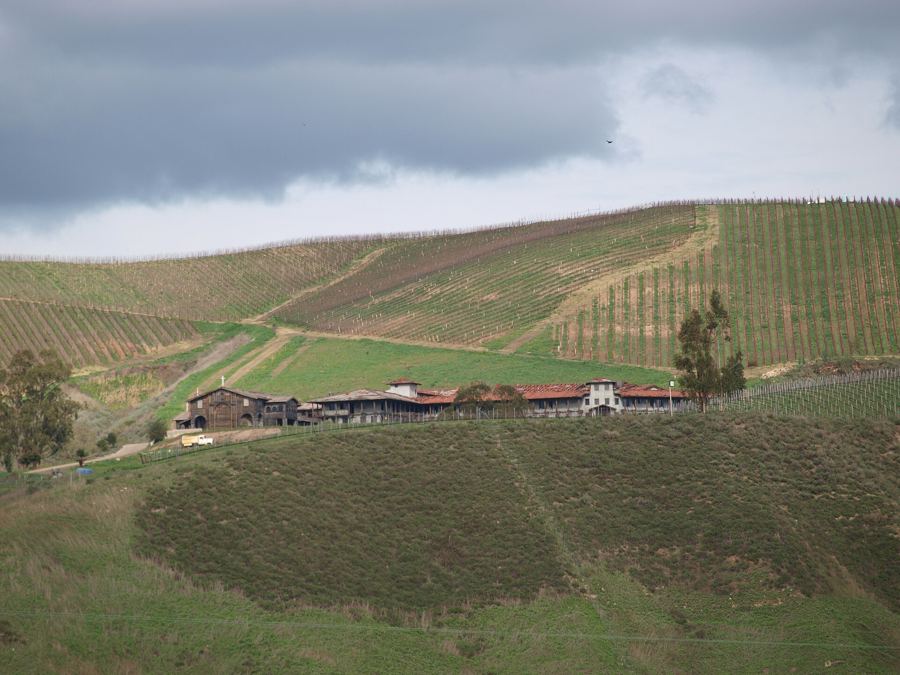
The modern industry is much younger. Serious planting began in the late 1960s and early 1970s, when a few growers bet that the cool western valley could ripen the grapes of northern France. The planting of the Sanford and Benedict vineyard in 1971, west of Buellton, is the moment most often named. Its Pinot Noir and Chardonnay showed what the coastal end of the valley could do.
The rest of the world caught on slowly and then all at once. By the 2000s, wineries in the county numbered well over a hundred, and a 2004 film about two friends on a wine-tasting trip through Buellton, Solvang and Los Olivos brought tour buses and a sudden fame to Pinot Noir.
Reading the map: the AVAs
An American Viticultural Area, or AVA, is a federally recognized wine region defined by its geography. Its name on a label tells you where the grapes were grown. The Santa Ynez Valley AVA, recognized in the early 1980s, covers the whole valley. Inside it, four smaller AVAs mark out distinct pieces of the gradient, and between them they give the valley its vocabulary.
Read them from west to east, the way the fog travels.
 Also on Presidio PostThe Urban Wine Trail, one block at a time
Sta. Rita Hills and Ballard Canyon
The Sta. Rita Hills lie at the cold western end, between Lompoc and Buellton, along Highway 246 and Santa Rosa Road. The AVA was recognized in 2001 under the name Santa Rita Hills. A few years later it was shortened to the abbreviation Sta. Rita Hills, to settle a dispute with a Chilean winery of a similar name, and the odd spelling stuck.
This is Pinot Noir and Chardonnay country, with Syrah on the warmer slopes. The soils are varied, and around Lompoc they include the chalky white diatomaceous earth that has been mined there for a century. Wines from these hills tend toward bright acidity and lean, savory fruit. On a cold morning the vineyards here look nothing like the postcard image of California wine: low, windswept, gray-green, wrapped in mist.
Ballard Canyon sits in the middle of the valley, a short, winding canyon between Solvang and Los Olivos. Recognized in 2013, it is small, and its growers chose to build its identity around a single grape: Syrah. The canyon is warm enough to ripen it fully and cool enough at night to keep it fresh. Grenache and other Rhône varieties grow here too, and the canyon's rolling hills, oaks and grazing cattle make it one of the prettiest drives in the county.
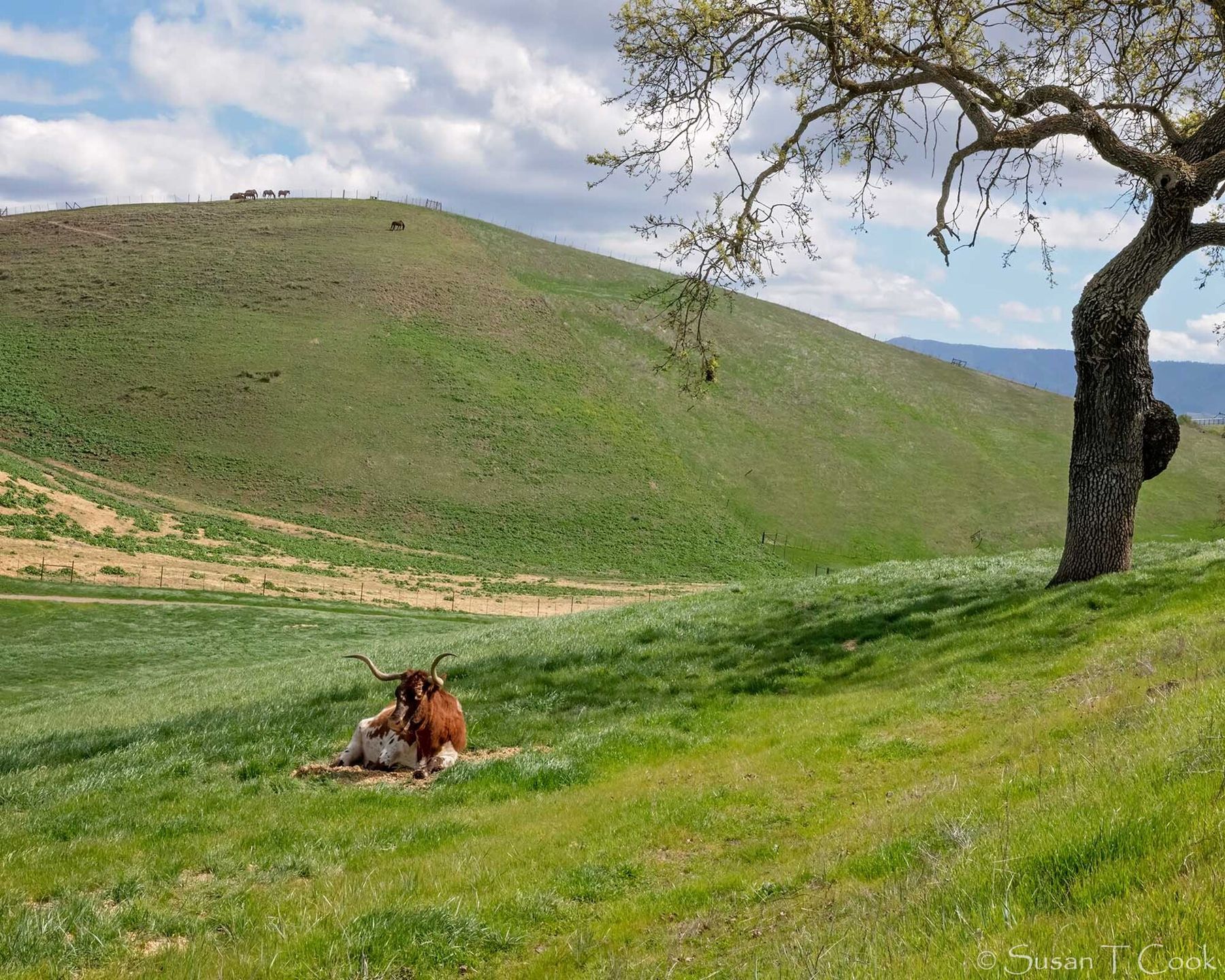
One valley contains the conditions of Burgundy at its western end and something closer to the Rhône or Bordeaux at its eastern end, all within an hour's drive.
Los Olivos District and Happy Canyon
The Los Olivos District, the newest of the four, was recognized in the mid-2010s. It covers the broad, gently sloping plain around the towns of Los Olivos and Santa Ynez, between the Santa Ynez River and the foothills of the San Rafael Mountains. It is warmer than the canyons to the west and more open, and it grows a wide range: Bordeaux grapes like Cabernet Sauvignon and Sauvignon Blanc, Rhône grapes like Syrah and Grenache, and a scattering of Italian and Spanish varieties. If one AVA represents the valley's versatility, it is this one.
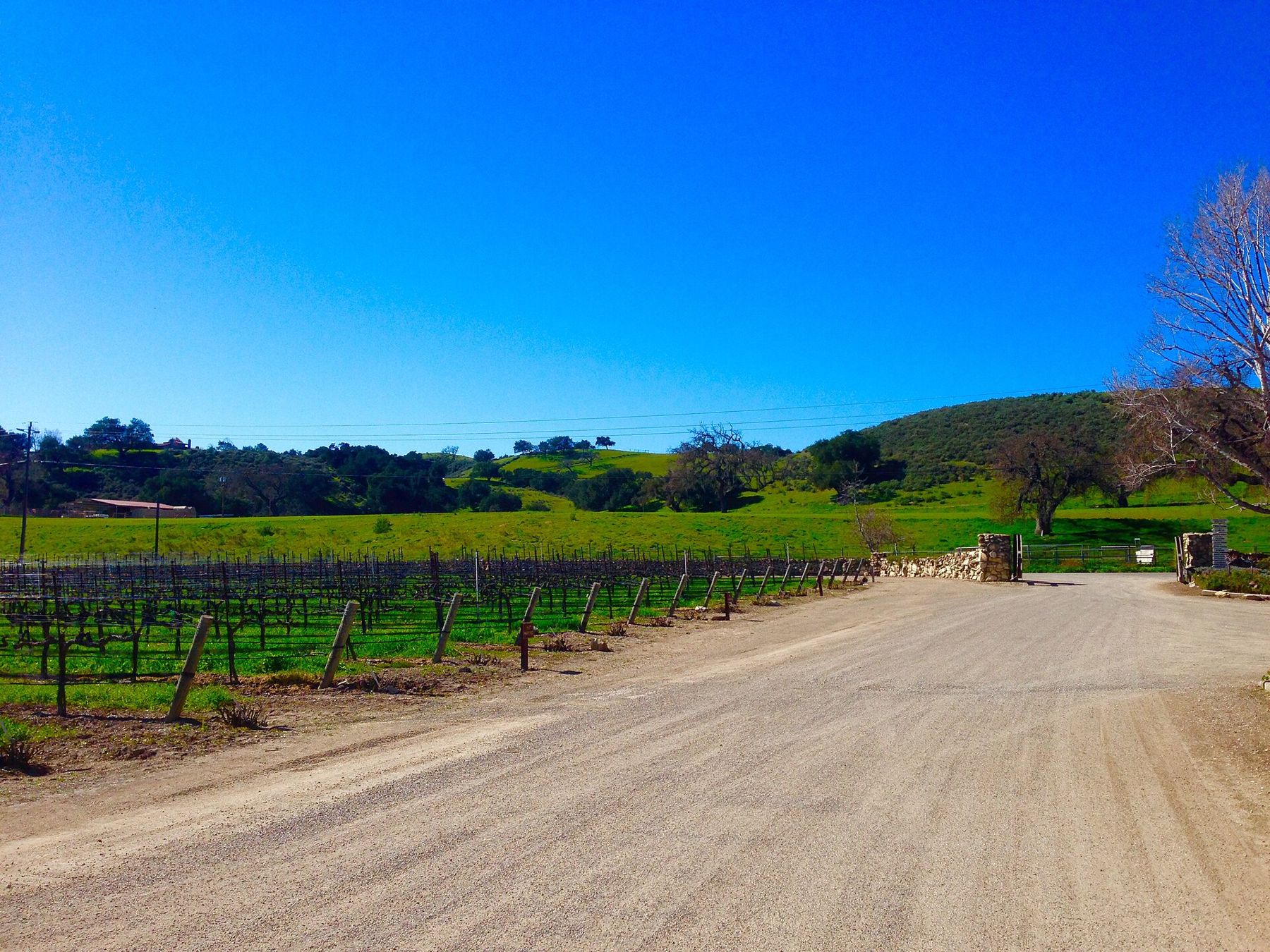
Happy Canyon of Santa Barbara, recognized in 2009, is the warmest. It lies at the far eastern end of the valley, in the foothills north of Lake Cachuma, where the marine air arrives late and weak. The days are hot, the nights still cool, and the soils include serpentine, an unusual greenish rock poor in nutrients that keeps the vines small and their crop light.
This is where Cabernet Sauvignon, Cabernet Franc, Merlot and Sauvignon Blanc do best. The wines are fuller and riper than anything from the Sta. Rita Hills, and the contrast is the whole lesson of the valley. The same river runs past both, and the same fog tries to reach both. Only one of them gets it every day.
How to taste the gradient
The best way to understand all this is to taste it in order. Start in the west with a Chardonnay or Pinot Noir from the Sta. Rita Hills, move to a Syrah from Ballard Canyon, and finish with a Cabernet from Happy Canyon. The wines get darker, richer and riper as you go, as clearly as the hillsides turn from green to gold.
You can do it in the valley, driving Highway 246 from Lompoc to Santa Ynez and up into the canyons. Many wineries welcome walk-in visitors and many now prefer reservations; tasting fees and hours vary and change, so check before you set out. Bring a designated driver, or book a driver, because the roads are winding and patrolled.
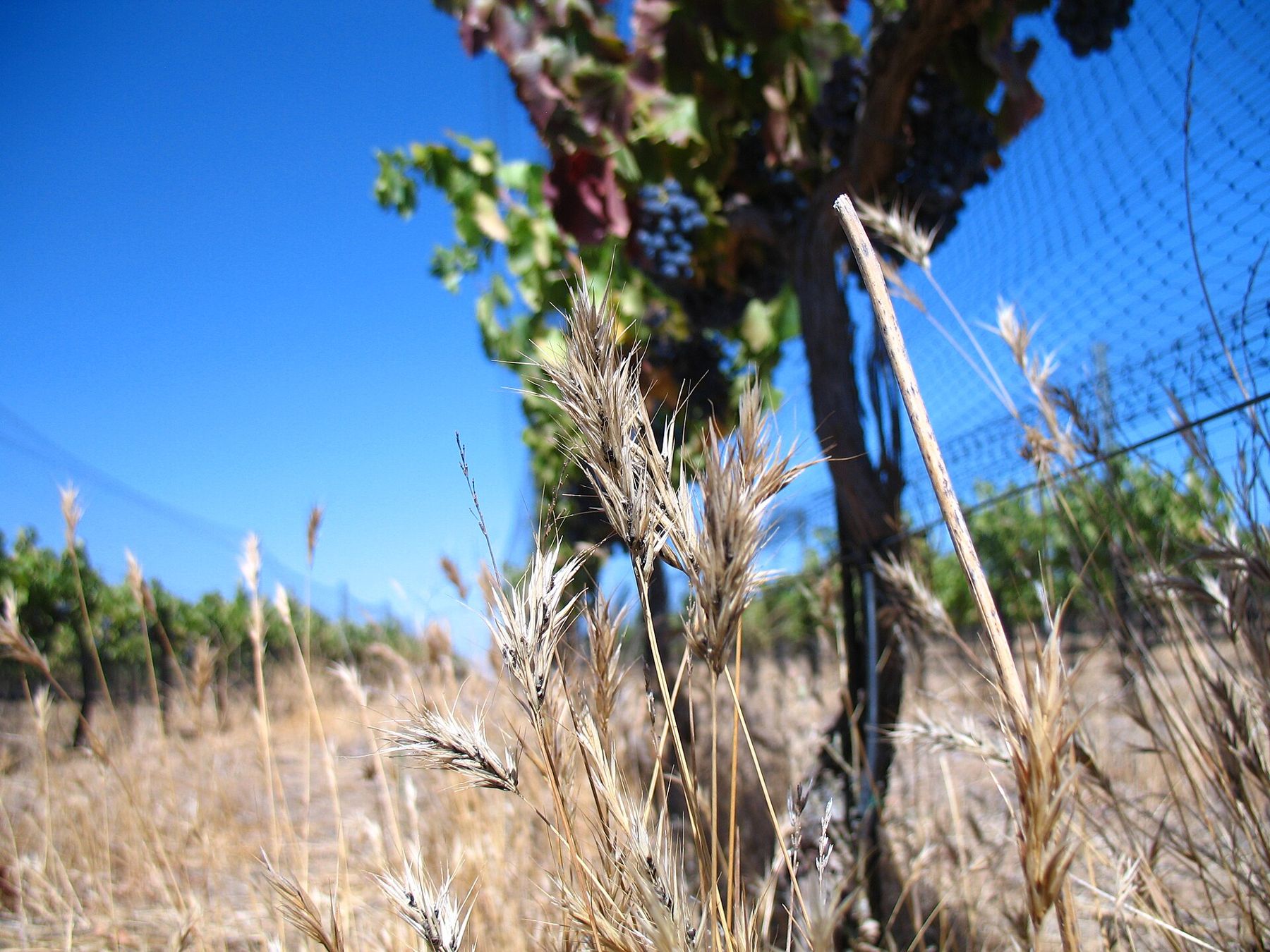
The season changes the picture. In late winter and spring, after the rains, the hills are a startling green and the vines are bare sticks just beginning to bud. By midsummer the grass has gone gold and the rows are dense with leaves. Harvest runs from late summer into autumn, earliest for sparkling wine and white grapes, latest for the Cabernet of Happy Canyon. That is when the valley smells of crushed fruit, trucks of grape bins crawl along Highway 246 at dawn, and the wineries are at their busiest.
Or you can do it without leaving the city. Many producers from all four areas pour on Santa Barbara's Urban Wine Trail, and a walking afternoon in the Funk Zone can cover the whole map. The towns of the valley make a good day out in their own right, from Danish Solvang to the small main street of Los Olivos.
Wherever you taste, ask the same question: where was this grown, and how far from the sea? The answer explains the glass. In the Santa Ynez Valley, the ocean is always the first ingredient, even in a vineyard twenty miles inland where the fog arrives only as a thin gray line on the western horizon at dusk.