The first thing you hear is the pumps. Water runs through the tanks on the dock, and in the tanks the rock crabs climb over one another with a dry clicking of shells. A fisherman in orange bib overalls lifts one out with a gloved hand, turns it to show the weight of it, and drops it into a bag. Behind him the masts in the marina tick in the morning breeze, and the Santa Ynez Mountains stand up gray-blue above the city.
Santa Barbara is a fishing town as well as a resort, and on Saturday mornings the two meet on the docks at the harbor. The commercial boats sell their catch directly to the public: live crab, spot prawns, fish caught that week, and, when the divers have been out, whole sea urchins in their spines. There is no market hall and no fish counter, just boats, tanks, scales and a line of people with coolers.
A harbor that still works
The Santa Barbara harbor was built behind a breakwater in the late 1920s, and it has always been a working port as much as a marina. Among the sailboats and the charter boats, a commercial fleet still ties up here: crab and lobster boats, trap boats that fish for prawns in deep water, small trawlers, and the dive boats of the urchin and sea cucumber fishery.
Most of what they land leaves town. It goes by truck to restaurants and wholesalers across California, and much of the urchin goes overseas. The Saturday market is the exception, a few hours when anyone can walk down the ramp and buy from the people who caught it.
That directness is the point. Fishermen sell at a price they set, without a middleman, and buyers get seafood that was in the channel a day or two ago, often less. Ask what came in and when. Ask how to cook it. The people behind the tanks know, and on a quiet morning they will tell you more than you expected about traps, depths, weather and the season.
Rock crab, the everyday catch
Rock crab is the market's mainstay. Red rock crab and its cousins live on the rocky bottom of the channel and are caught in baited traps for much of the year, so they are usually on offer when other things are not. They are smaller and harder-shelled than the Dungeness crab of Northern California, with big black-tipped claws that hold most of the meat.
They are sold live, by the pound. At home they need nothing more than a large pot of well-salted boiling water and a few minutes, then a cooling rinse, a nutcracker and a table covered in newspaper. The claw meat is sweet and firm. The bodies take patience. A bowl of melted butter or a squeeze of lemon is enough.
Crabs should go into the pot alive, so plan the morning backwards: buy them last, keep them cool and damp, and do not seal them in a bag of water, which drowns them. A cooler with ice under a wet towel gets them home in good shape.
Spot prawns from deep water
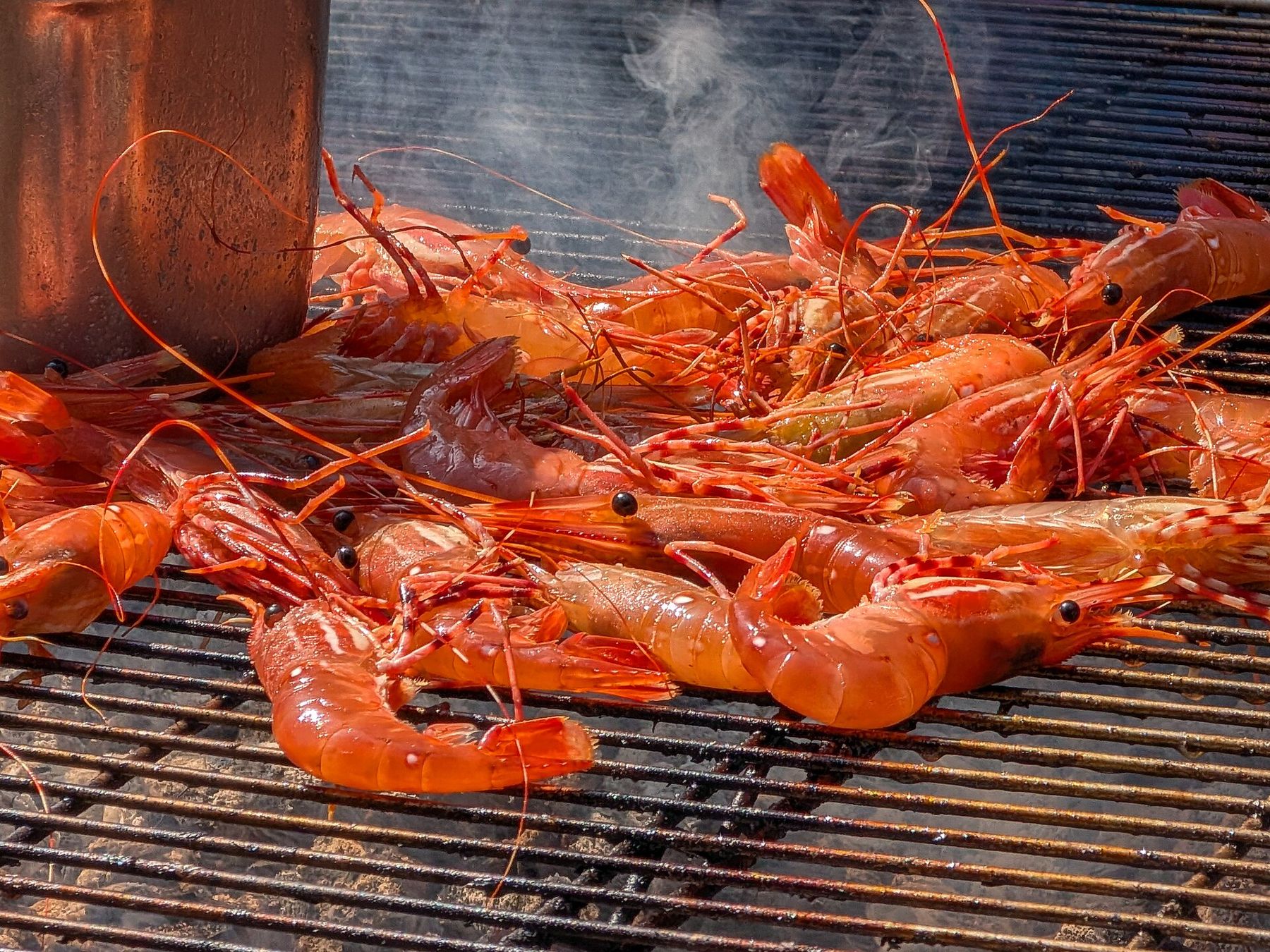
Spot prawns are the prize. They are the largest shrimp on the West Coast, often as long as a hand, with reddish-orange shells marked by white spots near the head and tail. The boats fish for them with traps set on long lines in deep, cold water, hundreds of feet down along the edges of the channel, and they arrive at the dock alive and kicking.
Their season is set by the state and includes a closed period each year, so they are not always available. When they are, they sell quickly.
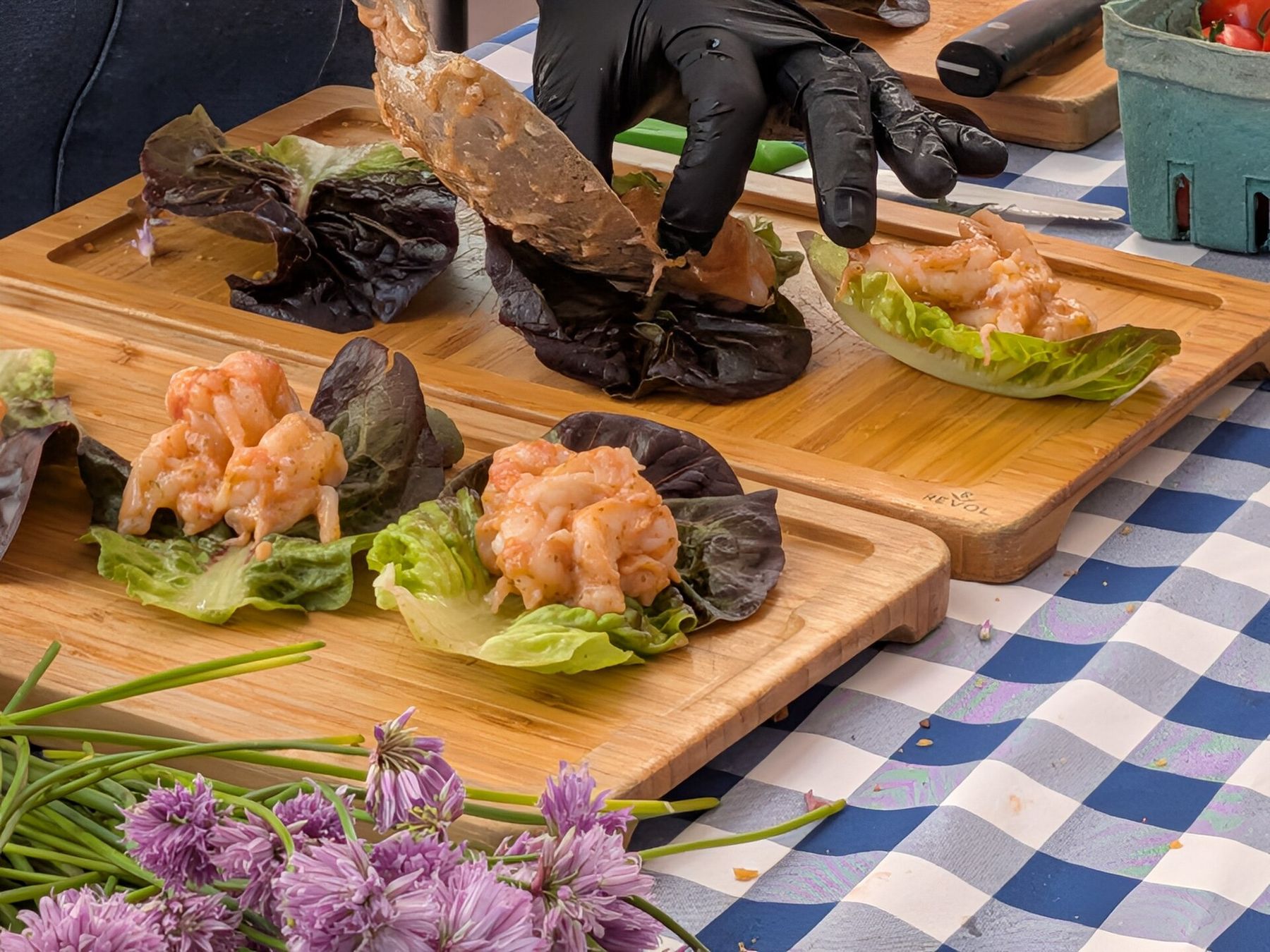
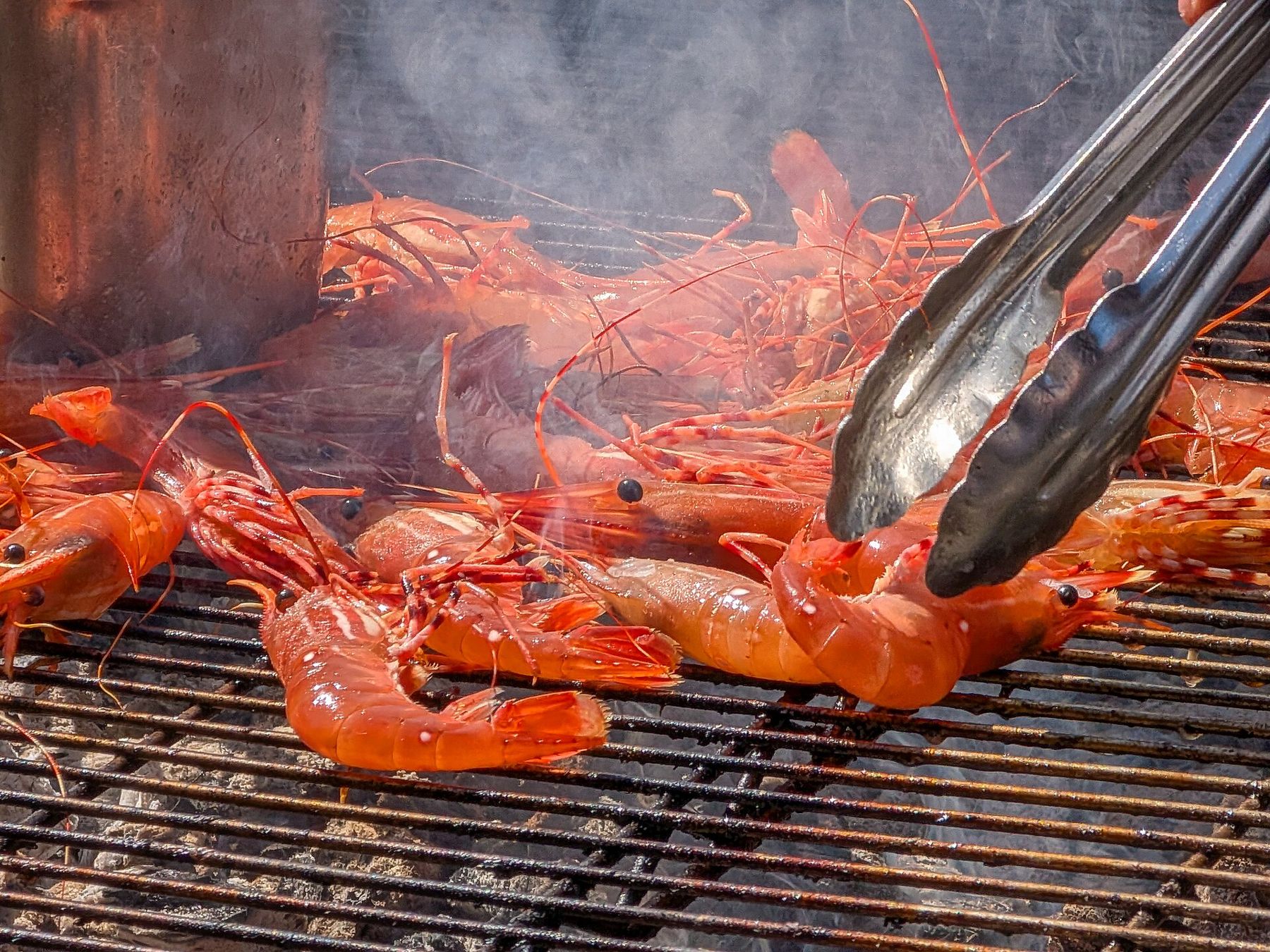
The rule with spot prawns is to do as little as possible. The flesh is sweet and delicate, close to lobster, and it turns mushy if it sits. Cook them the day you buy them. Some cooks eat them raw, the tails peeled and served cold as sweet shrimp. Others throw them whole on a hot grill for a minute or two a side, until the shells turn bright orange, then pull off the heads and suck out the juices. The heads also make a fine stock for a risotto or a soup that same night.
 Also on Presidio PostWhales in the channel
Santa Barbara uni
If the market has a celebrity, it is the red sea urchin. Divers work the kelp forests along the coast and around the Channel Islands, collecting urchins by hand from the rocks, and Santa Barbara has long been one of the most important urchin ports in California. For decades a large share of the catch was flown to Japan, where it was prized. Sushi chefs elsewhere now ask for Santa Barbara uni by name.
The edible part is the roe: five tongues of soft, golden or orange flesh arranged in a star inside the shell. It tastes of the sea, rich and sweet at once, with a texture like custard. Good uni is firm, bright and smells clean. It does not keep long.
At the market, urchins are sometimes sold whole, still bristling. Handle them with gloves or a folded towel. To open one, cut a circle around the soft mouth on the flat underside with kitchen shears, lift it away, pour out the dark liquid and debris, and spoon the five pieces of roe out onto a plate. Some fishermen will crack one for you on the spot. Eat it right there, with a squeeze of lemon, standing on the dock. A spoonful on a warm tortilla or a bowl of rice is the next best thing. It may be the best thing you eat in Santa Barbara.
Urchin fishing depends on the health of the kelp, and the kelp depends on ocean temperature and storms, so the supply rises and falls from year to year. When it is scarce, the price goes up and the tank on the dock may be empty.
Eat it right there, with a squeeze of lemon, standing on the dock.
The rest of the catch
What else appears depends on the week. Rockfish of several kinds, sold whole, are common, and they are excellent steamed or baked with ginger and scallions. California halibut, a flatfish, comes in from the sandy bottoms. Sablefish, also called black cod, is rich and oily and takes well to a miso glaze. Sheephead, a reef fish with a pink band and an enormous jaw, has firm white flesh that holds together in tacos.
California spiny lobster has its own season, which opens in the autumn and runs into the late winter. In those months the lobster boats may bring them to the dock live, and their tails go well on the grill. Like everything else, the season's dates and rules are set by the state and change, so ask.
Whole fish are often the best value, and most vendors will tell you how they would cook theirs. Whether a boat cleans or fillets what you buy varies; some do, many do not. Bring a sharp knife at home and a little nerve, and the bones make stock.
How to do the market well
Come early. The best of the catch goes first, and on a sunny weekend the line forms before the boats are ready. Hours shift with the seasons and the weather, and a stormy week can mean a thin market or none, so check before going.
Bring a cooler with ice, a few bags, and cash, even though many sellers take cards. Wear shoes that do not mind a wet dock. Do not touch the animals in the tanks unless invited. And remember that a fisherman's morning is short: pay, thank them, and let the next person in line have their turn.
Plan the rest of the day around what you buy. A crab will not wait while you walk to Stearns Wharf and back. Head home, or to a rented kitchen, and cook. If there is no kitchen, eat at the harbor, where restaurants by the docks serve the same fish from the same boats, and watch the fleet unload from a table by the water.
By late morning the tanks are drained, the hoses are coiled, and the dock is just a dock again. A pelican stands on the end of a piling, hoping something was missed.