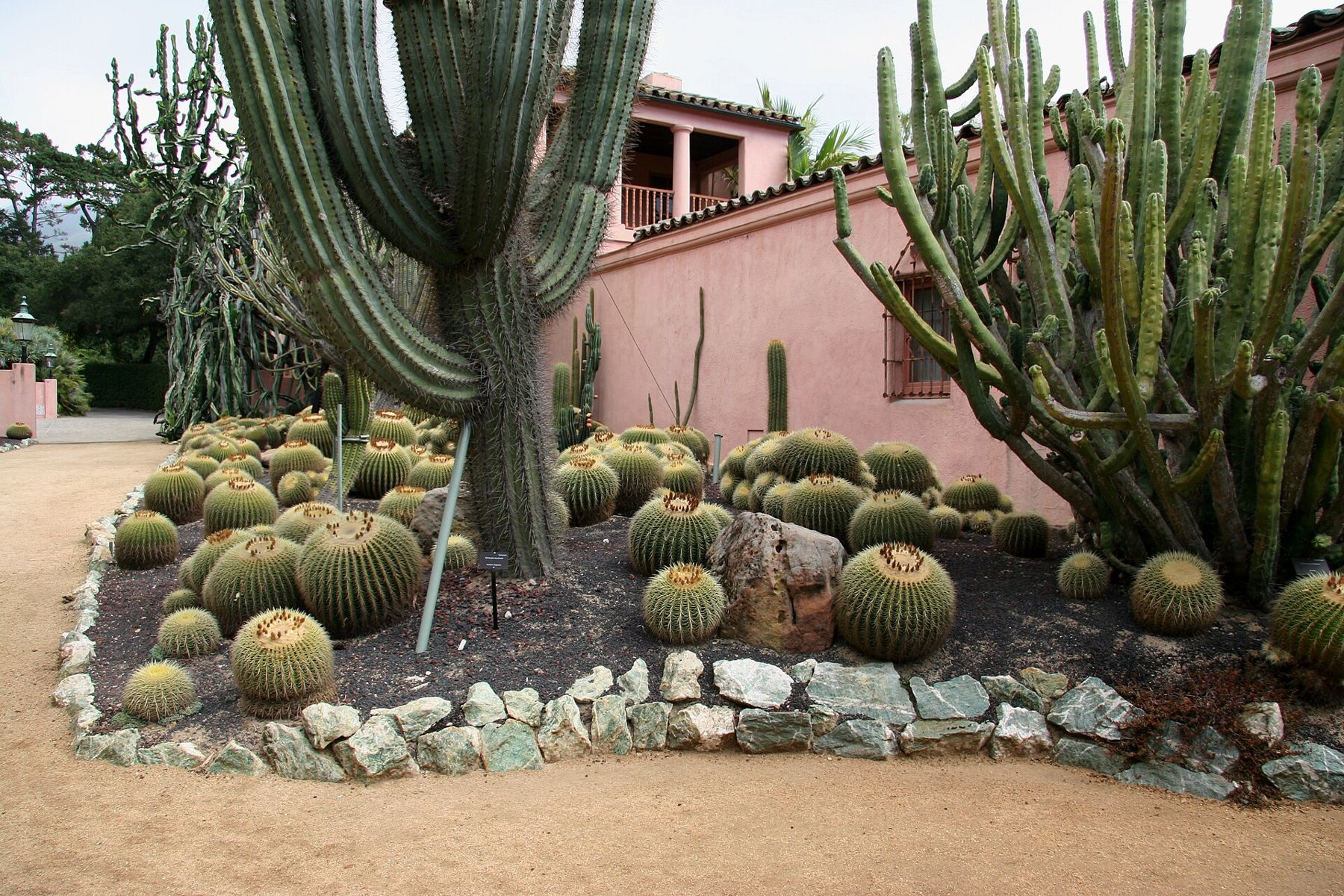
In front of the pink house, the golden barrel cacti sit in their bed like a crowd of round, spiny heads, hundreds of them, all turned to the sun. Behind them rise cactus columns taller than the windows, and a twisted tree cactus throws its arms out over the gravel. It is a scene that should look like a desert. It looks like a stage set, which is exactly what its maker intended.
Lotusland is the garden of Ganna Walska, and it is unlike any other garden in California. It covers about thirty-seven acres in Montecito, with more than twenty separate gardens, each built around a single idea and pushed further than seemed sensible. It is open only to visitors who book ahead, and only part of the year. That scarcity is not a marketing device. It is the result of a long agreement with the neighbours.
It looks like a stage set, which is exactly what its maker intended.
The woman who made it
Ganna Walska was born in Poland in 1887, became an opera singer, and spent the years between the wars moving between Paris, New York and the stages of Europe. Her singing career never matched her ambitions. Her life did not lack drama, and she married six times. None of that is why she matters now.
In 1941 she bought an old Montecito estate called Cuesta Linda, on land where nurserymen had already planted exotic palms and trees in the late nineteenth century. She first called it Tibetland. When that plan and that marriage ended, she renamed it Lotusland, after the lotus that grew in its ponds, and spent the next four decades making it hers. She worked with a series of landscape designers, but the vision, and the habit of buying plants in quantities no one else would consider, were her own.
Her method was simple to state and expensive to follow. When she liked a plant, she rarely bought one; she bought dozens, sometimes hundreds, and planted them together so that the effect would be overwhelming. A single golden barrel is a curiosity. Several hundred in one bed become a landscape. The same habit runs through the whole garden, from the ranks of aloes to the massed cycads, and it is what gives Lotusland its peculiar intensity. Nothing here is a sample. Everything is a crowd.
She died in 1984 and left the estate to a foundation. After a long permitting process with the county and the neighbours, the garden opened to the public in 1993, with visitor numbers limited under its permit. That limit is why every visit is booked in advance.
The house and its cacti
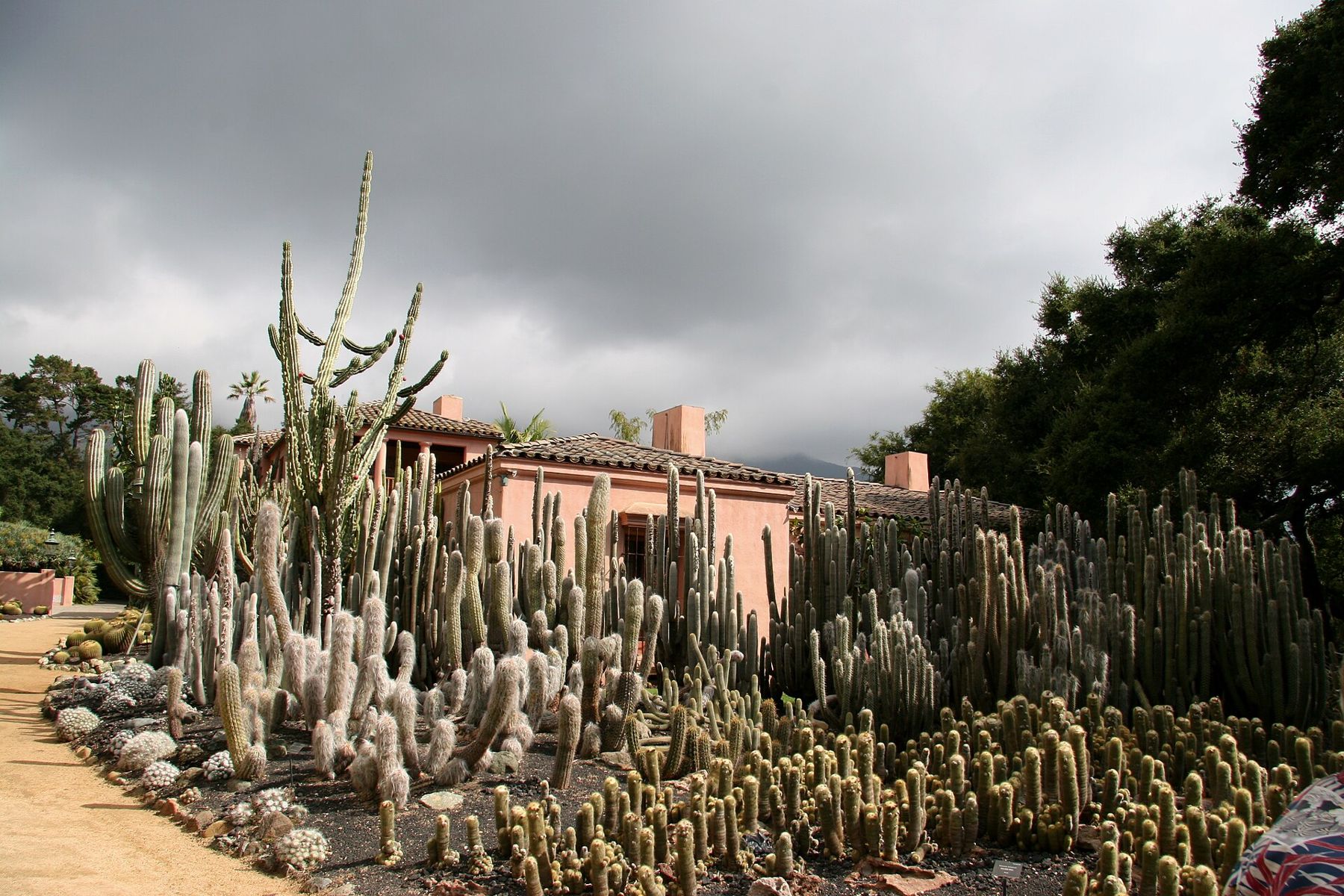
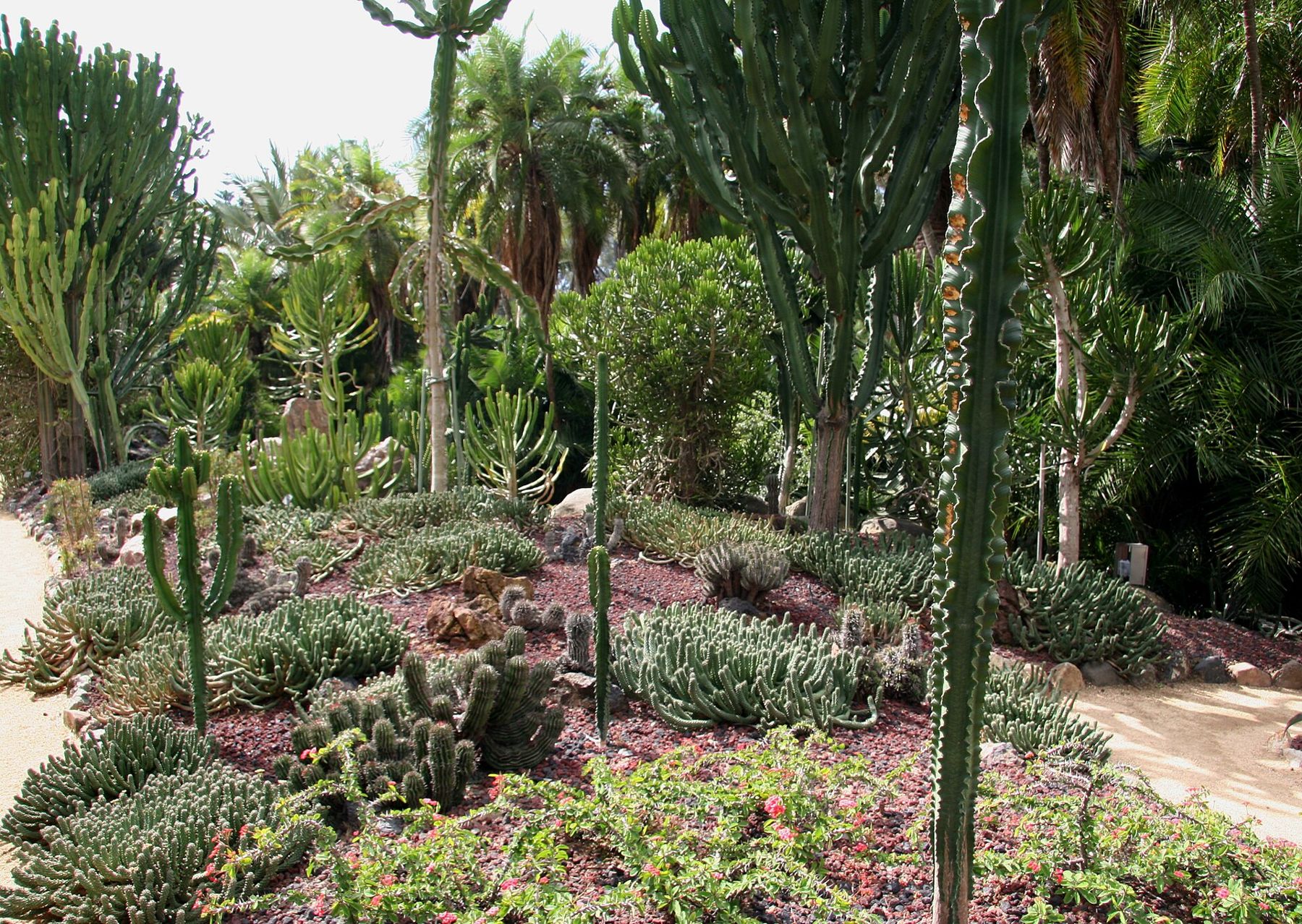
The main house, a low pink building with a tile roof, is the centre of the composition. Walska planted it in the way a set designer dresses a stage, and the planting around it is the garden's signature: golden barrel cacti massed in beds, tall columnar cacti behind them, and weeping, fleshy euphorbias that look like they belong underwater.
Walska liked plants in mass, and she liked contrast. The rounded barrels against the vertical columns, the gold spines against the pink stucco, the grey stone mulch under all of it: the effect is deliberate, and it photographs better than almost anything else in the garden. Come back here at the end of the visit, when the light has shifted.
Blue, grey and silver
The Blue Garden is one of Walska's best ideas, carried out with complete conviction. Every plant in it is blue or grey: blue fescue grass in tufts, blue Atlas cedars, silvery palms, glaucous succulents, and paths edged with lumps of blue-green glass. Walk through it in the soft light of a cloudy morning and the whole garden seems to be seen through water.
Close by, the Aloe Garden circles a pond lined with abalone shells, with giant clam shells serving as fountains. Aloes of dozens of kinds rise around the water, many of them flowering in red and orange spikes in the cooler months. It is the garden's most theatrical corner, and among its most lively, full of hummingbirds when the aloes are in bloom.
Clipped, timed and staged
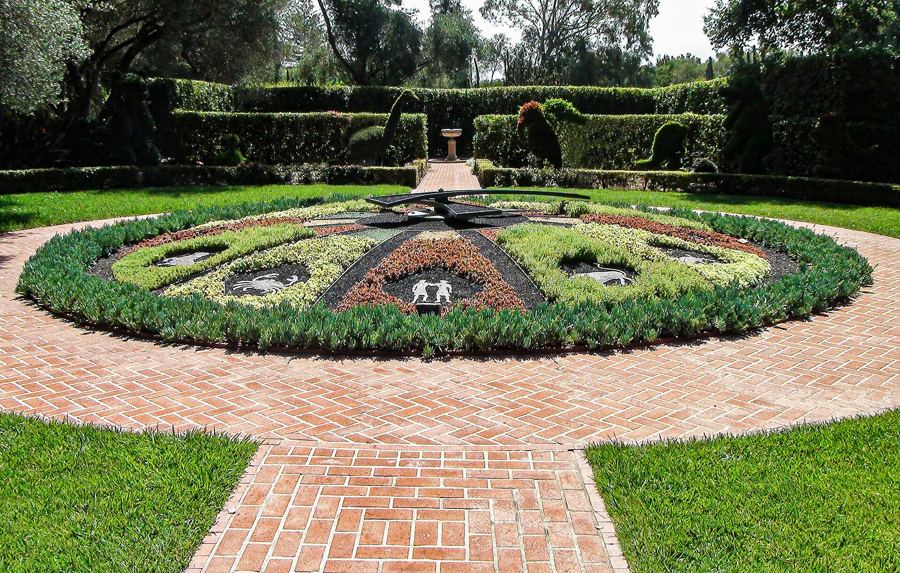
Not everything is spiny. The Topiary Garden is a lawn bordered by green sculpture: animals, spirals and geometric forms clipped from shrubs, with a working floral clock laid into the grass, its face planted rather than painted. The hands turn over beds of low succulents and ground covers, and the clock keeps time.
Nearby, the Theatre Garden is an outdoor stage, and a company of stone figures stands around it in costume, frozen mid-gesture. For a garden made by a singer, it is a fitting joke. The Japanese Garden, quieter, follows a pond with stone lanterns and maples, and the Water Garden holds the lotus that gave the place its name. In summer the leaves lift clear of the water and the flowers open.
 Also on Presidio PostQueen of the Missions
Cycads and cacti
Two collections make botanists travel. The cycads, ancient, slow-growing plants that look like palms but belong to a far older line, were Walska's late passion. She sold jewellery to pay for rare specimens, and the cycad garden is now one of the most important collections of its kind. The plants, some of them rare in the wild, stand in groups with their stiff, glossy fronds catching the light.
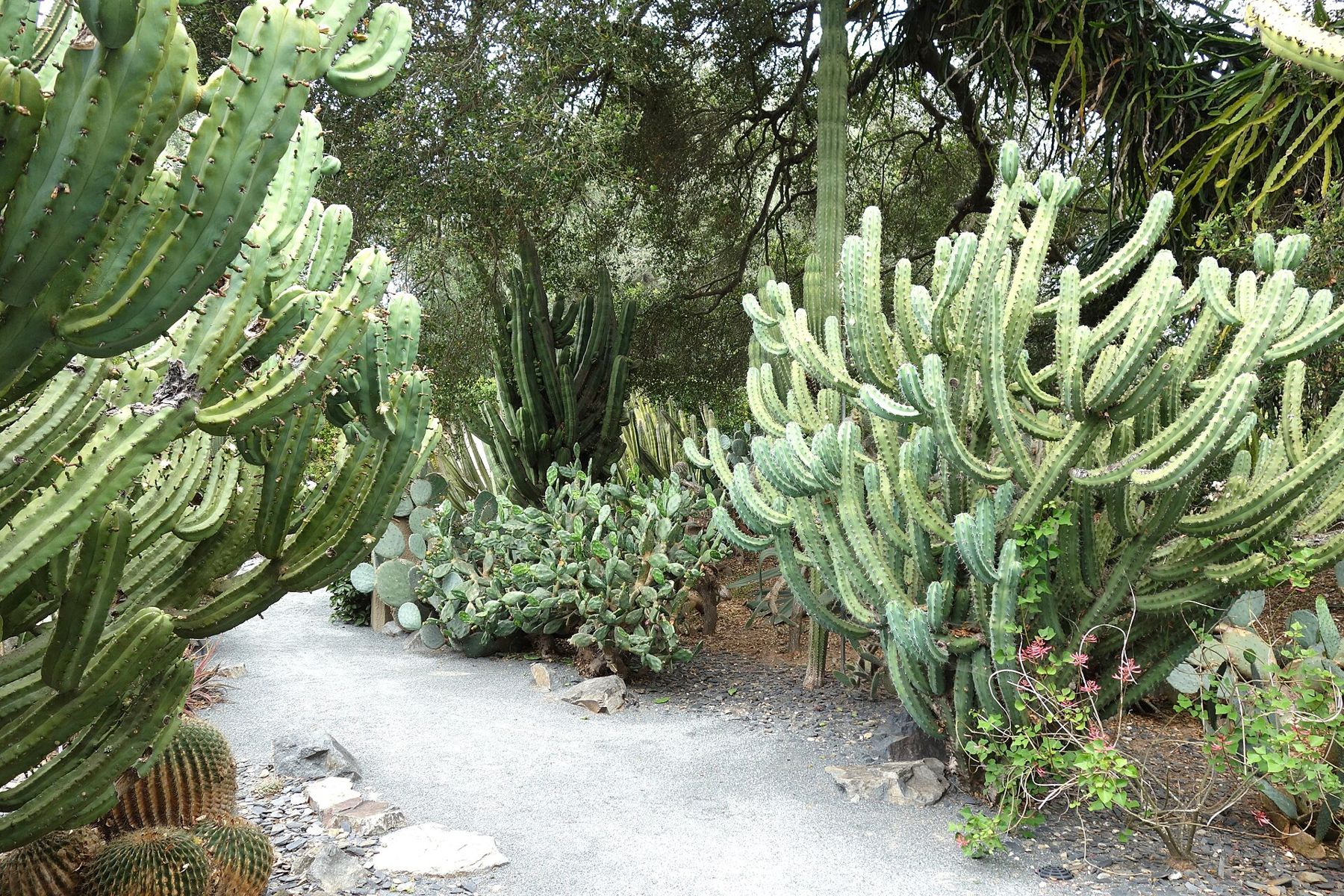
The Cactus Garden is newer. It was laid out after Walska's death around a large collection donated to the garden, and it adds to her theatrical plantings a more botanical order: cacti from across the Americas arranged among boulders and dark stone mulch, with paths winding between columns that stand taller than the visitors walking past.
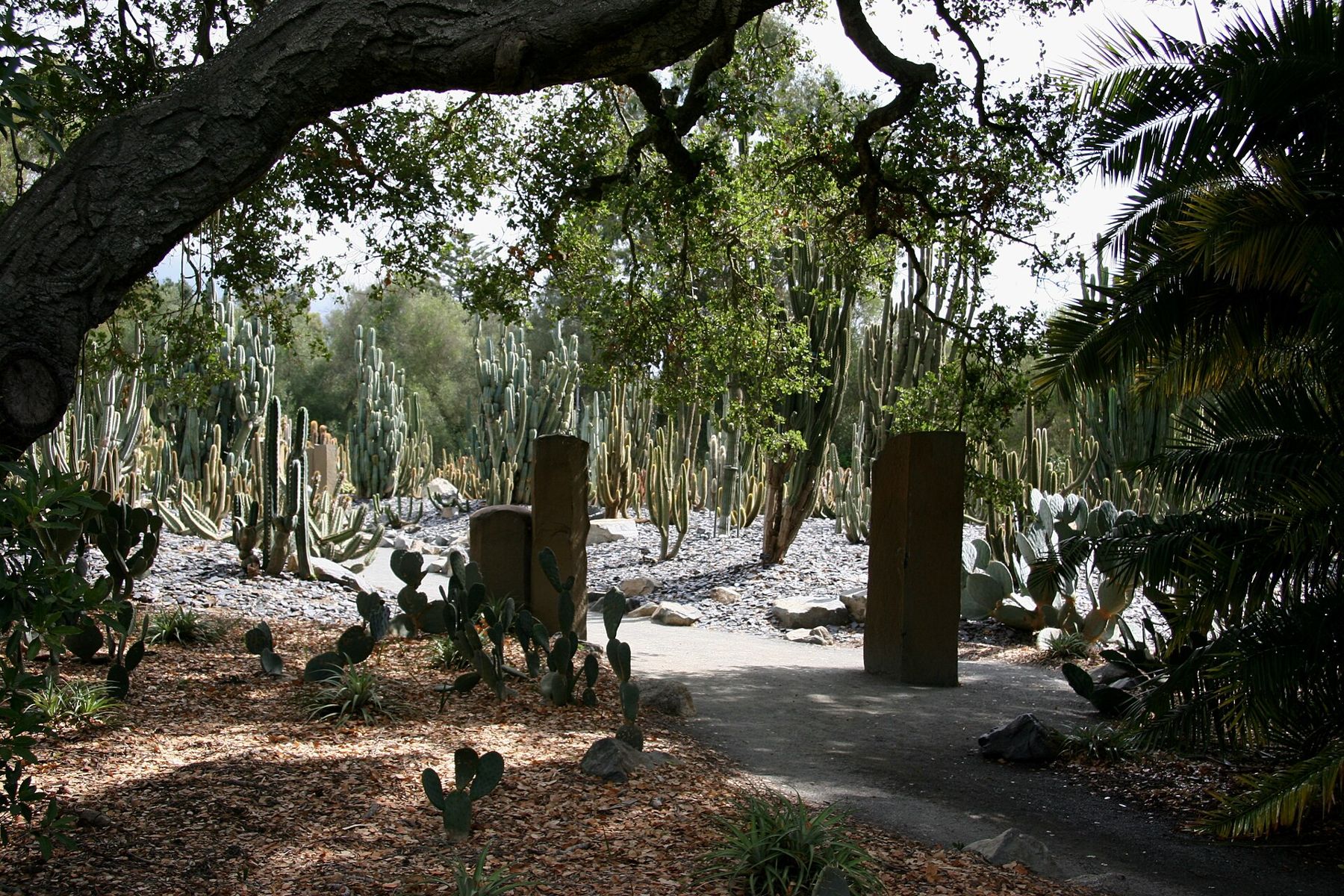
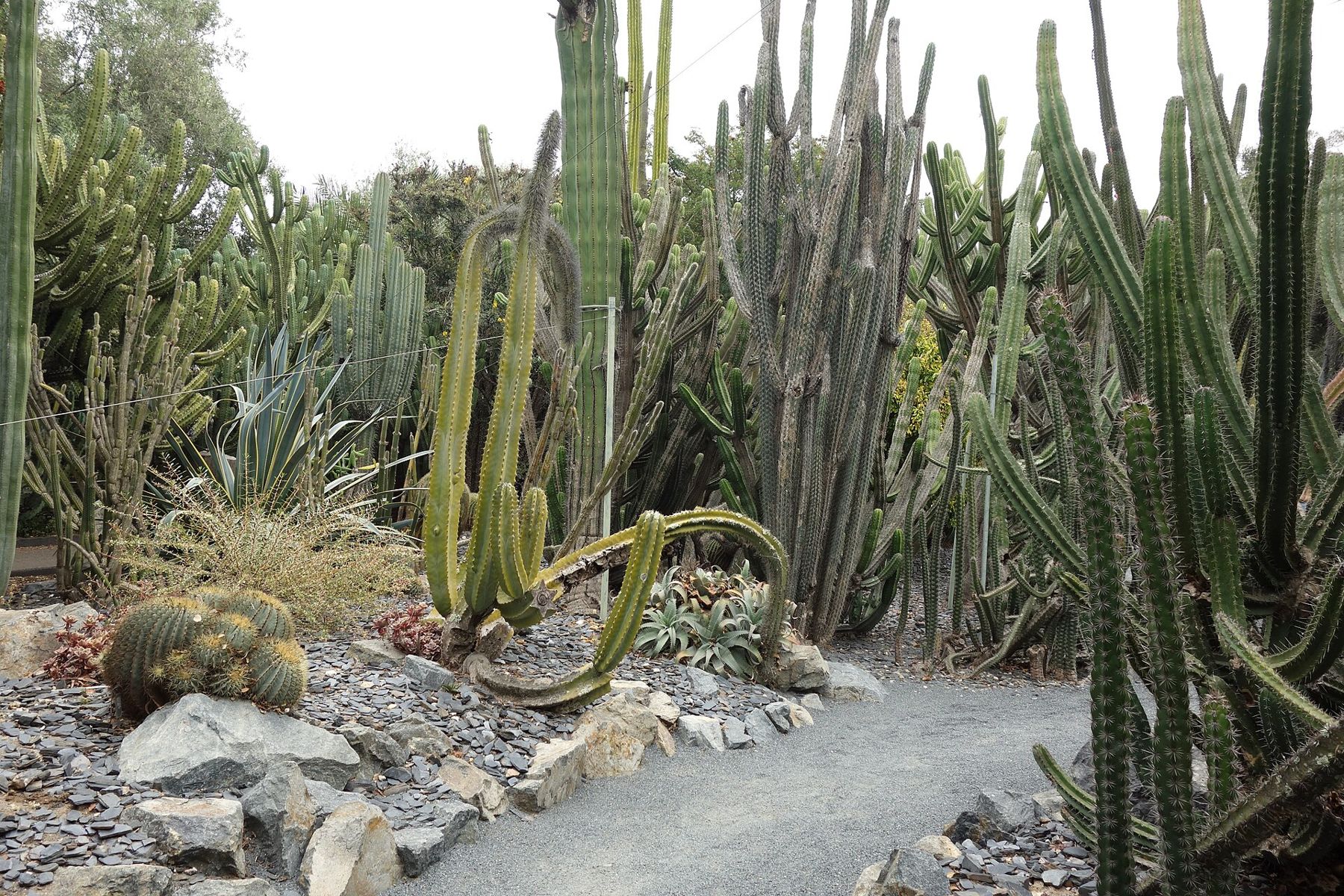
The difference shows. Walska's own plantings are about effect: masses, colour, surprise. The Cactus Garden is about the plants themselves, and it reads like a library rather than a stage. Both are worth the time. Look closely at the cacti near the edges of the paths. The spines in the low sun shine like filaments.
The garden through the year
Lotusland changes more through the seasons than a garden of cacti suggests. Late winter and early spring, when the gates reopen, belong to the aloes, whose red, orange and yellow spikes stand over the pond and draw hummingbirds from all over the estate. Spring brings flowers to many of the cacti, short-lived and startlingly bright against the grey spines. In summer the lotus rises in the water garden, its leaves held above the surface and its flowers opening in the morning. By autumn the light lowers and the blue garden looks its most silver.
Fog is not the enemy here. On a grey morning the colours in the blue garden deepen and the cactus shapes stand out sharply against the soft background. Bright sun flatters the house and the golden barrels. Either way, the garden rewards a slow pace.
How a visit works
Every visit to Lotusland is booked in advance. There are no walk-up visits and no visiting outside a reserved time. The garden offers a mix of guided tours and self-guided visits, and the kinds of visit, the times and the days all change from year to year. It closes for part of the winter, and its season has typically run from late winter into autumn. Book early for spring and early summer, when places go first.
The garden is in a residential part of Montecito, and visitors arrive by car with a reservation; the address and parking details come with the booking. Arrive on time. Rules about children, pets, food and photography are set by the garden and change, so read the confirmation carefully.
Wear shoes that can handle gravel. Bring a hat; much of the garden is in full sun. A visit takes about two hours, more if you linger, and lingering is the point. If you can choose, come in spring for the aloes and the flowering trees, or early summer for the lotus, and see the best time to visit for the city's seasons more broadly. Stay nearby the night before and the morning is easy; our guide to where to stay covers Montecito with the rest.
On the way out, walk past the house one more time. The golden barrels are still there, round and patient in their bed, glowing in the late sun.