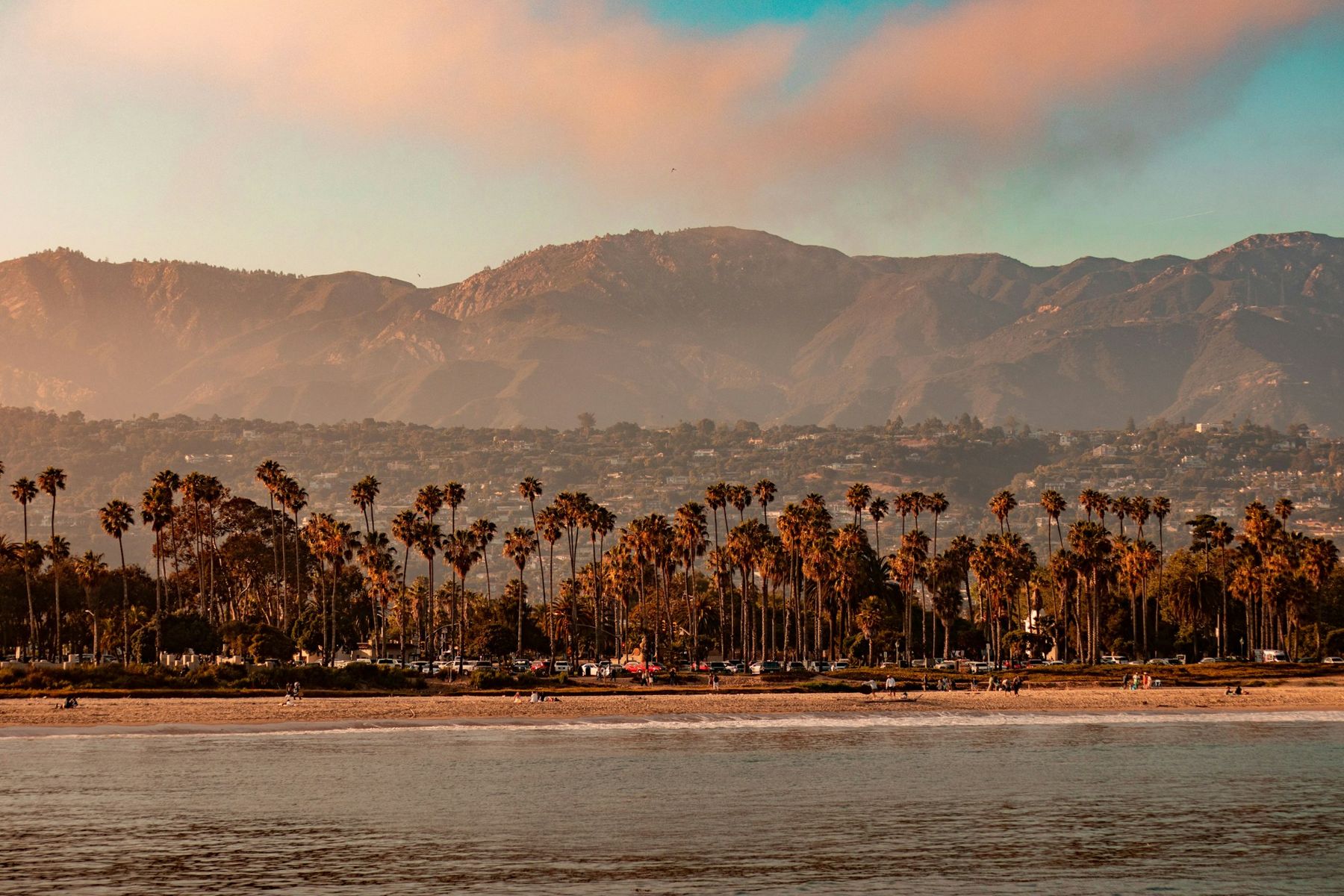
Santa Barbara has three faces, and they sit in a neat line from the mountains to the sea. Up the slope is the Spanish town of the Mission and the Courthouse, all whitewash and red tile. Along the shore are the harbor, the wharf and the beaches. Over the mountains, half an hour by the pass, is the wine country of the Santa Ynez Valley. A long weekend gives each one a day.
Days one and two need nothing but comfortable shoes. Day three needs a car, or a seat on a tour.
Day one: the Mission in the morning
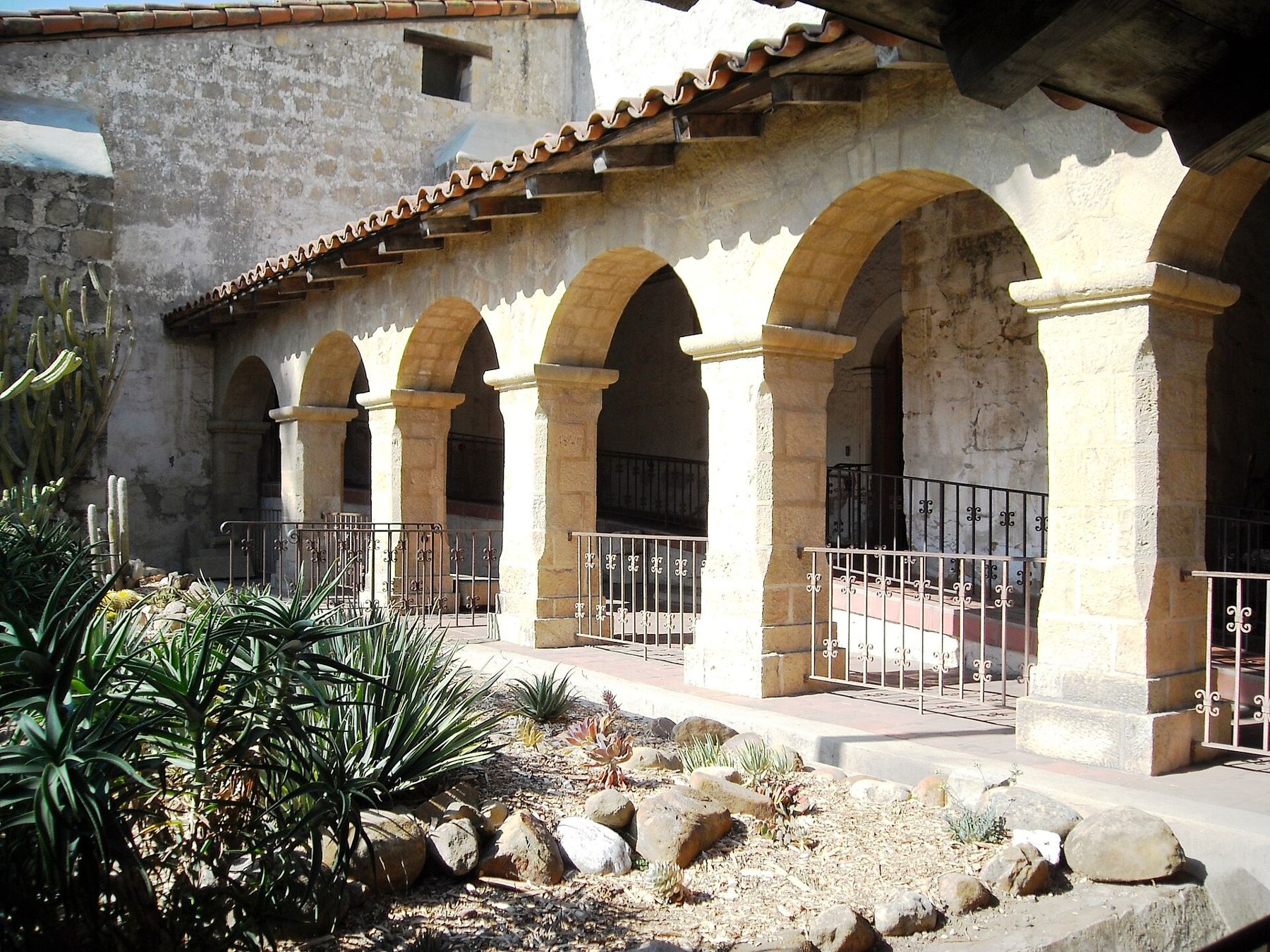
Start at the top of town. Mission Santa Barbara, founded in 1786, stands on a rise above the city with its twin bell towers facing the sea, and morning is the time to see it, with the sun full on the sandstone facade and the lawn still quiet. The church, the cemetery garden and the small museum are open on a ticketed self-guided tour; times and fees change, so check before you go.
Across the road, the rose garden in Mission Historical Park is free and at its best from spring into autumn. Look back from its far edge for the classic view of the Mission against the mountains.
If there is time before the Courthouse, the Santa Barbara Museum of Natural History sits a short walk up Mission Canyon, among oaks beside the creek, and the walk from the Mission down Laguna Street toward downtown passes some of the city's handsomest older houses. Otherwise, head straight down the hill.
Day one: the Courthouse and the old quarter
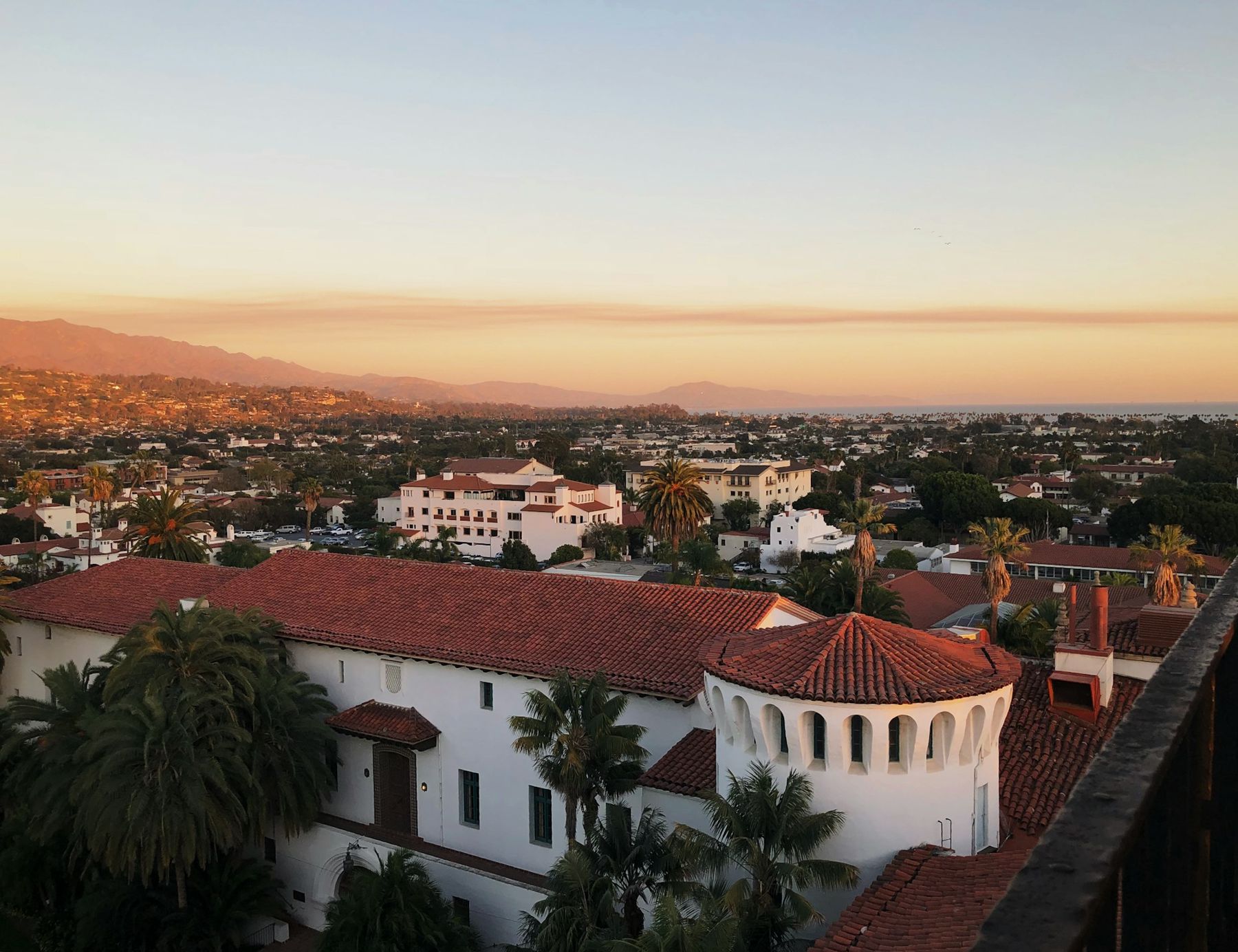
Walk or take a short ride down to the County Courthouse, finished in 1929 and still the grandest building in the city. It is a working courthouse and free to visit. See the painted Mural Room, then climb to El Mirador, the viewing deck in the clock tower, for the full sweep of red roofs, palms, the harbor and the islands. Late morning light is good up there.
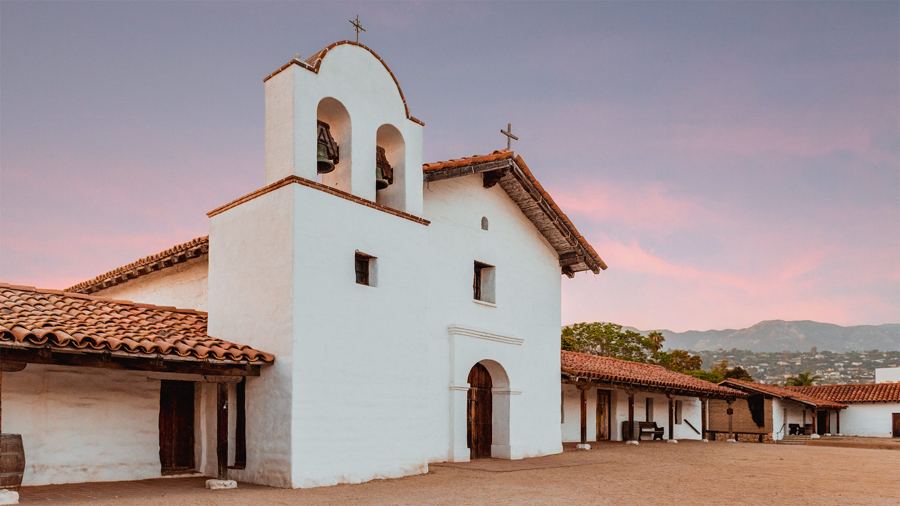
Have lunch downtown, then spend the afternoon in the old quarter a few blocks east. El Presidio de Santa Bárbara, the Spanish fort founded in 1782, survives in the El Cuartel adobe and a reconstructed chapel and quadrangle on Cañon Perdido Street. From there, the streets between the Presidio, Casa de la Guerra and El Paseo hold most of what is left of the adobe town, and they repay a slow wander.
In the early evening, walk down lower State Street to the Funk Zone, the old warehouse blocks by the railway line, for a glass of local wine and dinner. It is busy and loud on weekend nights, which is the point.
Day two: the harbor before breakfast
Get up early for the coast. At the harbor, fishing boats come and go past the breakwater, sea lions bark from the buoys, and on Saturday mornings the fishermen sell rock crab, spot prawns and whatever else the boats brought in from stalls at the harbor's edge. Walk out along the breakwater to the end, with the open sea on one side and the masts on the other, and continue onto the sandspit if the tide allows.
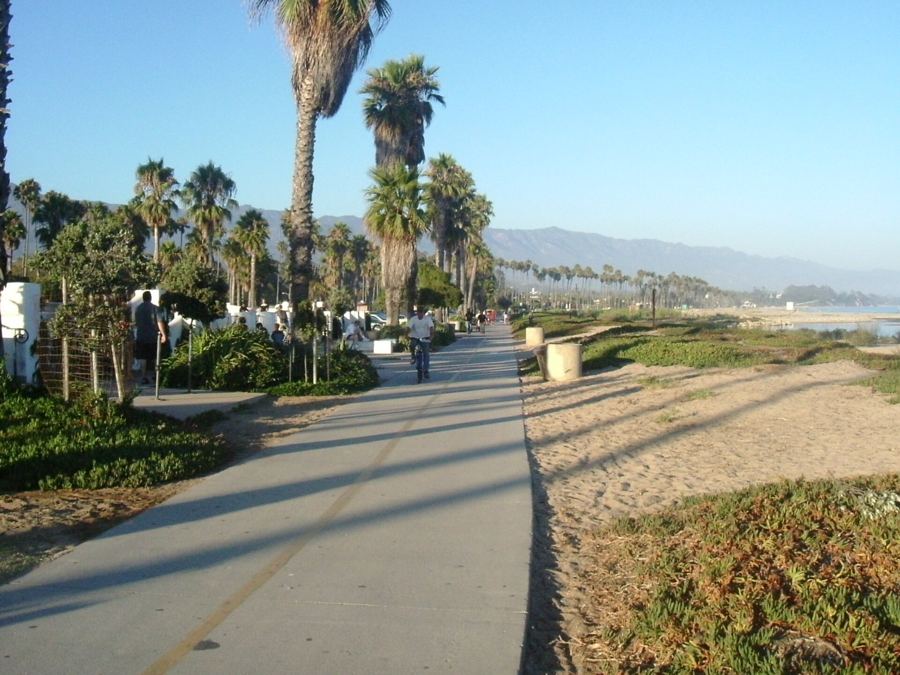
Have breakfast near the water, then pick up the beach path heading east. It runs beside Cabrillo Boulevard past West Beach to Stearns Wharf, a little over half a mile. Walk out to the end of the wharf for the view back at the town, which is the best introduction to its shape: beach, palms, red roofs, then the wall of the Santa Ynez Mountains rising almost from the city's edge.
The afternoon is for the beach. East Beach, beyond the wharf, is wide, sandy and lined with volleyball nets. Rent a bike and ride the path all the way to the bird refuge, or simply lie on the sand. If it is a Sunday, the arts and crafts show lines the grass along Cabrillo Boulevard east of the wharf.
 Also on Presidio PostEl Presidio de Santa Bárbara, then and now
Day two: sunset on the Mesa
Take a short ride up to Shoreline Park on the Mesa, where a long lawn ends at the top of the bluffs. The view runs out over the channel to the islands, and in winter and spring it is a good place to look for the spouts of passing whales. Watch the sun go down over the Pacific; then have dinner downtown or back in the Funk Zone.
Day three: over the pass
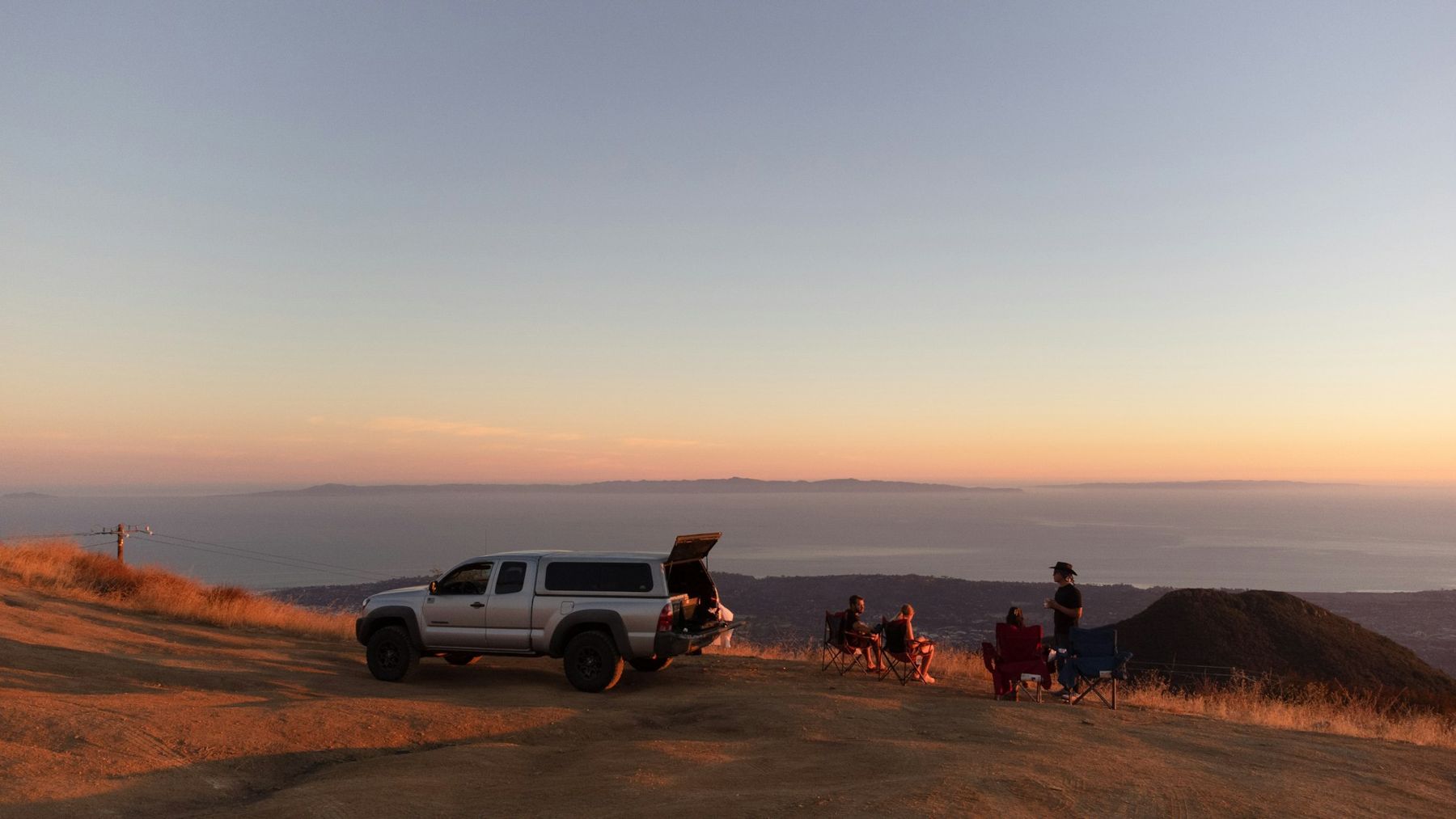
Day three leaves the coast behind. Take Highway 154 north out of town and up the face of the mountains over San Marcos Pass. The road climbs fast, with views back over the city and the sea, and then crosses the Cold Spring Arch Bridge, a single steel arch built in 1963 over a deep canyon. Beyond the summit, the country turns dry and golden, Lake Cachuma spreads out below the road, and the oaks begin.
The Santa Ynez Valley is a cool wine country of rolling hills, horse ranches and small towns. Los Olivos, a single short main street of tasting rooms and cafés, is about 45 minutes from downtown and the easiest place to taste without driving between stops. Solvang, a few miles south, is the Danish-founded town of windmills and bakeries, with Mission Santa Inés at its edge. Pick one for lunch and a slow afternoon. Los Olivos suits a day of tasting; Solvang suits a day of wandering, with pastry. Between them, Ballard Canyon Road loops through vineyards and ranch land and makes a quiet detour on a weekday. Many tasting rooms ask for reservations, especially on weekends; plan ahead and choose a driver who is not drinking.
Keep tasting light. Pour sizes are small, but they add up across an afternoon, and spitting is normal and expected. Buy a bottle from the place you liked best rather than visiting five, and eat a real lunch. The valley is at its loveliest in the late afternoon, when the oaks throw long shadows across the hills, and that is when you will want to be clear-headed.
Coming home by the coast
For the return, skip the pass. From Buellton, Highway 101 runs south through the narrow Gaviota gorge and comes out at the sea, then follows the open Gaviota coast all the way back to Santa Barbara. For half an hour the road runs between the ocean on one side and empty ranch land and railway on the other, past the state beaches at Refugio and El Capitán. In the late afternoon the light comes in low across the water from the west.
Stop at one of the beaches if the day allows, and then drive the last stretch into town as the lights come on along the waterfront, back to where the weekend began.